
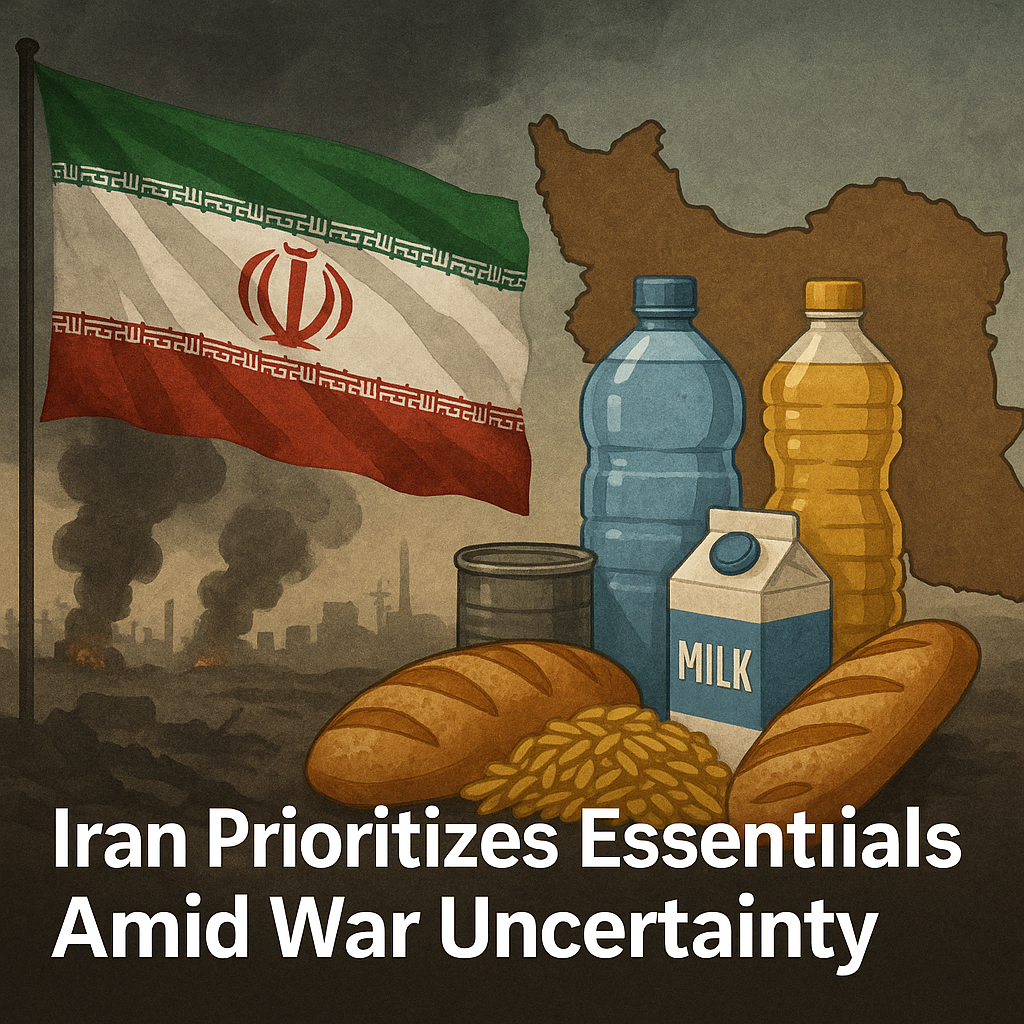
Iran Prioritizes Essentials Amid War Uncertainty

Iran Prioritizes Essentials Amid War Uncertainty
As geopolitical tensions escalate in the Middle East, Iran is shifting its economic focus to essentials, aiming to prioritize the needs of its population amid the looming threat of war. This transition reflects a broader recognition of the instability that accompanies such conflicts and a strategic move to strengthen domestic resilience.

Economic Shift Towards Essential Goods
The Iranian government is taking substantial steps to restructure its economy, channeling resources toward essential goods such as food and medicine. According to a report from Al Jazeera, this shift is partly in response to ongoing international sanctions and the increasing challenges posed by the ever-changing geopolitical landscape. As citizens face rising prices and dwindling supplies, the government’s emphasis on essentials aims to maintain social stability and mitigate public discontent.


Iran’s approach includes bolstering domestic agriculture and incentivizing local production of essential goods. This strategy is vital, given the country’s vulnerability to external shocks and the recent disruptions in global supply chains exacerbated by the COVID-19 pandemic and geopolitical tensions. The move seems to resonate with a significant portion of the Iranian populace, who are increasingly concerned about inflation and scarcity.


On the contrary, some analysts, such as those from RT News, argue that while focusing on essentials is crucial, this approach may not be entirely sufficient to shield Iran from external pressures. They suggest that the government must also consider diversifying its economy to reduce its long-term dependency on imports and enhance resilience against sanctions—essentially urging a balance between immediate and strategic economic actions.
Balancing Domestic and International Pressures
Iran’s pivot towards essential goods occurs against a backdrop of multiple challenges. The country faces substantial scrutiny over its nuclear program, with Western powers urging a return to diplomatic negotiations. Sky News reports that while Iran pursues a more self-sufficient economic model, the potential for renewed conflict over its nuclear ambitions looms large. The myriad sanctions imposed by various nations continue to stifle international trade, compelling Iran to rely more on domestic production.
The internal discourse within Iran is multifaceted. Some citizens celebrate the government’s focus on essentials, perceiving it as a necessary adaptation to ongoing economic hardship. Others, however, express concern that this emphasis might sideline critical sectors like technology and infrastructure, which are essential for long-term economic growth.
In this context, public sentiment appears mixed. Surveys indicate that while some Iranians appreciate the government’s immediate actions to provide basic necessities, there is a prevailing anxiety about the lack of diverse economic opportunities. The looming uncertainty surrounding potential military conflict poses an additional layer of stress, leading many citizens to wonder if the government’s strategies are sufficiently forward-thinking.
Implications for Future Stability
The focus on essentials indeed serves a dual purpose: it addresses immediate survival needs while striving to maintain social cohesion in a politically and economically turbulent landscape. Yet, the prioritization of essential goods may inadvertently isolate certain sectors, leading to a potential bottleneck in broader economic growth.
Experts caution that while the short-term focus is necessary, a lack of investment in other sectors could hinder Iran’s economic recovery post-conflict. The challenge remains for the Iranian government to navigate this delicate balance—escalating military tensions on the one hand and fostering economic stability on the other.
In conclusion, Iran’s transition towards prioritizing essential goods amid war uncertainty offers insights into the resilience of the nation in the face of considerable challenges. While this shift may provide immediate relief to the populace, it raises critical questions about sustainability and economic diversification in the long run. As the landscape continues to evolve, both the national leadership and the citizens of Iran will need to adapt to these dynamic and often overlapping pressures, ensuring that the lessons learned today pave the way for a more stable and prosperous future.















