
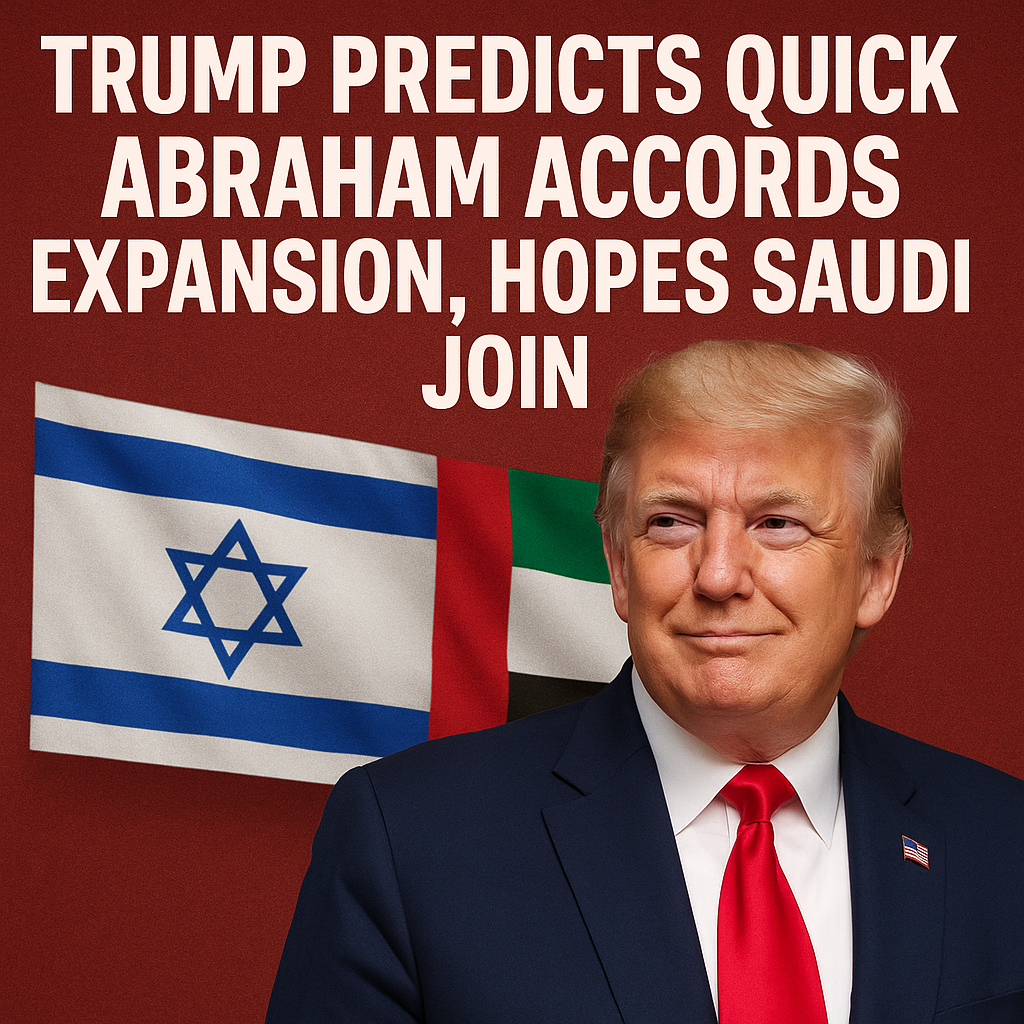
Trump Predicts Quick Abraham Accords Expansion, Hopes Saudi Join

Trump Predicts Quick Abraham Accords Expansion, Hopes Saudi Join
In recent statements, former President Trump expressed optimism about the future of the Abraham Accords, predicting a rapid expansion of these agreements and specifically mentioning hopes for Saudi Arabia’s participation. The Abraham Accords, which normalized relations between Israel and several Arab nations, have sparked debate regarding their implications for regional stability and U.S. foreign policy.

The Abraham Accords: A Brief Overview
Introduced in 2020 under the Trump administration, the Abraham Accords marked a significant shift in Middle Eastern diplomacy. Countries like the United Arab Emirates (UAE) and Bahrain normalized relations with Israel, breaking a long-standing taboo in a region often fraught with conflict over the Israeli-Palestinian issue. The agreements were celebrated as a landmark in U.S. diplomacy, but they also drew mixed reactions.


Notable Achievements
– Normalization of Relations: The UAE and Bahrain were the first Arab nations in decades to officially recognize Israel.
– Economic and Strategic Ties: Beyond diplomatic recognition, the accords opened pathways for trade, tourism, and technology exchange.
– Regional Security Collaboration: There’s a growing sense of shared interest in counteracting common threats, particularly from Iran.


Mixed Reactions
Despite these achievements, the accords haven’t been universally praised. Critics argue that they sidelined the Palestinian cause and did not address fundamental issues related to the Israeli-Palestinian conflict. Some see the agreements as merely transactional and fear that they could create further divisions rather than fostering lasting peace.
Mixed Signals on Saudi Involvement
Trump’s recent assertions about Saudi Arabia’s potential inclusion in the Abraham Accords have revived discussions on Middle Eastern alliances. The Saudi kingdom has historically held a unique position in Arab politics due to its size, oil wealth, and Islamic leadership.
Saudi Interest in Normalization
On one hand, various reports indicate that Saudi Arabia is cautiously considering normalization with Israel, driven by strategic concerns such as Iran’s influence in the region. Prince Mohammed bin Salman (MBS) has moderated some of his earlier stances, aligning Saudi interests more closely with Israel’s security policies.
National Aspirations or External Pressures?
Conversely, a faction within Saudi Arabia remains opposed to any normalization that doesn’t address Palestinian statehood. The kingdom has historically positioned itself as a guardian of Islamic solidarity, making the decision to normalize relations a complex balancing act. Critics argue that rushing into an agreement without foundational Palestinian rights could undermine Saudi Arabia’s legitimacy both domestically and across the Arab world.
Divided Opinions on Expansion Viability
While Trump’s confidence in a swift expansion of the Abraham Accords reflects some optimism, various analysts and political commentators hold divergent views on the feasibility and ethical implications of such an outcome.
Global Reactions
– Supporters of Trump’s Vision: Some advocates believe that including Saudi Arabia would not only boost economic growth in the region but also bring about a newfound cooperative security framework that could stabilize long-standing regional tensions.
– Skeptics: Others see the push for quick expansion as politically motivated, arguing it could lead to further alienation of the Palestinian people and destabilize existing accords. Observers note that any significant diplomatic move must consider public sentiment in the countries involved and the broader geopolitical landscape.
Uncertainties Ahead
Given that Middle Eastern politics are often unpredictable and influenced by external factors, opinions diverge sharply. Some analysts foresee a potential reconciliatory phase amid mounting geopolitical pressures, while others warn that events such as changing U.S. administrations or escalating Israeli-Palestinian tensions could derail progress.
Conclusion: A Complicated Path Forward
Trump’s predictions about the swift expansion of the Abraham Accords, particularly concerning Saudi Arabia, highlight both the opportunities and challenges of modern diplomacy in the Middle East. The viability of such expansions relies on comprehensive dialogue that respects regional sensibilities and historical contexts.
As both supporters and detractors assess the implications, the path to further normalization appears laden with complexities. Maintaining a delicate balance between achieving diplomatic breakthroughs and honoring longstanding commitments to regional equality, particularly concerning the Palestinian issue, will be crucial in determining the future of the accords—and the stability of the region as a whole.















