
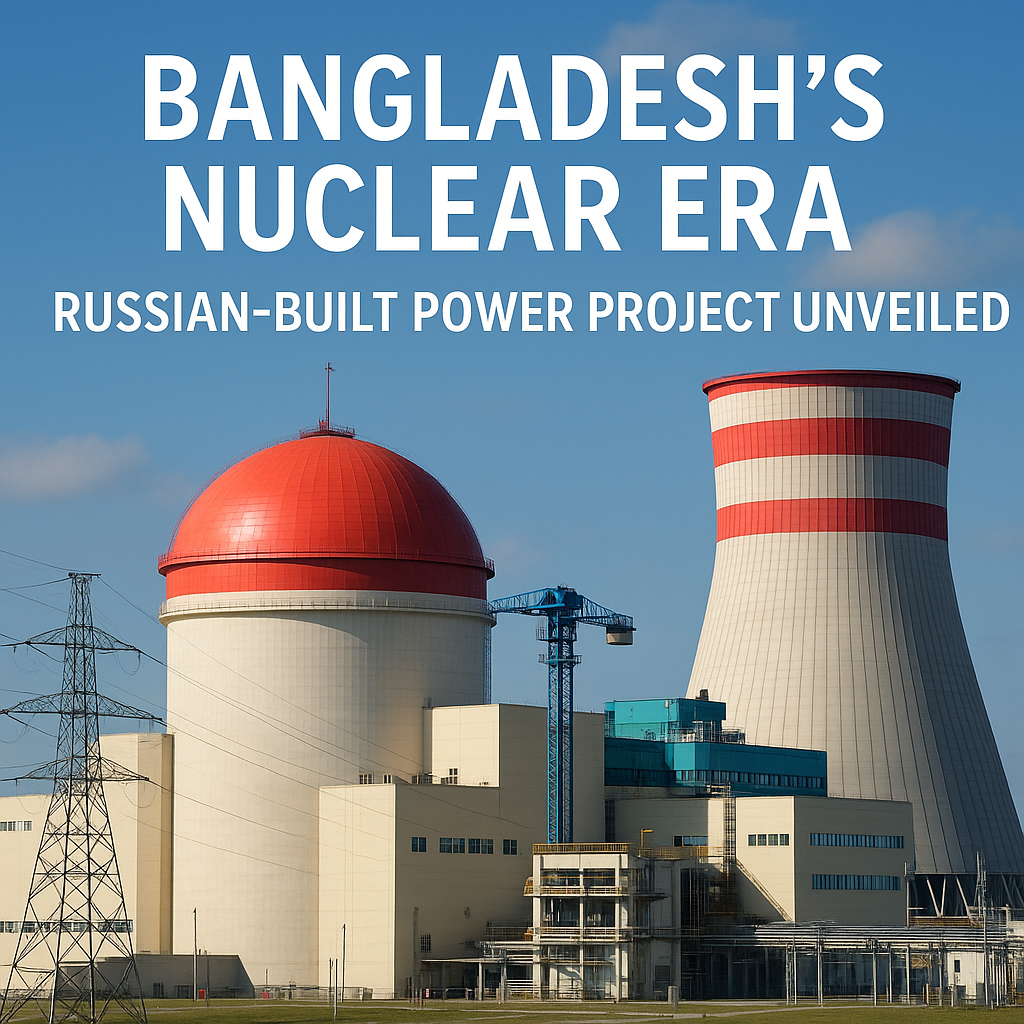
Bangladesh’s Nuclear Era: Russian-Built Power Project Unveiled

Bangladesh’s Nuclear Era: Russian-Built Power Project Unveiled
Bangladesh’s entry into the nuclear domain marks a monumental shift in its energy landscape, with the recent unveiling of a Russian-built nuclear power plant generating significant attention. This project is expected to address the country’s escalating energy demands while positioning it within the broader context of global nuclear energy development.

The Russian Influence and Project Overview
Bangladesh has partnered with Russia to develop the Rooppur Nuclear Power Plant, which is projected to have a capacity of 2,400 megawatts, spread across two reactors. The plant’s construction, which began in 2017, is a joint effort between the Bangladesh Atomic Energy Commission and state-owned Rosatom, Russia’s nuclear energy corporation. The project has been touted by officials as a critical step toward achieving energy security and reducing dependence on fossil fuels.


However, despite these ambitious promises, experts express a mix of optimism and caution. Proponents highlight that nuclear energy will alleviate Bangladesh’s energy crisis, providing a stable supply that can support industrialization and economic growth. Furthermore, as the country grapples with the impacts of climate change, transitioning to nuclear power might align with global sustainability goals.


Conversely, critics raise concerns about the feasibility and safety of such projects, particularly in a region prone to natural disasters. Bangladesh is situated in a seismically active zone, and questions about regulatory oversight, environmental impact, and preparedness for potential crises abound. A history of infrastructural challenges further complicates this ambitious initiative.
Diverse Perspectives on Nuclear Energy in Bangladesh
Supporters’ Viewpoint
Supporters of the Rooppur project argue that nuclear energy is indispensable for Bangladesh’s development. The Bangladesh Power Development Board states that the country aims for 40% of its electricity supply to come from non-fossil fuel sources by 2041. The nuclear sector is envisioned as a vital asset to achieve this target.
Moreover, the project is expected to bring substantial economic benefits, including job creation, technological advancement, and international investment. A recent report by Al Jazeera notes that the initiative has the potential to stimulate not just direct employment within the plant but also in related sectors such as construction, maintenance, and services.
Cautionary Concerns
On the other hand, concerns voiced by environmental activists and safety experts highlight the risks associated with nuclear energy production. The opposition stems from the Fukushima disaster in Japan, leading to heightened scrutiny of nuclear plants worldwide. Many Bangladeshis question whether the benefits outweigh the risks, especially in light of climate-induced natural disasters.
The safety standards of the plant and the regulatory frameworks governing its operation are other focal points of apprehension. Critics argue that the capacity for emergency preparedness must be robust, given Bangladesh’s vulnerability to flooding, cyclones, and other climate-related events. Furthermore, questions arise about the disposal of nuclear waste and the long-term implications for public health and safety.
The Broader Context of Nuclear Energy
As Bangladesh embarks on this nuclear journey, the global context cannot be ignored. Countries like India and Pakistan have also invested heavily in nuclear energy, often viewing it as a strategic asset. The regional dynamics, including geopolitical tensions, have led to concerns about nuclear proliferation and security.
As detailed by multiple sources, Russia’s role as a trusted partner raises questions about power dynamics in South Asia. Some analysts argue that Bangladesh is strategically aligning with Russia amid shifting global alliances, which could redefine the balance of power in the region.
Conclusion: Navigating Uncertainties
Bangladesh stands at a critical juncture as it enters an era defined by nuclear energy. While the Rooppur Nuclear Power Plant promises to usher in an age of energy independence and address the pressing needs of a growing population, it is essential to navigate the complex landscape of safety, environmental concerns, and regional dynamics carefully.
The divergent perspectives surrounding this project encapsulate the nuanced debate surrounding nuclear energy’s role in sustainable development. As Bangladesh forges ahead, the balance between economic growth and safety must be prioritized to ensure that this ambitious project does not come at an unacceptable cost to its citizens and environment. Moving forward, ongoing dialogue, transparency, and rigorous safety protocols will be vital in shaping a nuclear future that serves as a model for responsible energy use in the region.















