
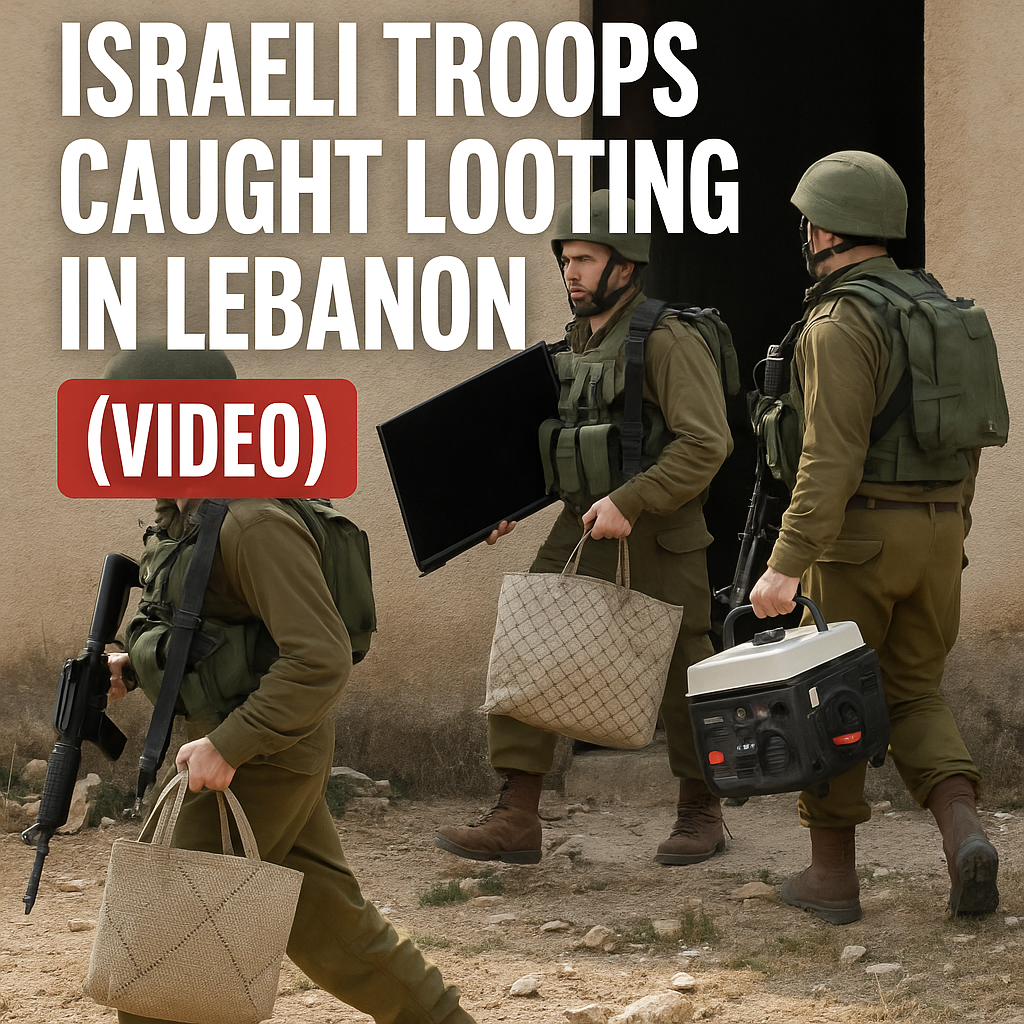
Israeli Troops Caught Looting in Lebanon (VIDEO)

Israeli Troops Caught Looting in Lebanon: Perspectives on Accountability and Consequences
Israeli troops have recently been accused of looting in Lebanon, raising significant questions about military conduct and the broader implications of such actions in conflict zones. This incident, highlighted by footage circulating on social media, has sparked a wave of reactions from various stakeholders, including government officials, human rights organizations, and the public.

The Incident and Immediate Reactions
Reports emerged detailing a particular event where Israeli soldiers were allegedly caught on video looting property in Lebanon during a military operation. The footage has drawn international attention, igniting discussions on the ethical responsibilities of armed forces amid ongoing hostilities.


The Lebanese government swiftly condemned the alleged actions, labeling them as a violation of international laws that govern armed conflicts. In particular, Lebanon’s Foreign Minister emphasized that such behavior could be classified as a war crime, urging the international community to take action. This sentiment was echoed by various human rights organizations, who have underscored the need for accountability in military practices.


However, Israeli officials have responded by downplaying the incident, categorizing the behavior of the soldiers as isolated and not representative of their military ethos. They stated, “The Israel Defense Forces (IDF) conducts itself under strict rules of engagement and does not tolerate misconduct.” This defense underscores a recurring theme in military conflicts where the actions of individuals can reflect poorly on an entire organization.
Perspectives from Human Rights Organizations
Human rights advocates have expressed deep concern over the potential normalization of such conduct in hostile environments. Reports from organizations like Human Rights Watch highlight patterns of misconduct by armed forces during periods of conflict. They argue that if incidents like this go unpunished, it sets a dangerous precedent where soldiers may feel emboldened to act without regard for the laws of war.
Concurrently, there is a recognition that the emotional and psychological toll of conflict can lead to instances of stress and breakdown in ethical standards among soldiers. Many advocates assert that while accountability is crucial, it is equally important to consider the impacts of prolonged military engagement on servicemen and -women.
The Broader Context of Israeli-Lebanese Relations
The backdrop of Israeli-Lebanese relations adds another layer of complexity to this incident. Historically fraught with tension, the two nations have seen cycles of violence punctuated by periods of uneasy ceasefire. The recent flare-up of hostilities, compounded by the ongoing political and social instability in the region, creates an environment where military engagement often escalates beyond its intended scope.
In light of this context, the act of looting may be viewed not only as an isolated event but as potentially reflective of deeper systemic issues within military operations. Analysts argue that a lack of clear oversight and frameworks for accountability can lead to an environment conducive to misconduct. Thus, the responsibility may extend beyond the individual soldiers involved to higher command structures that formulate and oversee military engagement rules.
Analyzing the Path Forward
Understanding the implications of these actions requires a comprehensive approach that considers multiple viewpoints. The urgent call for accountability must be balanced with an understanding of the broader socio-political context. International bodies, including the United Nations, are increasingly called upon to mediate and potentially intervene in such conflicts to ensure compliance with international laws.
Moreover, efforts toward reconciliation and conflict resolution are integral to preventing future incidents. Engaging in dialogue and peace-building initiatives can help address underlying grievances that may lead to military actions spiraling out of control.
Conclusion: The Complexity of Accountability
The incident involving Israeli troops looting in Lebanon represents a microcosm of the larger challenges inherent in military conflicts. It underscores the critical need for accountability, ethical conduct, and oversight in armed forces. As the story evolves, it also highlights the complexities of military engagement and the necessity for concerted efforts towards peace and stability in the region.
As various stakeholders weigh in, it becomes evident that the path forward lies not only in addressing wrongful behaviors but also in fostering an environment where the potential for such misconduct is minimized. Ultimately, achieving lasting peace requires both accountability for actions and a comprehensive understanding of the broader context in which these conflicts unfold.















