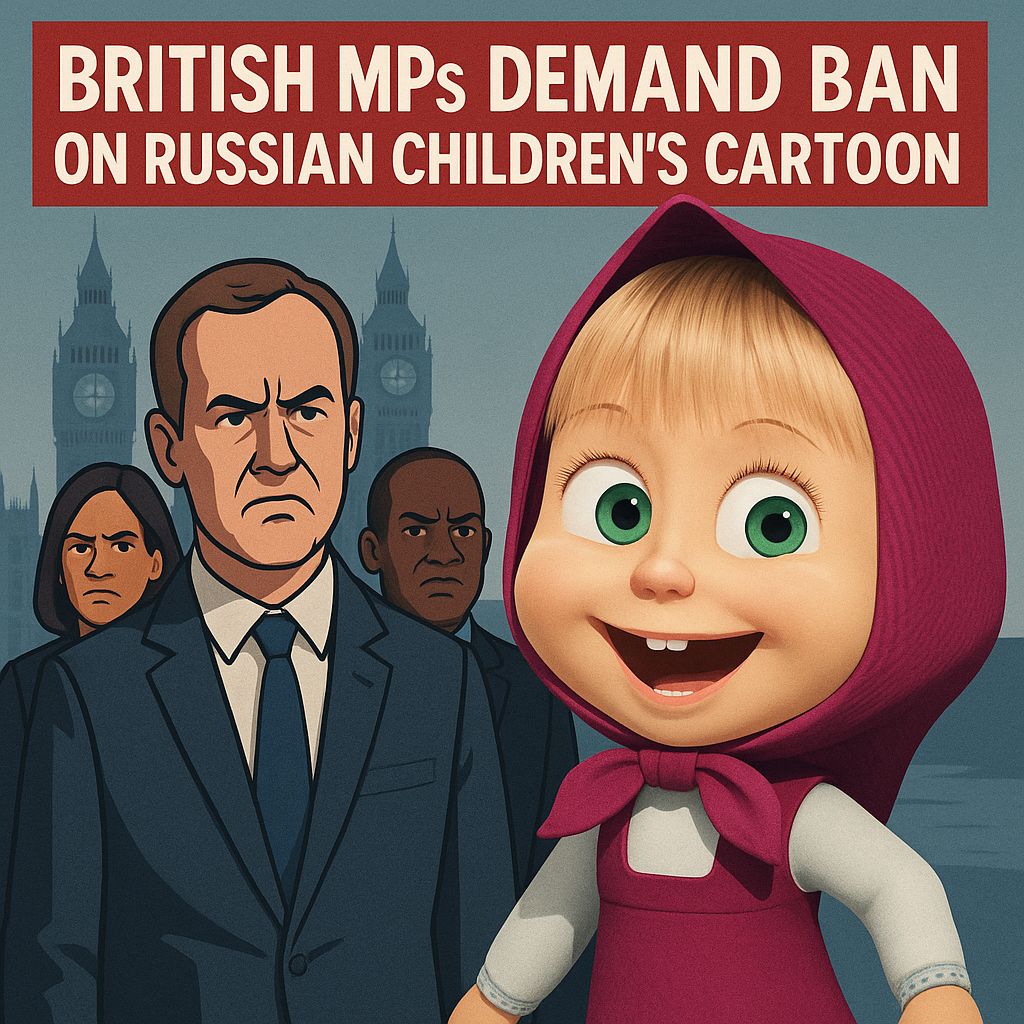
British MPs Demand Ban on Russian Children’s Cartoon

In a move that underscores the ongoing tensions between the UK and Russia, British MPs are calling for a ban on a Russian children’s cartoon that they claim promotes propaganda. The controversy centers around the animated series “Masha and the Bear,” which has garnered widespread acclaim in many countries but has now become a focal point of political debate in the UK.

Understanding the Controversy: The Cartoon in Question
“Masha and the Bear” features a mischievous young girl, Masha, and a bear as they navigate various adventures. While it has been praised for its educational content and creativity, some UK lawmakers believe that it subtly promotes Russian cultural narratives that could be viewed as conducive to Kremlin propaganda. Conservative MP David Warburton has been one of the loudest voices calling for the ban, arguing that such shows can shape children’s perceptions of Russia in a favorable light at a time when relations are strained.


The MPs’ concerns highlight a broader fear regarding the influence of foreign media content on young audiences. They argue that in the context of ongoing military conflicts and geopolitical tensions, exposure to Russian media can be risky. During a parliamentary session, Warburton stated, “We must be vigilant about the kinds of messages that our children are absorbing, especially given the context of the current world affairs.” This perspective suggests that even seemingly innocuous content can have underlying messages that shape young minds.


Mixed Reactions: Support and Opposition to the Ban
Amid the push for a ban, reactions to the MPs’ demands have been decidedly mixed. On one side, many parents and educators support the MPs’ call, fearing that exposure to Russian children’s content may inadvertently normalize Russian political stances among children. An educator speaking anonymously mentioned, “It’s crucial to scrutinize what our children consume. It’s not just about entertainment; it’s about shaping their worldview.”
Conversely, critics of the proposed ban argue that prohibiting media based on country of origin undermines the very principles of freedom of expression. Organizations advocating for children’s rights contend that censoring content can create a slippery slope where various media, regardless of their educational value, might be unjustly targeted based on political climates. A representative from a leading children’s advocacy group commented, “We should be fostering understanding and dialogue rather than isolation and censorship. Banning a cartoon over political fears may send the wrong message to our kids about the importance of diversity and global perspectives.”
Looking Ahead: The Implications of the Proposed Ban
The discourse surrounding a potential ban on Russian children’s cartoons extends beyond entertainment; it encompasses cultural, educational, and political dimensions. Proponents view this move as imperative for safeguarding young minds from perceived ideological biases. However, the implications of such a ban could have significant repercussions for media diversity in the UK.
Should the ban go into effect, it may set a precedent for other countries to enact similar restrictions on foreign content, particularly from nations with which they have tense relationships. This scenario raises questions about the standards by which content is evaluated and who ultimately decides what is suitable for children. The potential fallout from such actions could stifle artistic and cultural exchange, ultimately depriving children of valuable storytelling and learning opportunities from diverse perspectives.
Conclusion: Weighing Choices in a Complex Landscape
As the debate continues, it is evident that the issue is far from black and white. With concerns about influence and propaganda on one side and the importance of artistic freedom on the other, the UK finds itself at a crossroads. The call for a ban on Russian children’s cartoons encapsulates the broader complexities of cultural diplomacy and the role of media in shaping young people’s understanding of the world.
In navigating these waters, it becomes crucial for politicians, educators, and parents alike to engage in open dialogue about the content available to children, while also considering the potential impact of censorship. For now, the question remains: can society balance the need for vigilance against propaganda with the necessity of fostering a well-rounded cultural education for future generations?