The AI Revolution in Broadcasting: How Intelligent Tech is Reshaping Newsrooms and Content Production
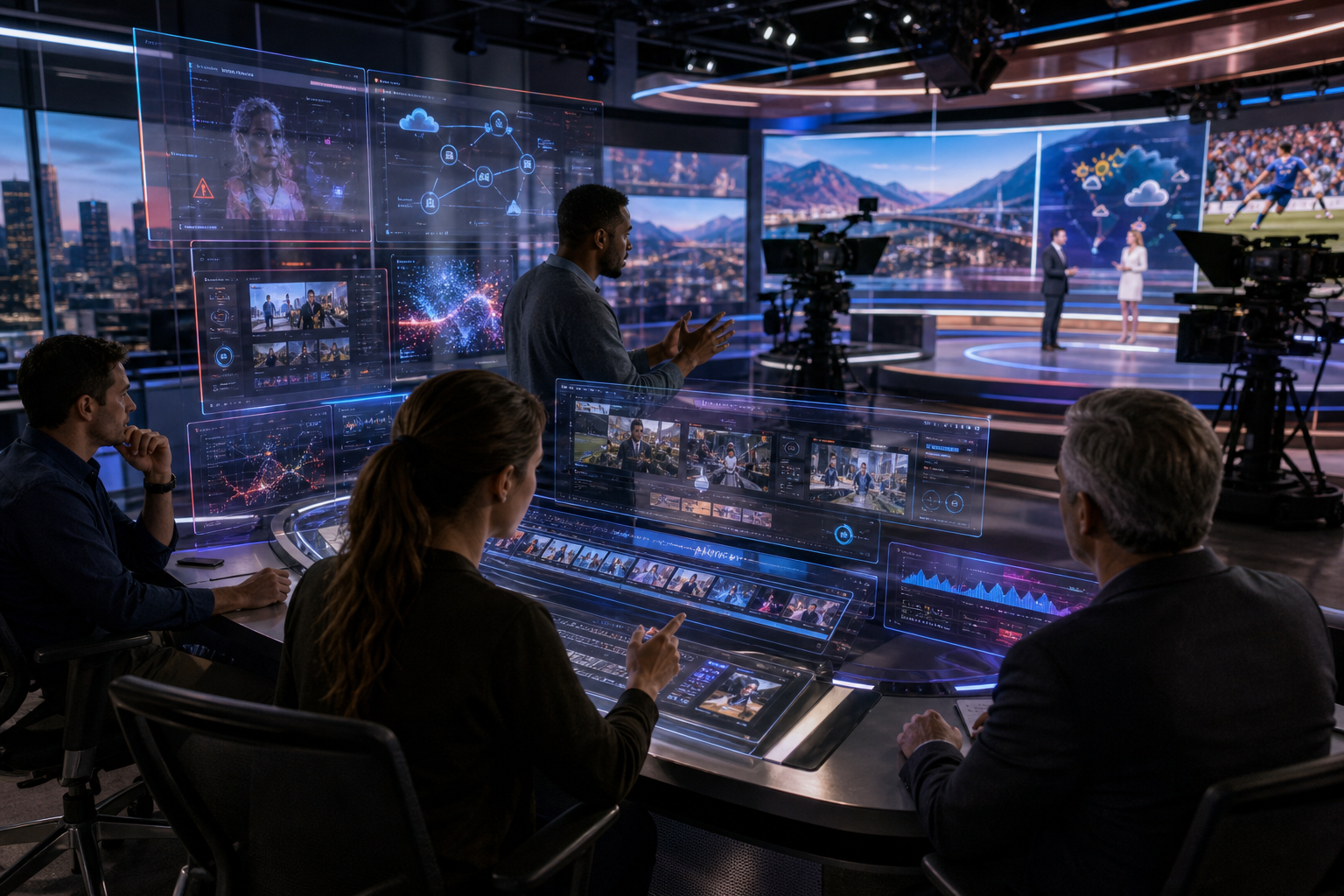
Artificial intelligence is transforming broadcasting by automating video analysis, editing, scheduling, content distribution, and audience-driven programming. AI-powered virtual production and visual tools are also enabling immersive environments, augmented reality graphics, and broader access to advanced production capabilities.
Adoption raises concerns about deepfakes, privacy, algorithmic bias, infrastructure costs, and staff training. AI is expected to support rather than replace journalists and production teams as broadcasters integrate it into existing workflows.
By: Jawadia Tokhi

The broadcasting and media industry is currently undergoing its most significant transformation since the shift from analog to digital. At the heart of this evolution lies Artificial Intelligence (AI). No longer just a tool for automated subtitles or basic editing, AI is now deeply integrated into the core infrastructure of modern newsrooms, streaming platforms, and content production studios.

As the industry prepares for major global events like the NAB Show, it is clear that the conversation has shifted from “if” AI will be adopted to “how” it will define the future of broadcasting.From Manual Editing to Intelligent AutomationFor decades, broadcasters relied on manual workflows for video editing, scheduling, and content distribution. Today, AI-driven platforms are automating these complex tasks.

Machine learning algorithms can now analyze hours of raw footage in minutes, identifying key moments, generating highlight reels, and even suggesting optimal broadcast schedules based on real-time audience data. This allows journalists and producers to focus on storytelling and investigative reporting rather than getting bogged down in technical logistics.
The Rise of Virtual Production and AI-Driven VisualsThe visual language of broadcasting is also changing. AI-powered virtual production tools are enabling studios to create immersive, photorealistic environments without the need for physical sets. From real-time weather visualizations to augmented reality (AR) graphics during live sports, AI is helping broadcasters deliver more engaging and dynamic content to viewers. This technology is not just limited to large networks; smaller production houses are also leveraging cloud-based AI tools to compete on a global scale.
Challenges and the Road AheadHowever, this rapid adoption comes with challenges. Industry leaders are actively debating the ethical implications of AI, including concerns about deepfakes, data privacy, and the potential for algorithmic bias in news curation. Furthermore, integrating AI into legacy broadcast systems requires significant investment in infrastructure and staff training.
As we look toward the future, the role of AI in broadcasting will only expand. It will not replace the human element of journalism, but it will undoubtedly serve as a powerful co-pilot for producers, editors, and reporters. For the media industry, embracing this intelligent technology is no longer an option—it is a necessity for survival and growth in the digital age.