
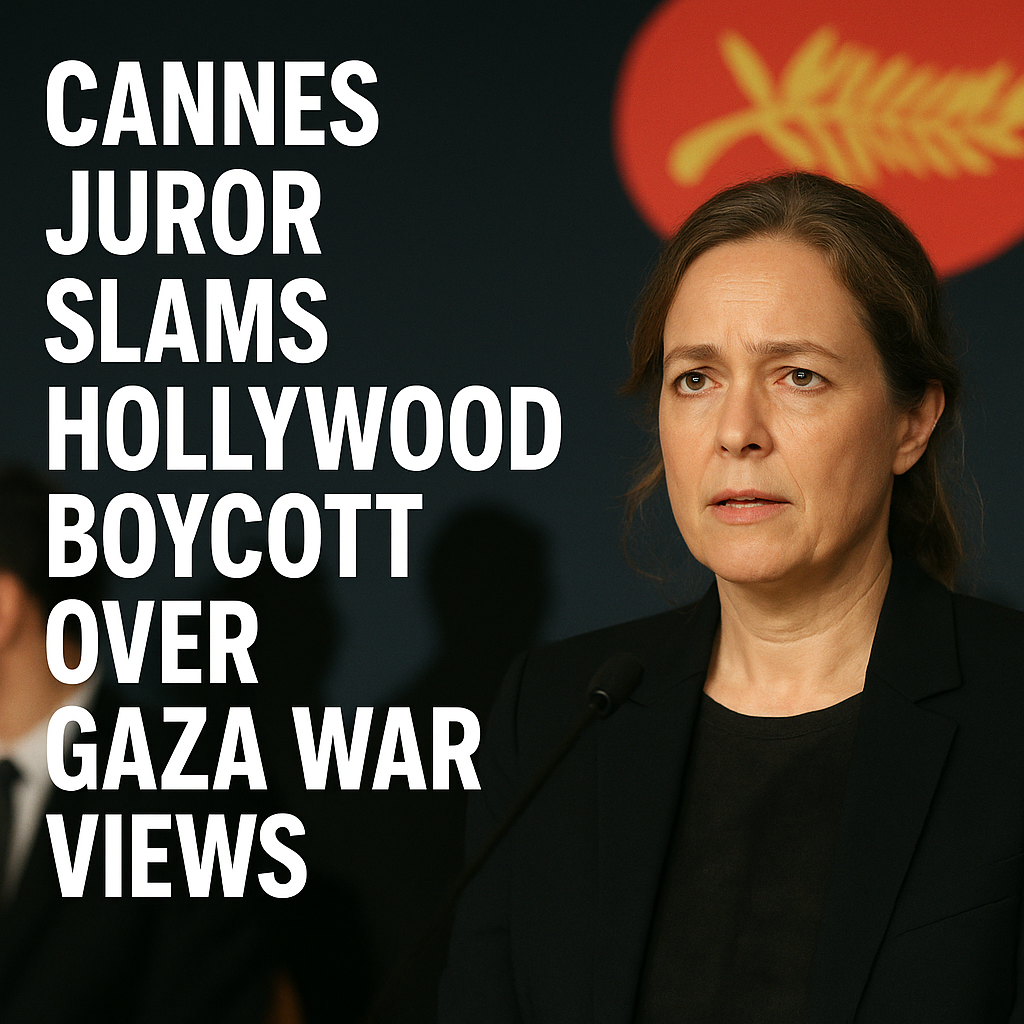
Cannes Juror Slams Hollywood Boycott Over Gaza War Views

Cannes Juror Slams Hollywood Boycott Over Gaza War Views
In recent discussions surrounding the Gaza conflict, a Cannes juror has taken a firm stand against what they perceive as a Hollywood boycott of individuals who express views on the war. This incident highlights the complexities of free speech in the entertainment industry, particularly when political issues intersect with personal beliefs and professional consequences.

The Backlash Against Hollywood’s Boycott
The Cannes juror’s comments come at a time when the entertainment industry is grappling with stark divisions over the ongoing crisis in Gaza. In an age where social media amplifies voices, artists who express support for Palestine or criticism of Israeli actions have faced significant backlash from sections of the industry.


Many actors and filmmakers have found themselves facing scrutiny for their opinions. Some high-profile individuals have faced job losses or were sidelined due to their public statements, raising questions about the limits of artistic expression when tethered to political stances. The Cannes juror, during a panel discussion, articulated that this response not only stifles personal expression but also hampers the industry’s diverse tapestry of opinions. The juror stressed the importance of creating an environment where differing viewpoints can coexist, arguing that this is fundamental to the spirit of artistic freedom.


A Divided Industry: Perspectives and Reactions
The reaction to the Cannes juror’s remarks has been mixed, illustrating the complex landscape of political discourse within Hollywood. Some members of the industry have rallied behind the juror, advocating for a more inclusive environment that encourages open dialogue. They argue that artists should not be punished for their views, irrespective of how controversial those views may be.
However, others within Hollywood defend the initiatives that have led to perceived boycotts, claiming that they serve as a necessary mechanism to uphold a stance against perceived injustices. They highlight how public sentiment and corporate responsibility often shape the actions of studios and production companies. For them, taking a stand against certain viewpoints is a way to reflect audience values and moral imperatives in the face of global crises.
The discourse surrounding this issue is complex, with various artists taking different paths. Some choose to remain silent, navigating a landscape rife with potential repercussions, while others are emboldened by the outrage, using their platforms to raise awareness. This divergence illustrates a larger cultural struggle within the industry: should artists be free to speak their minds, or should they remain cautious of the implications of their statements?
The Implications for Cultural Discourse
The Cannes juror’s critique raises important questions about the implications of a boycott. The potential consequences could extend beyond immediate job losses and into the broader realm of cultural discourse. When artists feel pressured to align with certain positions or face repercussions for their beliefs, the landscape of creativity itself may become limited.
Moreover, the juror’s remarks highlight the need for critical introspection within Hollywood. Is there a risk that the industry’s response could mirror a form of censorship, albeit in a more socially acceptable guise? The fear of backlash may lead to self-censorship, depriving the audience of diverse narratives from the artistic community.
Support for artistic freedom is crucial, but it must balance with accountability regarding the perspectives being shared. The intersection of art and activism can lead to powerful outcomes, yet it also risks alienating those who may not share the same views. As the Cannes juror pointed out, the challenge lies in fostering an environment where criticism and support can coexist without leading to ostracization.
Conclusion
The Cannes juror’s denunciation of Hollywood’s response to opinions on the Gaza conflict serves as a crucial reminder of the industry’s complicated relationship with political discourse. While the call for an open dialogue is laudable, it is important for the entertainment sector to navigate this terrain thoughtfully—acknowledging both the protection of artistic expression and the responsibility that comes with influence.
As dialogues continue to evolve, so too must the responses from within the industry. Creating that balance will be key in ensuring that the art remains a place where multiple perspectives can thrive, challenging audiences and fostering a deeper understanding of the complexities inherent in global issues.















