
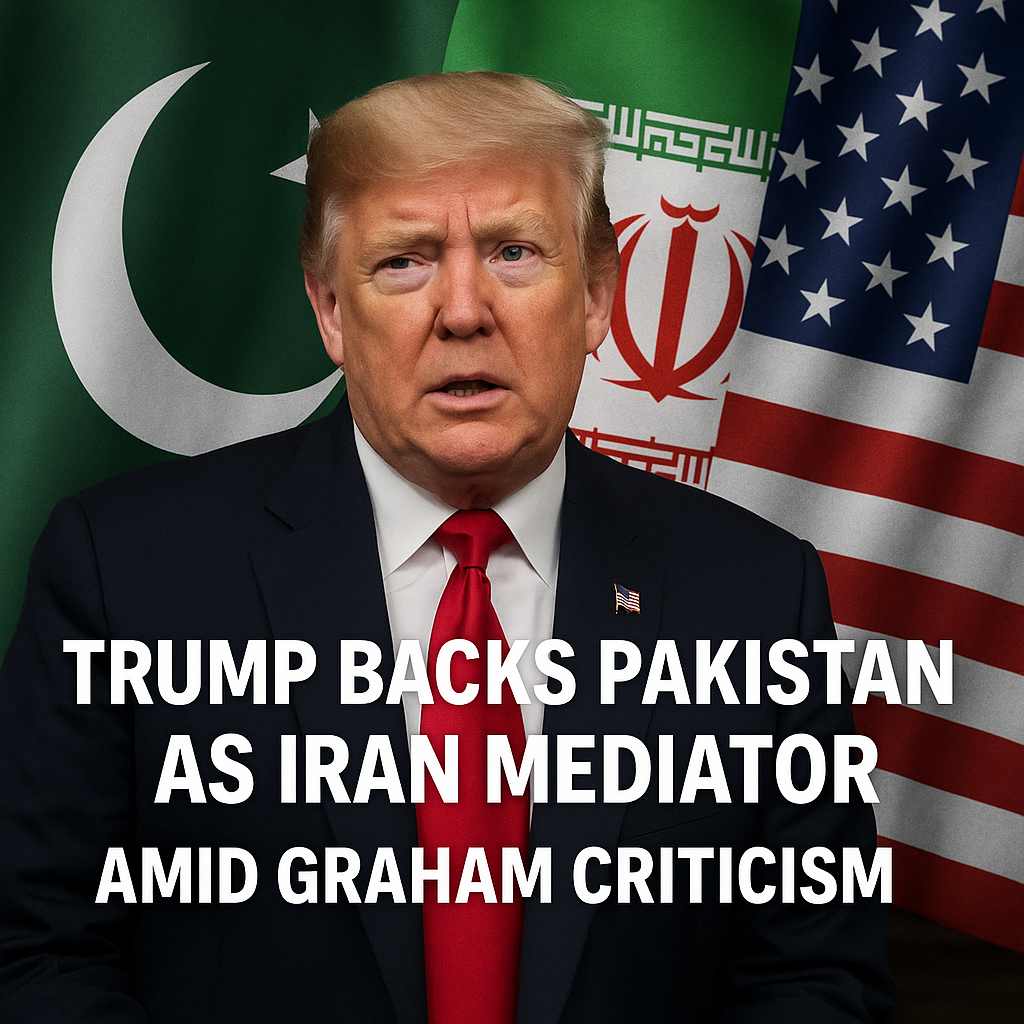
Trump Backs Pakistan as Iran Mediator Amid Graham Criticism

In a surprising turn of events, former President Donald Trump has publicly endorsed Pakistan as a potential mediator in the ongoing tensions between Iran and the United States. This statement comes in the wake of criticism from Senator Lindsey Graham, who has voiced skepticism regarding Pakistan’s role and effectiveness in international diplomacy. Trump’s support for Islamabad presents an intriguing development, especially given the complicated history between the countries involved.

The Context of Trump’s Endorsement
Trump’s announcement follows a series of escalations in U.S.-Iran relations, notably after the U.S. exit from the Iran nuclear agreement. In this backdrop, any initiative aimed at de-escalating tensions can be seen as a positive step by some observers. Trump’s comments suggest a willingness to explore non-traditional diplomatic avenues, which is a hallmark of his approach to foreign relations.


Supporters of Trump’s decision argue that Pakistan has unique ties with Iran, which could facilitate dialogue that other nations might find difficult. Historically, Pakistan has maintained its relationship with Iran, balancing its ties closely with the U.S. This dual relationship puts Pakistan in a strategic position to potentially mediate effectively. Moreover, both countries share concerns about extremist groups operating within their borders, providing a basis for cooperative dialogue.


Graham’s Concerns: A Skeptical Viewpoint
Contrasting Trump’s views, Lindsey Graham is firmly against the idea of Pakistan stepping into a mediating role. He has raised questions regarding Pakistan’s longstanding support for militant groups that could undermine peace efforts. Graham’s criticism emphasizes a more hawkish stance, arguing that trusting Pakistan could lead to complications, especially given the nation’s history in regional politics.
This skepticism is rooted in Pakistan’s complicated relationships with both Iran and militant organizations, causing many to question its reliability as a mediator. Graham and other critics fear that engaging Pakistan could be counterproductive, as its historical behavior suggests a lack of commitment to candid dialogue and conflict resolution.
The Complicated International Dynamics
The juxtaposition of these viewpoints highlights the complexity of international diplomacy concerning Iran. While Trump’s endorsement of Pakistan advocates for broader engagement, critics like Graham argue for a more cautious approach. The divergent opinions underscore the complicated geopolitics at play.
In addition to mediating between Iran and the U.S., Pakistan’s involvement could impact its relationships with regional powers like Saudi Arabia and India. If Pakistan were to assume a mediating role effectively, it could bolster its international standing and stabilize its own region. This potential outcome poses a double-edged sword: while it could benefit Pakistan, it may also aggravate existing tensions with some neighboring countries.
An Uncertain Future
Given the nuances of this situation, one must approach Trump’s endorsement and Graham’s criticisms with caution. There are significant uncertainties surrounding Pakistan’s actual capacity to mediate effectively. While many observers may welcome the fresh perspective brought forth by Trump, Graham’s apprehensions are valid and deserve consideration.
As the situation evolves, the international community will be watching closely. Will Trump’s gamble on Pakistan prove beneficial for U.S.-Iran relations, or will Graham’s reservations about Islamabad’s role be validated? Only time will tell, but the discussions sparked by these contrasting perspectives are crucial in shaping the future of diplomatic engagement in this complex landscape.
In the broader context of U.S. foreign policy, Trump’s endorsement of Pakistan as a mediator is emblematic of a shift towards more unconventional diplomatic channels. However, the divided opinions within American policymaking circles serve as a reminder of the challenges ahead. The balance between engagement and skepticism will be pivotal in determining the effectiveness of any mediation efforts involving Iran and other regional actors.















