
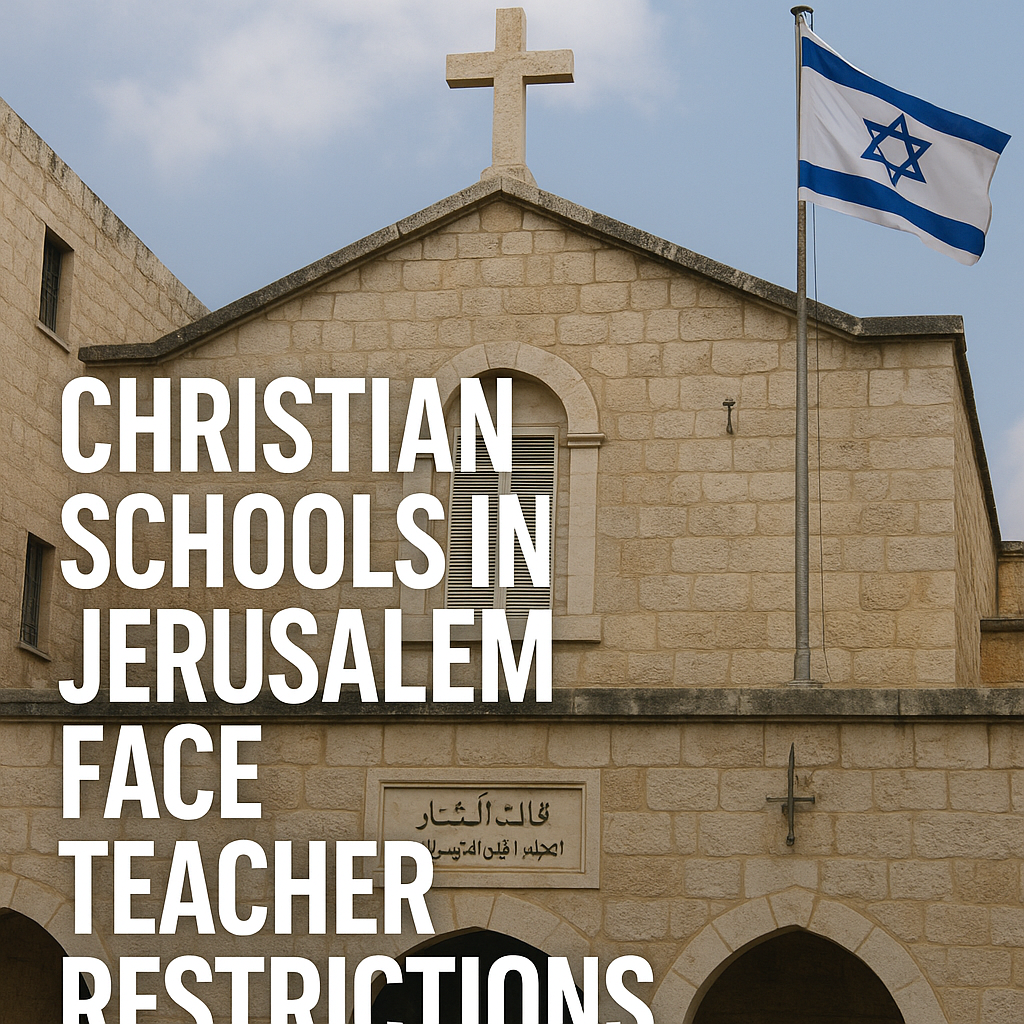
Christian Schools in Jerusalem Face Teacher Restrictions

Christian Schools in Jerusalem Face Teacher Restrictions
Christian schools in Jerusalem are currently navigating a complex landscape marked by new restrictions on teacher recruitment and retention. This situation reflects broader tensions between religious communities and governing authorities, raising questions about educational autonomy, cultural identity, and religious freedom.

The Background of Teacher Restrictions
Recent developments have seen Israeli authorities impose strict regulations on the hiring of teachers in Christian schools, particularly those located in the West Bank. These restrictions, primarily aimed at ensuring compliance with educational standards, have raised alarms among Christian communities that view them as a direct challenge to their autonomy and religious expression.


According to reports from various news outlets, the Israeli Ministry of Education has mandated that teachers in these schools must hold certain qualifications and certifications recognized by the state. While proponents argue that these regulations are necessary for maintaining educational quality, many in the affected communities contend that they undermine the schools’ foundational Christian values.


The Impact on Education
This clash of interests significantly impacts how Christian schools operate. Many institutions have been forced to reassess their hiring practices, resulting in a decline in the availability of qualified teachers who share the religious and cultural backgrounds required to embody the ethos of these schools. As stated in a recent article from RT, some schools have reported difficulty in attracting educators who not only meet state requirements but also resonate with the students’ faith and traditions.
This predicament is exacerbated by the demographic challenges faced by Christian communities in Jerusalem and the West Bank. With a declining Christian population, these schools serve not only an educational purpose but also act as bastions for cultural preservation. As a result, the newly imposed restrictions could inadvertently contribute to the erosion of cultural identity among Christian youth.
Balancing Educational Standards and Religious Autonomy
The ongoing debate raises essential questions about the balance between upholding educational standards and respecting religious autonomy. Advocates for state oversight argue that uniform qualifications can prevent disparity in educational quality across different schools, thereby benefiting all students. They claim that the restrictions are not specifically targeting Christian institutions but are part of a broader strategy to enhance educational standards.
Conversely, critics assert that the implementation of such policies poses a significant threat to the unique cultural and religious identity of Christian schools. According to perspectives shared on Al Jazeera, many educators and parents feel that the regulations serve to marginalize Christian communities further, pushing them toward greater sectarian divisions.
Balancing the need for educational standardization with the rights of religious minorities presents a substantial challenge. Administrators of Christian schools express apprehension about the potential for a homogenized educational environment that does not reflect the diverse realities of Jerusalem’s communities.
Voices of Concern and Hope
Amid these challenges, voices from the affected Christian communities underscore the resilience and commitment of educators and families to maintain their cultural identity. Schools are adapting by creating programs that highlight their religious teachings, even as they comply with state rules.
Some have found creative solutions, such as partnerships with international organizations that support teacher training and development. This collaborative effort aims to bridge the gap created by state regulations while allowing schools to remain true to their religious principles. The commitment to education within these communities remains strong, illustrating a determination to adapt without entirely sacrificing their identity.
Conclusion: Navigating a Complex Landscape
The situation of Christian schools in Jerusalem amidst teacher restrictions is emblematic of broader tensions facing religious minorities in the region. While the need for educational standards is acknowledged, the implications for cultural identity and religious freedom cannot be overlooked. As communities navigate these challenges, the outcomes will likely influence not only the future of Christian education in Jerusalem but also the dynamic between state and religious entities in a region fraught with complexity.
Ultimately, finding a resolution that respects both educational standards and the rich tapestry of cultural identities is essential for fostering an inclusive society. The path forward requires dialogue, understanding, and, most importantly, a commitment to preserving the unique voices that contribute to the vibrant mosaic of Jerusalem’s communities.















