
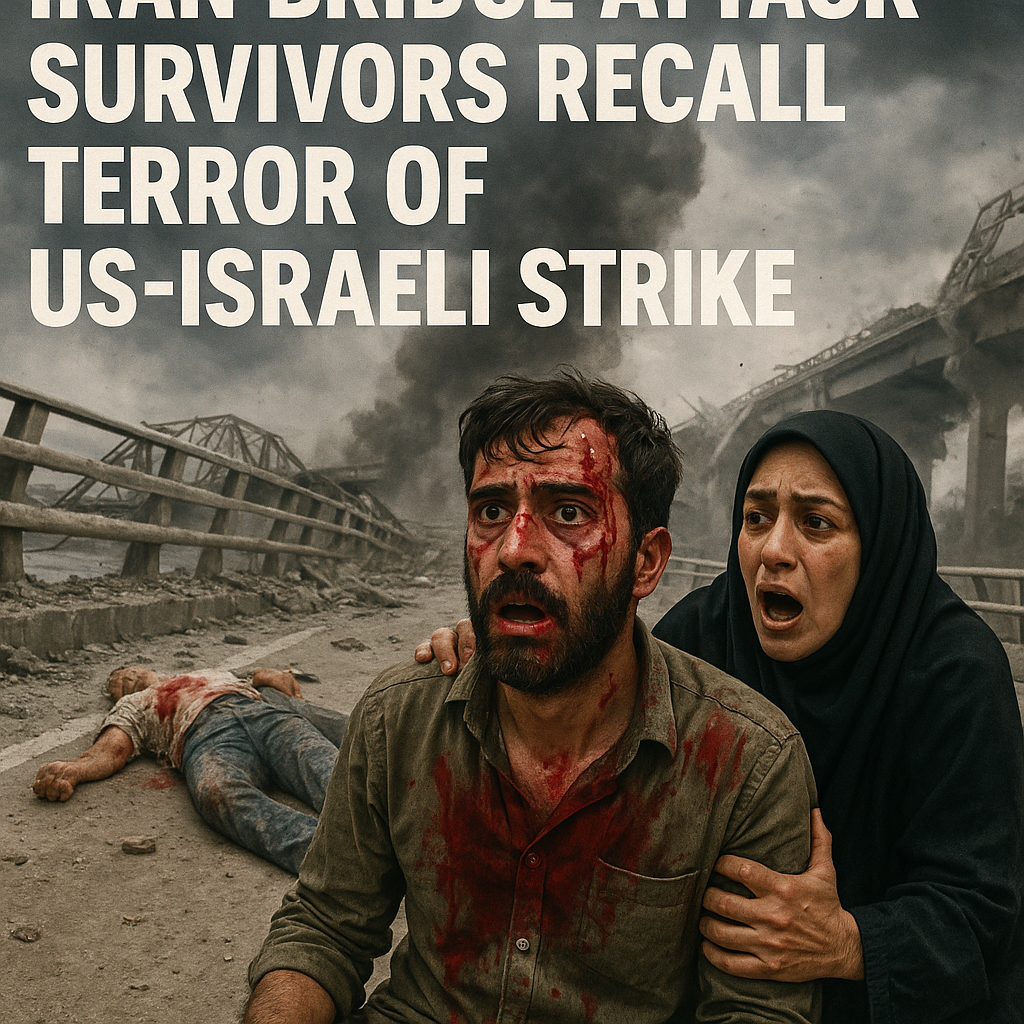
Iran Bridge Attack Survivors Recall Terror of US-Israeli Strike

Survivors of Iran Bridge Attack Recall Terror of US-Israeli Strike
The recent attack on a bridge in Iran has ignited debate and concern, with survivors recounting harrowing experiences that highlight the complexities of geopolitical tensions in the region. As details unfold, it’s imperative to examine these personal narratives alongside broader political implications.

Eyewitness Accounts: A Narrative of Fear and Chaos
Survivors of the bridge attack have shared chilling stories that vividly capture the moment of terror when the US-Israeli strike took place. Reports indicate that a sudden blast shattered the peace, engulfing bystanders in chaos. One survivor described running for cover, feeling the ground tremble beneath their feet, and witnessing the immediate aftermath of destruction. This emotional recounting serves as a critical reminder of the human cost associated with military actions.


The Broader Context of the Attack
The attack did not occur in isolation but rather as part of a series of escalations involving Iran, the US, and Israel. Analysts are keen to understand the motivations behind such strikes, with some suggesting that they are attempts to curb Iran’s influence in the region. These military maneuvers are often justified through the lens of national security. However, they also raise urgent questions about the implications for civilian safety and the ethical ramifications of such actions.


While some narratives focus on the rightful necessity of these operations to neutralize perceived threats from Iran, others point to the indiscriminate nature of warfare, emphasizing that civilians often bear the brunt of political conflicts. The contrasting viewpoints underscore a growing concern around the use of force and its ramifications on innocents caught in the crossfire.
The Human Cost of Geopolitical Tensions
Drawing from various sources, it’s evident that the attack hits at the heart of a broader humanitarian crisis. Human rights organizations highlight that military operations in such high-stakes environments often lead to significant civilian casualties and fundamental rights violations. Individuals displaced or harmed in these strikes find themselves not only grappling with physical injuries but also enduring psychological trauma.
Perspectives on Responsibility and Consequence
With international relations becoming increasingly strained, calls for accountability resonate louder. While some nations justify their military actions through legal frameworks, the resulting loss of life and community disruption raises potent ethical dilemmas.
The absence of a clear consensus on the justification for military action complicates discussions around responsibility. Some analysts argue that the collateral damage incurred in attacks like the bridge strike cannot be overlooked. Others, however, suggest that the ongoing conflicts necessitate decisive actions to prevent more significant threats from emerging.
These dichotomies shed light on the often overlooked personal toll that global politics exacts. The survivors’ stories are not merely anecdotes; they are crucial narratives that remind the international community of the stakes involved in military actions.
Addressing the Uncertainties
As we scrutinize the range of perspectives stemming from this event, it’s vital to acknowledge the uncertainties inherent in such complex situations. There are no straightforward answers or easy justifications when individual lives are caught against the backdrop of national interests. Each testimony brings to light the multilayered nature of this conflict, highlighting that while military might may achieve short-term objectives, the long-term consequences for civilians remain grave and unpredictable.
In conclusion, the chilling experiences of the survivors of the Iran bridge attack serve as a poignant reminder of the dire human implications central to military conflicts. As various perspectives clash, the focus must remain on crafting a future where geopolitical strategies align more closely with humanitarian imperatives, fostering a sense of safety rather than fear. In this turbulent landscape, the voices of those affected are a call to prioritize humanity above geopolitical calculations.















