
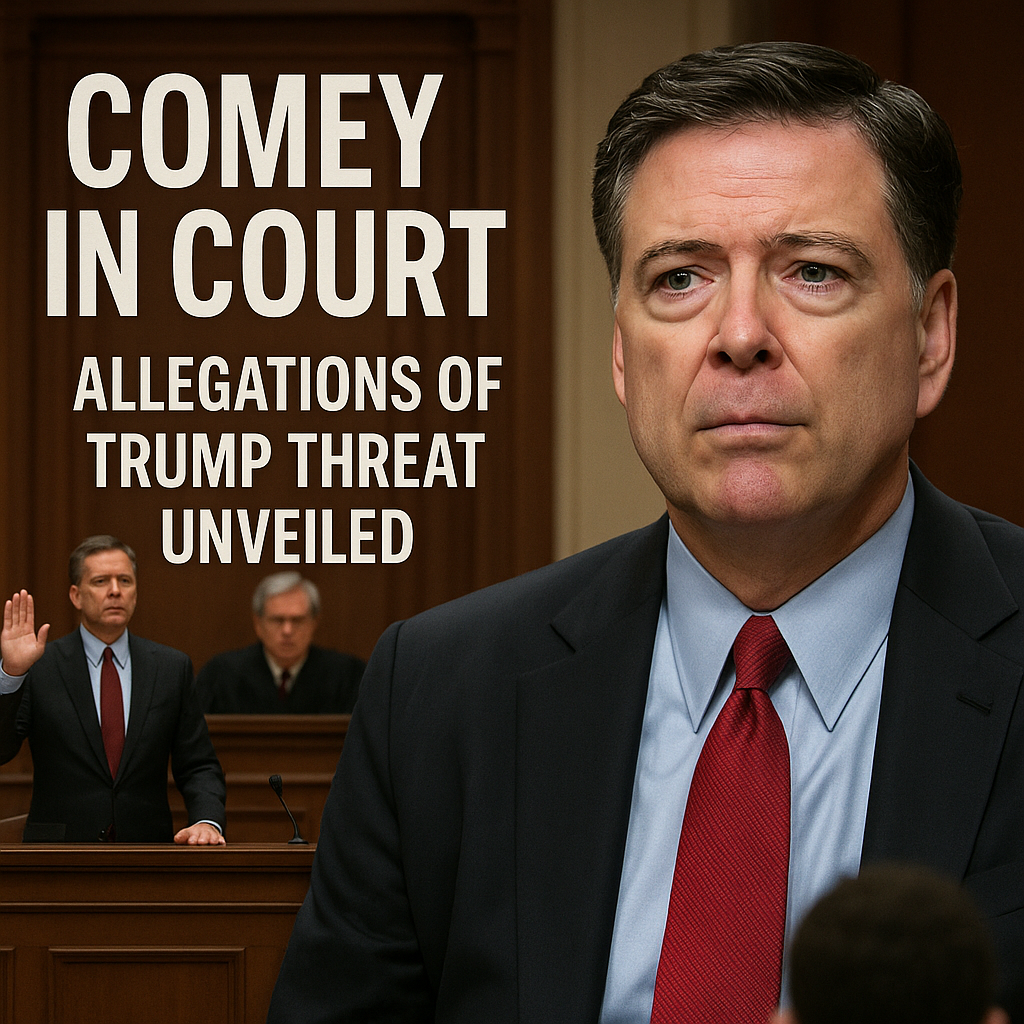
Comey in Court: Allegations of Trump Threat Unveiled

Comey in Court: Allegations of Trump Threat Unveiled
In a courtroom drama that has captured national attention, former FBI Director James Comey’s recent appearance has unveiled serious allegations involving Donald Trump. The proceedings have sparked renewed discussions about the intersection of law enforcement, political pressure, and executive power in the United States.

The Testimony: Key Allegations Emerged
During his court appearance, Comey detailed claims that Trump exerted undue pressure on him and other officials within the FBI regarding ongoing investigations. According to Comey, Trump allegedly made threats that raised concerns among top justice officials. This assertion brings to light several critical questions about the limits of presidential authority and the independence of federal investigations.


Comey described an atmosphere where political influence may have encroached upon the operational integrity of the FBI. His statements align with earlier testimonies regarding the former president’s interactions with FBI personnel, painting a picture of a tense relationship between Trump and law enforcement agents.


One standout moment from the court proceedings included Comey referencing a conversation in which Trump reportedly intimidated him concerning the investigation into Russian interference in the 2016 election. This narrative resonates with previously aired grievances about the manner in which Trump exercised his presidential powers and the resulting implications for the rule of law.
Diverging Perspectives on Legal and Political Implications
The situation raises divergent opinions about the ramifications of Comey’s claims. Supporters of Trump argue that these allegations are politically motivated and aim to discredit his presidency. They contend that Comey’s testimony may reflect a personal vendetta rather than an objective interpretation of events. One prominent voice in this camp, as noted by commentators on various platforms, asserted that the allegations stem from a broader narrative to destabilize Trump’s legacy.
Conversely, critics suggest that such behavior from a sitting president undermines democratic institutions and sets a troubling precedent. Legal analysts have expressed concerns that Comey’s accounts, if validated, could lead to more extensive consequences for Trump’s political future. They argue that while presidents have discretion over appointments and investigations, any implication of coercion poses serious ethical and legal questions.
Multiple legal experts have weighed in, noting that if Comey’s allegations hold water, they could fuel further investigations into Trump’s presidency. The expectations for accountability within the highest levels of government remains a hot topic, with many calling for reform to safeguard against any future instances of political meddling.
The Court’s Role and Public Reaction
As these unfolding events continue to resonate throughout public discourse, one central role of the court is to evaluate the credibility of the evidence presented. Observers from both sides of the political spectrum are watching closely to ascertain how the judicial system navigates these densely layered allegations.
Public opinion appears to be sharply divided. Proponents of Comey argue that his persistence in coming forward despite backlash reflects a commitment to upholding democratic principles. In contrast, a significant faction sees this as an extension of a so-called “witch hunt,” aimed at undermining Trump’s authority and legacy.
There is also a critical reflection on how the media has framed these developments. Coverage has varied widely, with some outlets amplifying Trump’s denials while others focus on Comey’s perspective. This divergence in reporting underscores the complex dynamics at play as the American public seeks to understand the truth amid competing narratives.
Conclusion: Navigating Uncertainty in Political Oversight
As Comey’s court appearance concludes, the broader implications of his testimony remain uncertain. While some argue that Comey’s claims warrant significant legal scrutiny, others dismiss them as partisan attacks. This tangled web of allegations requires careful evaluation as both judicial and public opinions evolve.
The situation exemplifies the ongoing struggle between safeguarding democratic institutions and navigating the specter of political influence at the highest levels. Ultimately, the court’s handling of these allegations will have ramifications that extend well beyond this case, shaping the future discourse surrounding presidential power and accountability in the United States. As the legal process unfolds, it remains to be seen how this significant episode in American political history will be resolved.















