
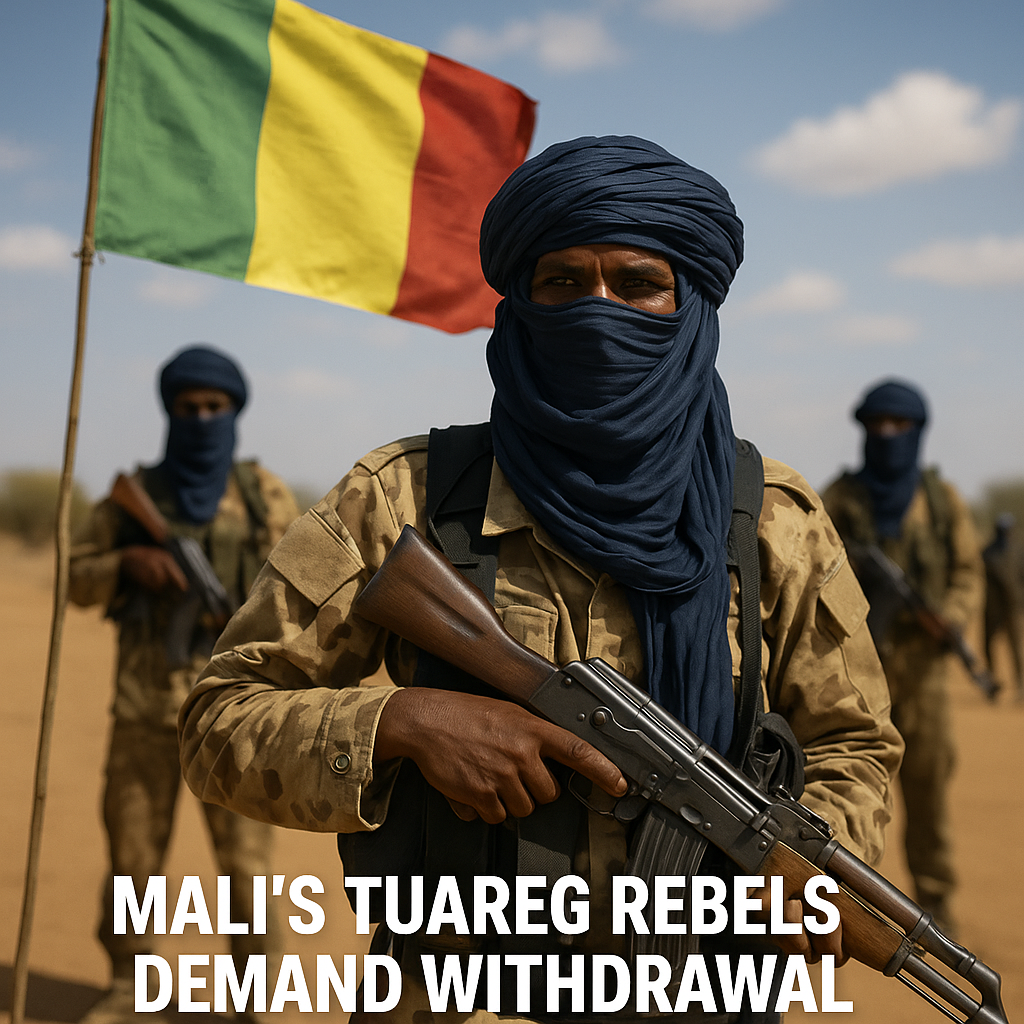
Mali’s Tuareg Rebels Demand Withdrawal of Russian Fighters

Mali’s Tuareg Rebels Demand Withdrawal of Russian Fighters
In recent weeks, Mali’s Tuareg rebels have escalated their demands for the withdrawal of Russian fighters from the country, a situation that has raised eyebrows both within the region and internationally. The clash of interests between local autonomy efforts and foreign military involvements has added complexity to an already tense situation in Mali.

The Tuareg’s Position
The Tuareg rebels, who have long sought greater autonomy for the northern regions of Mali, argue that the presence of Russian fighters, particularly from the Wagner Group, undermines their quest for self-determination. They claim that the Russian contingent’s involvement in combat operations is directed more towards propping up the current Malian government rather than addressing the grievances of local populations.


Reports indicate that the Tuareg factions view the Russians as an occupying force rather than allies in their fight against jihadist groups dominating the region. According to Al Jazeera, the rebels expressed, “We refuse the presence of foreign troops.” This sentiment is echoed in various local and international sources, indicating a significant resistance to foreign intervention perceived as exploitative or counterproductive.


Mixed Reactions from the International Community
The call for the Russian withdrawal has ignited a range of reactions beyond Mali’s borders. On one hand, some analysts argue that the Tuareg’s demand highlights a broader issue of sovereignty and self-governance that could resonate with other groups in the Sahel region. As Mali continues to grapple with extremist violence, the question becomes: Who truly represents the interests of the Malian people?
Conversely, supporters of Mali’s government and its Russian allies claim that the partnership is essential for national security. As articulated by mainstream outlets like Sky News, numerous officials argue that external support is critical in the ongoing fight against terrorism, particularly in a context where the Malian military has been struggling with efficacy. They emphasize that without this backing, stability in the region could erode even further, presenting greater risks not only to Mali but also to its neighbors.
The Complexity of Foreign Intervention
Foreign military support can be a double-edged sword. While the Malian government has welcomed Russian assistance, reports have surfaced about human rights violations attributed to some foreign fighters, including those from the Wagner Group. This has led to a complex narrative where support from foreign entities is often met with skepticism by local populations, including the Tuareg.
The juxtaposition of an armed response to local governance aspirations raises the question of who has the right to determine the future of Mali. It reveals a dynamic tension where foreign powers, willing to lend their military muscle, face local resistance from groups that desire sovereignty.
The Tuareg’s Broader Influence
As the Tuareg rebels vocalize their opposition to the Russian troops, they are also working to consolidate local support. Their demands for autonomy have roots in historical claims that date back to colonial times but have recently gained momentum. By opposing foreign intervention, the Tuareg seek to position themselves as protectors of local interests against what they portray as imperial incursions.
This sentiment aligns with other reports suggesting that local populations feel increasingly marginalized amid international efforts to stabilize the region. The underlying frustration stems from a belief that the international community often prioritizes geopolitical dynamics over genuine efforts to address local grievances.
Conclusion: A Path Forward?
The situation in Mali is emblematic of broader trends regarding foreign intervention and local self-determination. The demand for the withdrawal of Russian fighters by the Tuareg rebels encapsulates a fundamental struggle between external military influences and indigenous governance aspirations.
As the Tuareg rebellion continues to evolve, upcoming dialogues will be critical in shaping the trajectory of Mali. The complexities involved—balancing national security, regional stability, and local autonomy—underscore that there are no easy answers.
With multiple stakeholders vying for control of the narrative and the future of Mali, only time will tell how these tensions will unfold. As of now, the call for Russian withdrawal is more than a tactical demand; it’s a manifestation of deeper socio-political currents that could define the nation’s course in the years to come.















