
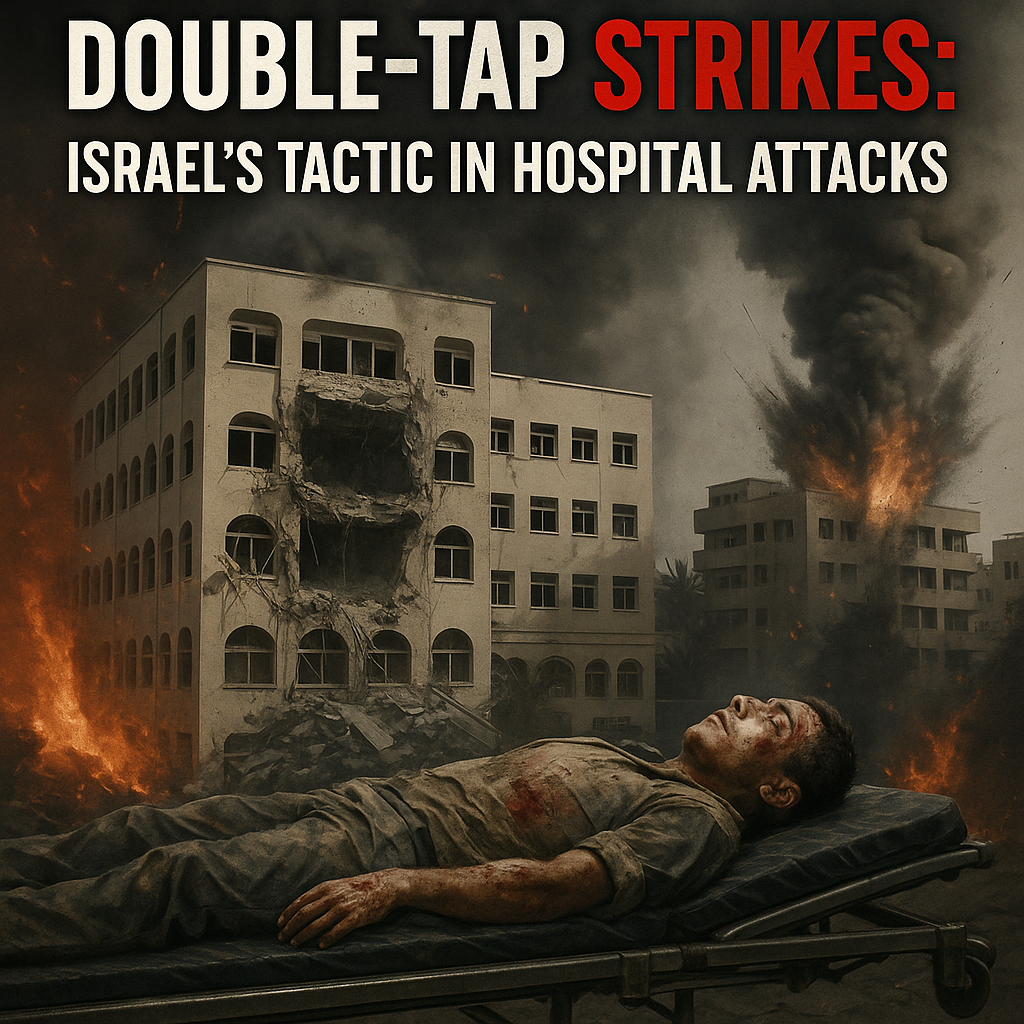
Double-Tap Strikes: Israel’s Tactic in Hospital Attacks

Double-Tap Strikes: Israel’s Tactic in Hospital Attacks
In recent months, the ongoing conflict in Gaza has seen the controversial military strategy known as “double-tap strikes” come under intense scrutiny, particularly regarding attacks on civilian structures such as hospitals. This tactic, which involves an initial explosion followed shortly by a secondary strike targeting those responding to the first, raises ethical questions about military operations in densely populated areas.

What Are Double-Tap Strikes?
Double-tap strikes are characterized by their two-pronged approach: the first strike is meant to damage a target, while the second is timed to harm rescuers and medical personnel attempting to provide aid. This method has drawn criticism and is seen by many as a violation of international humanitarian law. Reports indicate that such tactics have been used by Israel in Gaza, particularly during the escalation in violence surrounding the recent conflict.


Military Perspective and Justification
From a military standpoint, proponents argue that double-tap strikes can serve to disrupt enemy operations and deter further attacks. An article from RT emphasizes that these strikes can be seen as a legitimate tactic in asymmetrical warfare, where combatants are intermingled with civilians. The logic presented by this viewpoint hinges on the argument that targeting militants in the chaos of an initial explosion can protect troops and reduce operational risks.


However, critics assert that this justification cannot adequately account for civilian casualties and the moral implications of targeting rescue efforts. Al Jazeera’s coverage highlights testimonies from humanitarian organizations and eyewitness accounts that emphasize the devastating impact of such tactics. They report a significant number of casualties among medical personnel and aid workers, raising urgent ethical concerns.
The Humanitarian Implications
The use of double-tap strikes has significant ramifications for civilian populations, particularly in contexts like Gaza, where hospitals serve as the only refuge for many injured individuals. Human rights organizations, including Amnesty International and Human Rights Watch, have condemned this tactic as not only reckless but also as contributing to a climate of fear among those seeking medical assistance.
During a recent conflict, reports indicated that hospitals were hit soon after initial strikes, leading to an outcry over the blatant disregard for civilian lives. Al Jazeera emphasized this, stating that medical facilities, which are supposed to be protected under international law, faced a barrage of attacks, fundamentally contradicting the tenets of humanitarian law.
Diverse Perspectives on Accountability
However, the debate surrounding double-tap strikes goes beyond immediate tactical assessments. Critics argue that such actions should also prompt questions regarding accountability for wartime conduct. Some voices within the Israeli government assert the necessity of employing these methods as a means of deterrence against Hamas. Yet, as Al Jazeera points out, there is a growing push from international communities for accountability, demanding that military actions adhere to ethical standards.
On the other side, some military strategists insist that without these strikes, Hamas might continue to operate with impunity. They argue that the complications and ethical dilemmas posed by warfare should not be simplified to a binary of good versus evil. This nuanced debate underscores the difficulties military officials face when attempting to balance operational effectiveness with the imperative of minimizing civilian harm.
Conclusion: A Complicated Terrain
The use of double-tap strikes in conflict situations like those in Gaza highlights the interconnectedness of military strategy, humanitarian ethics, and international law. While some argue for their tactical necessity, countless voices emphasize the moral obligation to protect civilian lives.
As the situation evolves, open dialogues on the effectiveness and implications of such military strategies are more crucial than ever. The international community remains divided on accountability issues and the ethical considerations surrounding these tactics. Only time will tell if countries like Israel will evolve their military doctrines in response to these criticisms, or continue to employ methods that raise serious concerns for civilian safety and human rights.















