
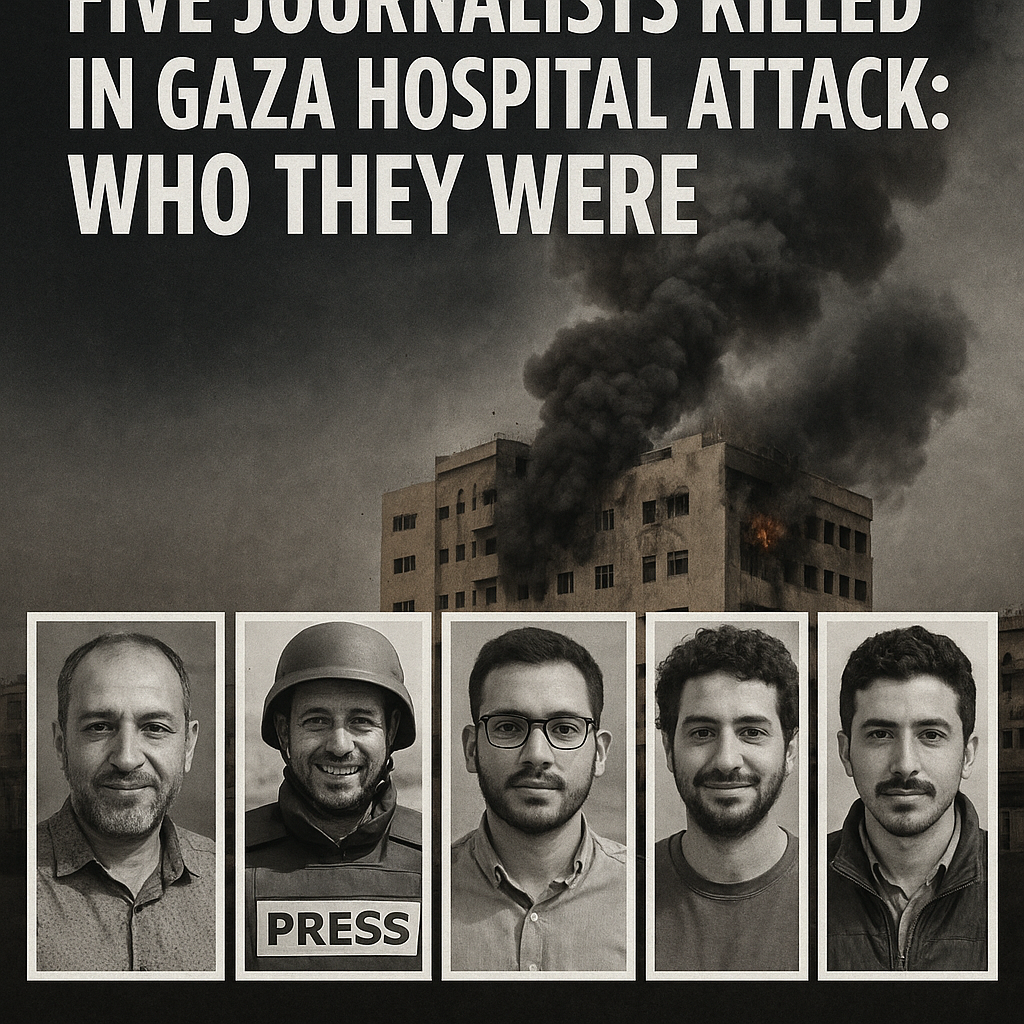
Five Journalists Killed in Gaza Hospital Attack: Who They Were

Five Journalists Killed in Gaza Hospital Attack: Who They Were
The recent attack on a Gaza hospital that led to the tragic deaths of five journalists has drawn global attention and condemnation. This incident highlights the dangers faced by media professionals working in conflict zones and emphasizes the need to protect those who seek to inform the public.

The Fallen Journalists
The five journalists who perished in the Gaza hospital attack had dedicated their lives to reporting from one of the most volatile areas in the world. Each had their own unique background, experiences, and contributions to journalism that will be sorely missed.


According to Al Jazeera, the victims included seasoned reporters who brought vital stories to the world. They ranged from local reporters who had lived through the conflict for years to foreign correspondents who had taken it upon themselves to report from the ground. The identities of the journalists are not just names; each represented a voice striving to narrate the realities of life in Gaza amid ongoing conflict.


– Dedicated Service: Many of them had been in the industry for over a decade, covering conflicts, crises, and social issues. Their reports brought to light the suffering and resilience of the Palestinian people, often putting them in harm’s way.
– Impactful Reporting: As journalists, they played crucial roles in educating international audiences about the complexities of the Israeli-Palestinian conflict, shedding light on issues that are often glossed over in mainstream media.
The Response to the Attack
The loss of these journalists sparked an outcry from various organizations, including the Committee to Protect Journalists (CPJ) and Reporters Without Borders (RSF). Both organizations condemned the attack and called for accountability.
Global Condemnation
Responses have varied, with many calling for a thorough investigation into the circumstances surrounding the hospital attack. Al Jazeera reported that there is a deep sense of injustice, especially considering the role of journalists in fostering understanding and dialogue. The CPJ released a statement emphasizing that “the killing of journalists in conflict zones is a violation of international law and should be treated as such.”
Conversely, some sources have highlighted the broader context of the conflict, arguing that both sides need to take responsibility for the civilian toll. RT News pointed out that while the journalists were caught in the crossfire, the overarching narrative often misses the complexities of wartime reporting.
Ethical Responsibilities
The attack has reignited discussions about the ethical responsibilities of armed forces during conflicts. Are adequate measures taken to ensure the safety of journalists? The RSF highlighted that journalists are not combatants and their protection should be paramount. The incident serves as a chilling reminder of the risks involved in reporting within war zones, where misinformation and propaganda can sometimes overpower the truth.
Uncertainties and Continued Threats
While many details surrounding the attack remain unclear, the incident underscores a harrowing reality: journalistic integrity comes with inherent risks, especially in conflict zones like Gaza. According to Al Jazeera’s coverage, the situation raises troubling questions about the accountability of military operations and the treatment of media personnel during such incidents.
A Call for Awareness
As the world watches, there is a collective responsibility to ensure that the lives lost do not fade into obscurity. The incident amplifies the ongoing struggle for press freedom and the urgent need for protective measures for journalists in conflict.
– Ongoing Dangers: Regions embroiled in conflict require protective measures and protocols to ensure journalists can operate safely. Training programs and safe passage regulations could be integral to preserving the lives of those who risk everything to document the truth.
– Remembering the Voices: In memory of the journalists who died in the line of duty, it is important to continue amplifying their stories and the stories of others affected by conflict. Their work serves as a testament to the importance of journalism in times of crisis.
Conclusion
The tragic deaths of the five journalists in the Gaza hospital attack highlight not only the dangers faced by those in the field but also the imperative necessity to protect press freedom. While opinions diverge on the complexities of the ongoing conflict, the collective memory of those who lost their lives provides a stark reminder of the responsibilities that accompany the privilege of reporting. As their stories are shared, we must advocate for greater awareness and action to protect journalists worldwide.















