EU Lifts Arms Embargo on Israel After Spy Scandal

EU Lifts Arms Embargo on Israel After Spy Scandal
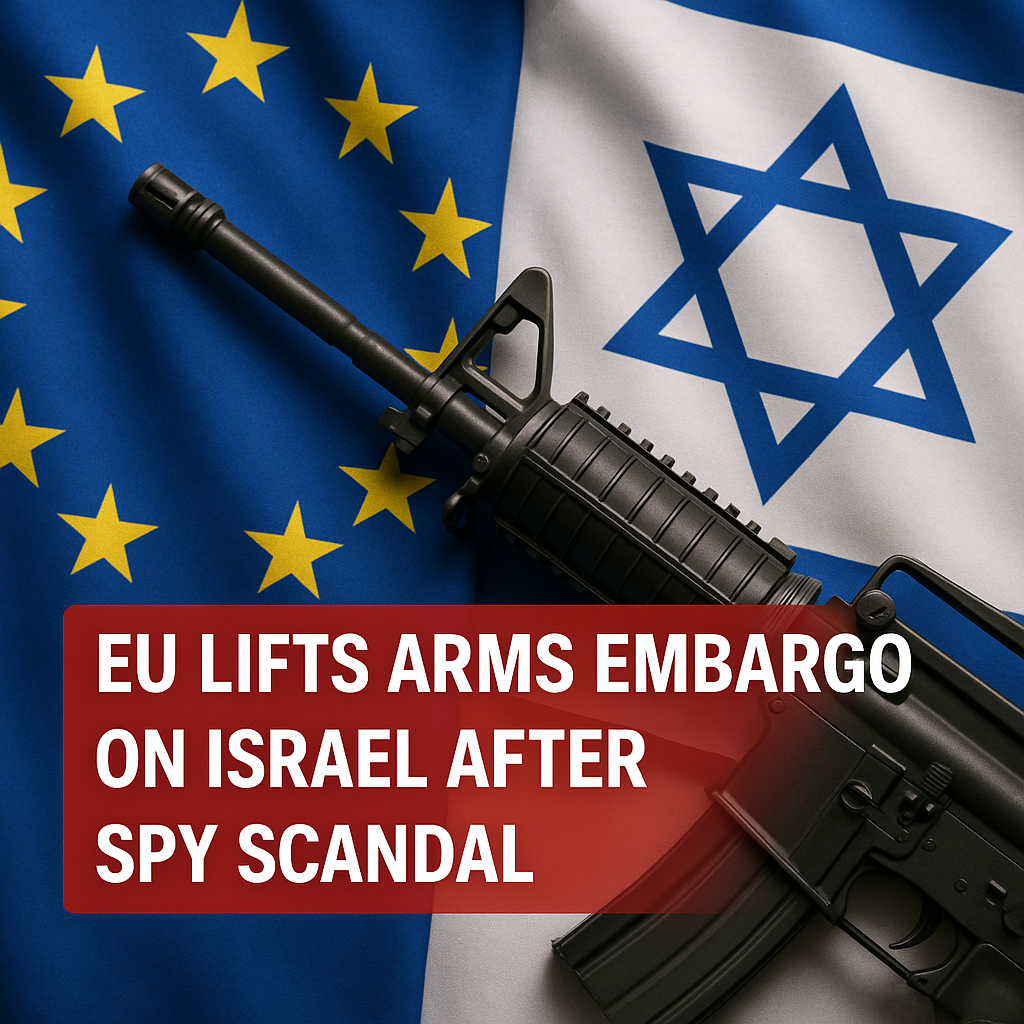
The recent decision by the European Union to lift the arms embargo on Israel has sent ripples through international diplomatic circles, raising questions about both security and ethics. This move comes in the aftermath of revelations regarding a significant espionage scandal, prompting a reassessment of alliances and military cooperation within the EU framework.

Understanding the Decision
The arms embargo, initially imposed due to concerns over Israel’s military activities, was seen by many as a tool to promote peace in the region. However, the scandal surrounding alleged unauthorized surveillance activities highlighted complexities in intelligence relationships between EU nations and Israel. Reports indicate that the scandal involved sophisticated cyber operations, suggesting that Israel had engaged in questionable espionage techniques that potentially threatened EU member states’ sovereignty.


Many EU officials have articulated a view that security cooperation should be prioritized, especially given the evolving geopolitical landscape. Some argue that the challenges posed by authoritarian regimes in the region necessitate at least a functional partnership with Israel, which is often perceived as a democratic ally in the Middle East.


Mixed Reactions within the EU
Reactions to this policy shift are far from uniform. Countries like Slovenia have expressed deep concerns about the implications for human rights and regional stability. They fear that lifting the arms embargo could enable further military action by Israel against Palestinian territories, exacerbating ongoing conflicts. It raises an ethical dilemma: can a democratic union align itself with a nation accused of human rights violations while claiming to promote global peace and security?
Conversely, proponents of the decision argue that the benefits of military collaboration with Israel—especially in areas of intelligence sharing and anti-terrorism efforts—are critical for European security. They contend that cybersecurity threats and an increase in militant activities in the region necessitate a practical alliance, even if it involves moral compromises. Citing mutual goals, they assert that cooperating with Israel allows for more robust defenses against these larger threats.
Ethical Implications and Future Consequences
The implications of this decision extend beyond immediate military collaborations. Critics maintain that the EU’s choice to lift the embargo may alienate various factions within the Palestinian territories and could undermine peace negotiations in the long term. Human rights organizations have expressed alarm, stating that increased arms supplies could lead to greater violence against civilians, intensifying humanitarian crises.
Additionally, this decision could affect relations between EU countries and those that oppose Israel’s current policies. Different nations within the EU align themselves on different ends of the spectrum regarding Israel. Nations such as Greece and Cyprus may see this as an opportunity to enhance ties with Israel, reciprocating the benefits of cooperation. However, others, particularly in Scandinavia and Eastern Europe, might distance themselves from military partnerships with Israel as a form of protest.
Conclusion: A Balancing Act of Interests
Ultimately, the EU’s decision to lift the arms embargo on Israel reflects a complex balancing act of ethical considerations and geopolitical necessities. As member states navigate their differing national interests, it remains crucial for the EU to find a coherent stance that promotes regional stability without forsaking its foundational values.
The road ahead is fraught with uncertainty, as the interplay between military cooperation and human rights remains delicate. The lifting of the embargo could define not only Europe’s relations with Israel but also its broader role as a mediator in the Israeli-Palestinian conflict. The situation calls for careful monitoring and an ongoing dialogue, recognizing that security should not come at the expense of humanitarian responsibilities.