
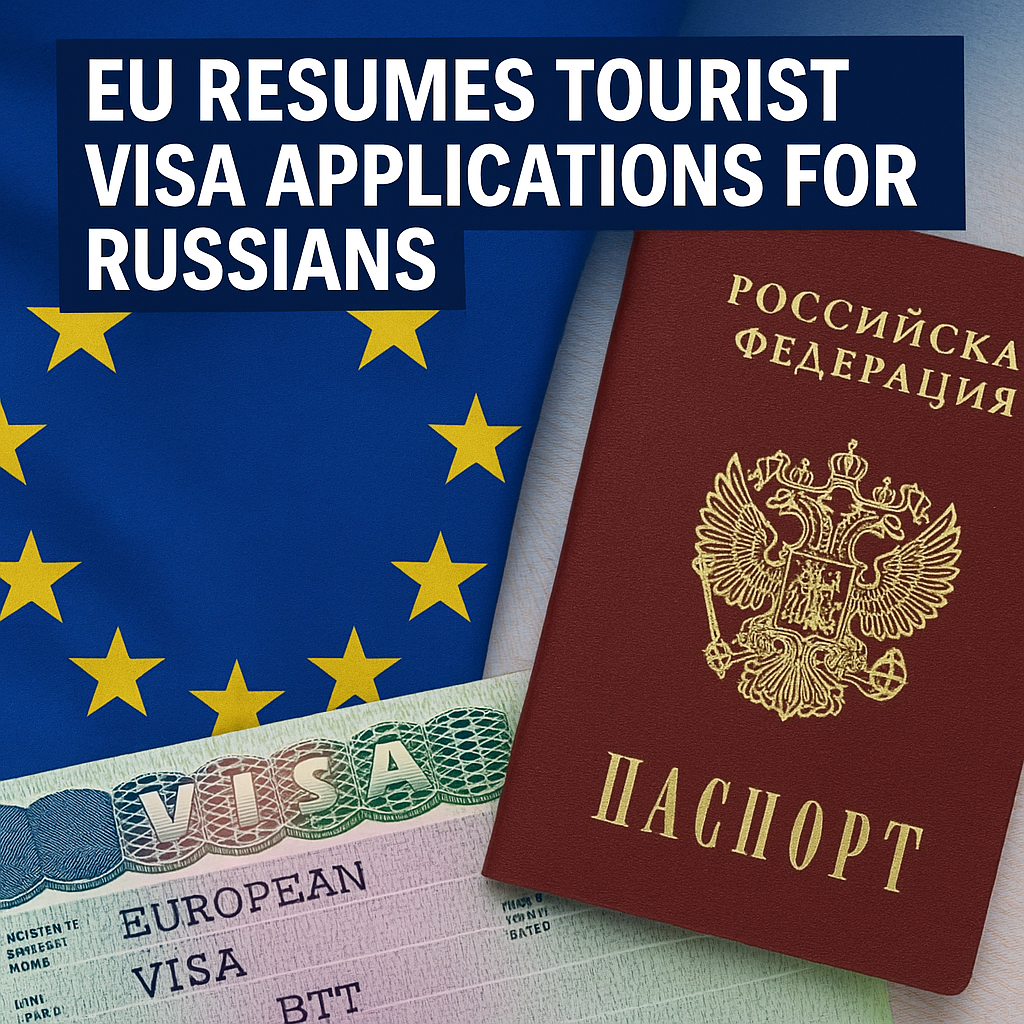
EU Resumes Tourist Visa Applications for Russians

EU Resumes Tourist Visa Applications for Russians: A Complex Landscape
The European Union’s decision to resume tourist visa applications for Russian citizens marks a significant shift in diplomatic and travel relations. This move comes in a context defined by heightened tensions due to geopolitical conflicts, particularly the ongoing situation in Ukraine. To better understand this development, it’s essential to explore various perspectives and the implications it brings for both travelers and European states.

Context of the Resumption
In light of recent developments, the EU’s choice to restore tourist visa applications appears to be an attempt to balance diplomatic relations with practical considerations. Previously, many EU countries had suspended tourist visas for Russians as a response to the ongoing conflict, which raised concerns about security and the potential for increased anti-West sentiments.


While the suspension was intended to signal discontent with Russian military actions, the impact on ordinary Russian citizens seeking to travel for leisure or family reasons has been profound. For many, the inability to travel to Europe has limited their freedom of movement and access to cultural and recreational experiences.


Diverse Viewpoints on the Resumption
Support for Resumed Visa Applications
Proponents of resuming tourist visas argue this move reflects a pragmatic approach to maintaining human connections and cultural exchanges. “Tourism is a crucial economic sector for many EU countries, and shutting it off from Russian travelers can hurt local businesses,” points out an analyst from Al Jazeera. Countries like Greece and Spain, which rely heavily on tourism, may find that welcoming Russian visitors aids in economic recovery.
Additionally, advocates suggest that tourism can play a role in softening tensions. By fostering interactions between everyday citizens, the hope is to create understanding rather than division. Travel can serve as a bridge, allowing Russian travelers to experience life in Europe and perhaps reconsider the narratives presented by their government.
Concerns and Criticism
On the other side of the debate, critics caution against the resumption of visas, fearing that it sends a mixed message regarding the EU’s stance on Russia’s actions in Ukraine. Some elements within the EU, notably from Eastern European nations, argue that resuming visas could diminish the pressure on the Kremlin, undermining international efforts to hold Russia accountable. As reported by Sky News, certain EU leaders express concern that allowing Russian tourists could inadvertently support the regime’s narrative and economic standing.
Moreover, security concerns persist. With the ease of travel comes the potential for risks, including the possibility of espionage or the movement of individuals with unfavorable intentions. The argument here aligns with a broader sentiment that, in the face of a war, isolating citizens from a regime might serve broader humanitarian and strategic interests.
Navigating Uncertainties
As the EU grapples with the complexities of visa resumption, there are uncertainties regarding how this move will play out in practice. Critics warn that the message of welcoming Russian tourists might confuse the global audience about the EU’s commitment to opposing the war in Ukraine. The reality that many Russians do not support the war complicates the dialogue; not all travelers bear the political baggage of their government.
The EU’s diplomatic position remains nuanced. Member states have differing lengths of tolerance towards Russian visitors, which could lead to a patchwork approach in implementation. As evidenced by various leaders’ statements, including those from member states like Poland and Hungary, perspectives on tourism and its implications vary significantly.
Conclusion: A Path Forward
While the EU’s decision to resume tourist visa applications for Russians can be seen as a gesture towards maintaining human connections amidst geopolitical strife, it comes with a host of challenges and critiques. The underlying question becomes not just about the practicality of tourism but about striking a balance between economic necessity and political integrity. In the face of uncertainty, this development requires careful monitoring and perhaps a willingness to adapt as circumstances evolve.
As the situation continues to unfold, one thing remains clear: the interplay between politics and personal freedoms will remain a cornerstone of how visa policies are shaped and perceived on the international stage.















