
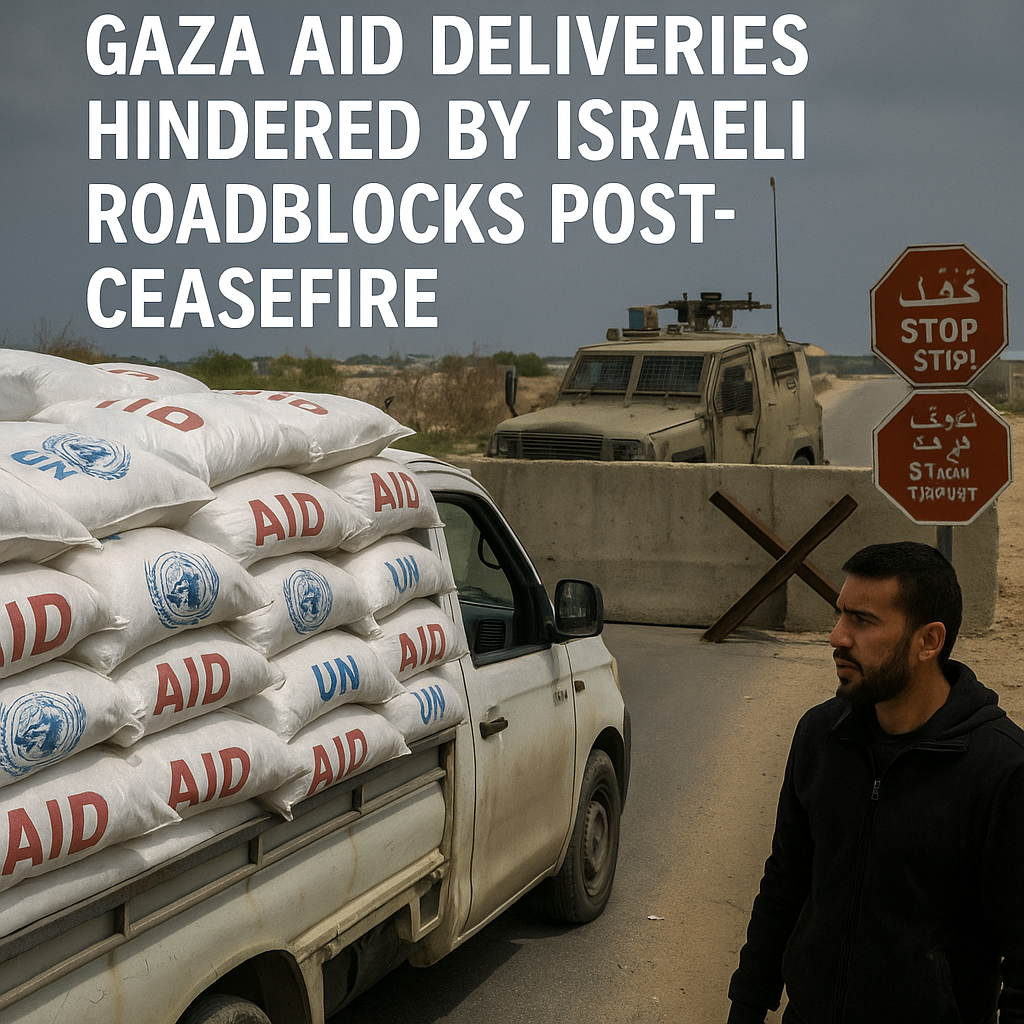
Gaza Aid Deliveries Hindered by Israeli Roadblocks Post-Ceasefire

Gaza Aid Deliveries Hindered by Israeli Roadblocks Post-Ceasefire
The ongoing humanitarian crisis in Gaza has been exacerbated by Israeli roadblocks that hinder aid deliveries shortly after a ceasefire took effect. Despite hopes for a sustained easing of tensions, the situation on the ground reveals complexities that challenge both humanitarian efforts and geopolitical dynamics.

The Dilemma of Humanitarian Aid
In the aftermath of the recent ceasefire, which aimed to provide relief to the affected populations, reports indicate that aid deliveries have been severely restricted due to Israeli-imposed roadblocks. According to Al Jazeera, many humanitarian organizations are struggling to navigate these obstructions, leading to a significant backlog of essential supplies, including food, medical equipment, and clean water.


Perspectives on the Ground
Aid agencies have articulated urgent concerns regarding the immediate implications of these roadblocks. In a recent statement, the United Nations Relief and Works Agency (UNRWA) emphasized the severity of the situation, warning that prolonged restrictions could lead to a humanitarian disaster. Their representatives noted that only a fraction of the necessary supplies has been able to reach those in need, underscoring the inadequacies in the current aid distribution framework.


Conversely, Israeli officials defend the roadblocks, arguing that they are essential to maintain security in the region. They assert that the potential for aid supplies to be diverted to militant groups necessitates a cautious approach. An Israeli spokesperson highlighted that while they are committed to facilitating humanitarian assistance, security concerns remain paramount. This perspective often leads to heated debates within international forums about the balance between security and humanitarian needs.
The International Response
International reactions to these roadblocks have been mixed. Some countries have pressured Israel to ease the restrictions to allow for faster aid delivery. For example, representatives from various humanitarian organizations have called for a purely humanitarian corridor, which could ensure that aid reaches those who need it most without being hindered by political tensions.
However, there is an equally powerful sentiment among some international actors who emphasize the necessity of Israeli security. At a recent UN meeting, several member states spoke about the importance of recognizing the delicate balance involved in the region. They argued that while humanitarian aid is crucial, it should not come at the expense of broader security concerns.
The Future of Aid Deliveries in Gaza
As the situation develops, several questions remain. Will Israeli authorities modify their stance on roadblocks to facilitate better access for humanitarian aid? How will international pressure shape the outcome of this ongoing dilemma?
Experts suggest that a diplomatic solution is essential to ensure that humanitarian needs are met without compromising security. Some analysts propose that involving third-party organizations could help mitigate security concerns while ensuring that aid reaches its intended recipients.
Navigating a Complex Landscape
The complexities surrounding aid deliveries in Gaza are emblematic of broader geopolitical issues that have plagued the region for decades. The challenge lies not only in the logistics of distributing supplies but also in addressing the underlying political tensions that complicate any resolution.
As the world closely watches how this situation evolves post-ceasefire, the imperative for action intensifies. The international community must engage with both sides to alleviate the suffering of civilians caught in the crossfire while respecting the legitimate security concerns expressed by the Israeli government.
In conclusion, while the ceasefire offered a glimmer of hope for improved humanitarian conditions in Gaza, the reality of roadblocks and security concerns poses significant challenges. A balanced approach that prioritizes both aid delivery and security will be critical as stakeholders navigate this complex landscape in the coming weeks and months.
By synthesizing the various perspectives and expert opinions, it is clear that the road ahead requires collaboration, empathy, and understanding from all parties involved. Only through such an approach can the humanitarian needs of Gazans be adequately addressed while also preserving regional stability.















