
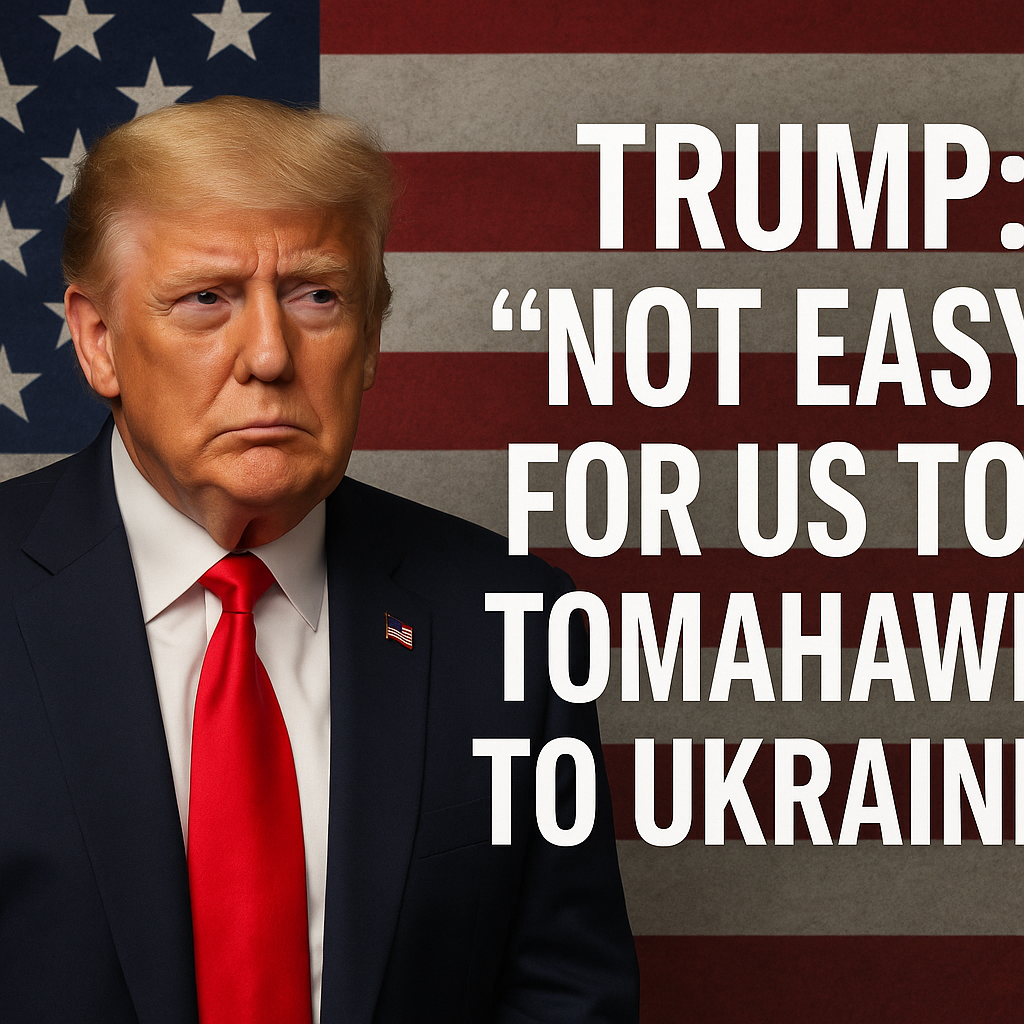
Trump: “Not Easy” for US to Send Tomahawks to Ukraine

Trump: “Not Easy” for US to Send Tomahawks to Ukraine
In a recent statement, former President Donald Trump emphasized that it is “not easy” for the U.S. to send Tomahawk missiles to Ukraine amidst the ongoing conflict with Russia. This remark highlights the multifaceted complexities of military aid decisions, involving strategy, logistics, and geopolitical considerations.

The Landscape of Military Support
Military assistance to Ukraine, especially the provision of sophisticated weaponry like Tomahawk cruise missiles, has been a contentious issue. Several factors play into the discussion, including the implications for U.S.-Russia relations, the operational capabilities of the Ukrainian forces, and the broader international consequences of further militarization.


Evaluating the Risks and Benefits
Supporters of sending Tomahawk missiles argue that these precision-guided weapons could significantly enhance Ukraine’s ability to counteract Russian offensives. Proponents cite examples of successful missile strikes that have changed the dynamics of previous conflicts, suggesting that the introduction of these assets could turn the tide in Ukraine’s favor. Moreover, the U.S. military’s eagerness to support an ally facing aggression could bolster international norms against unprovoked invasions, setting a precedent for collective defense.


However, critics voice serious concerns regarding escalation. The Kremlin has consistently framed Western military aid as a direct provocation, and actions like deploying Tomahawks could heighten tensions between NATO and Russia drastically. This risk of escalation raises questions about the potential for broader conflict, which could threaten European stability.
Diverse Perspectives on Aid
From the diverse viewpoints gathered from various sources, it becomes clear that there is no consensus. An analyst from Al Jazeera pointed out that while thresholds for military aid are being tested, sending advanced weaponry like Tomahawks could escalate to unintended consequences, including retaliation targets within NATO countries. Conversely, reports from Sky News highlighted a growing urgency among Western nations to provide Ukraine with advanced capabilities, asserting that failure to do so might embolden Russia further.
RT.com echoes these sentiments but poses a different lens, arguing that logistical challenges also hinder the speed of arms transfers. The preparation needed to deploy such complex weapons systems may take longer than a simple supply chain could accommodate, bringing to light an additional layer of difficulty in acting promptly.
Understanding the Broader Context
Trump’s assertion that it is “not easy” reflects a nuanced understanding of the intricate decision-making processes in U.S. foreign policy. While immediate military outcomes are one dimension, broader strategic goals and the diplomatic landscape are equally important.
Logistics and Strategic Implications
The logistical complexities of deploying Tomahawk missiles extend beyond technology and battlefield impact. For one, the U.S. must consider the political ramifications of introducing a substantially lethal weaponry system to a conflict zone already rife with instability. Moreover, planning for training Ukrainian forces on these systems, as well as ensuring secure transport and deployment, complicates the timeline significantly.
The operation of such weapons requires not only hardware but also well-trained personnel and robust support logistics, which Ukraine may need assistance with. Thus, even if the decision were made to send these missiles, the operational readiness could delay their effectiveness on the battlefield.
Finding a Middle Ground
In the face of contrasting perspectives, the path forward remains unclear. While Trump’s comments spotlight logistical and strategic obstacles, the underlying question is whether the potential benefits of supplying these missiles outweigh the geopolitical risks. As the conflict evolves, both the U.S. and its allies will need to weigh their options critically, balancing the commitment to Ukrainian sovereignty against the need to avoid escalation into a broader war.
Conclusion
Ultimately, Trump’s statement serves as a reminder of the complexities involved in military aid decisions. While the need for swift support for Ukraine in its defense against Russian aggression is palpable, the multifaceted challenges—logistical, strategic, and ethical—must be navigated carefully. As stakeholders continue to debate the efficacy and appropriateness of sending Tomahawk missiles, it becomes increasingly clear that the implications of such decisions will resonate far beyond the immediate context of the battleground. Thus, a balanced, comprehensive approach to military aid will be essential in shaping not just the outcome of the conflict, but the future of international relations in a precariously polarized world.















