
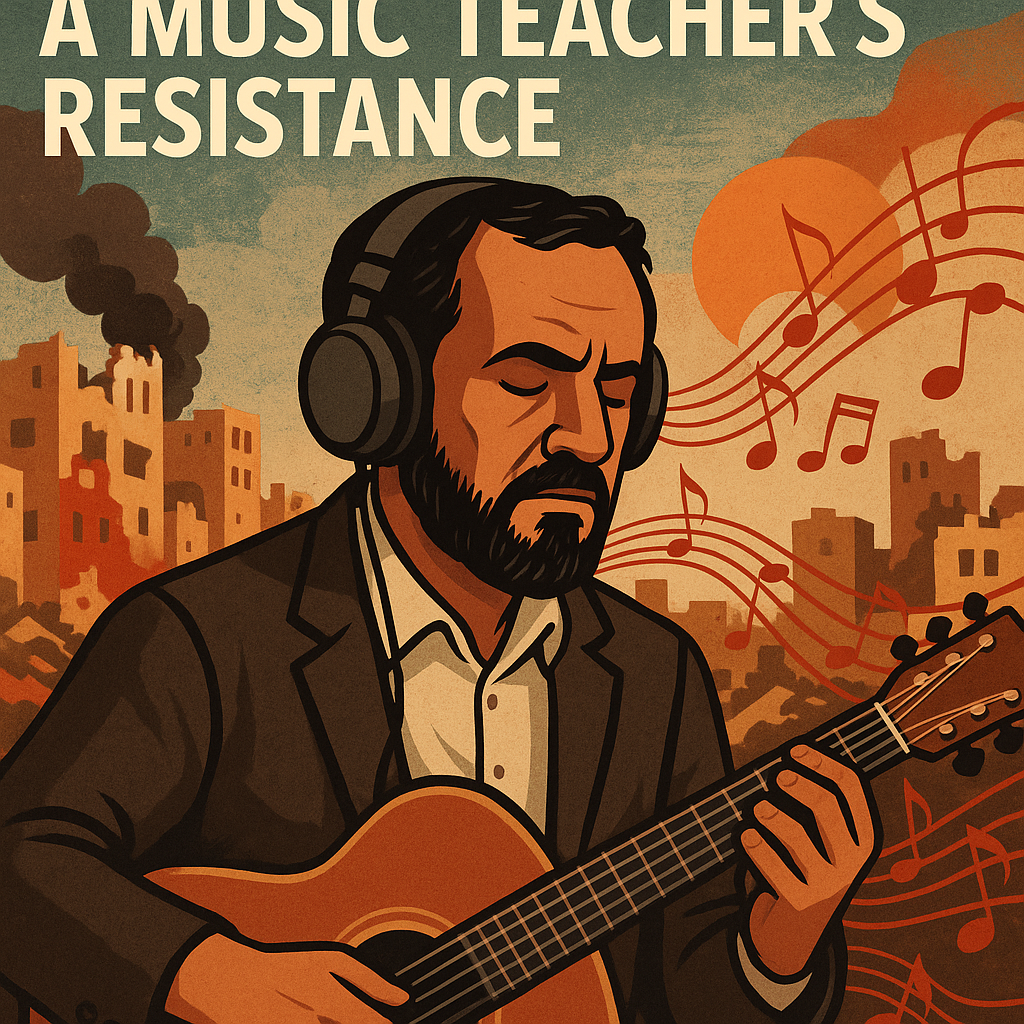
Gaza’s War Soundtrack: A Music Teacher’s Resistance

Gaza’s War Soundtrack: A Music Teacher’s Resistance
In the midst of the relentless conflict in Gaza, the role of music transcends mere entertainment; it becomes a powerful tool for resilience and resistance. This perspective is embodied by a music teacher who harnesses the “soundtrack of war” to instill hope and unity within her community.

The Sound of Resistance
In an environment where chaos and destruction dominate daily life, the music teacher’s initiative stands out as both an inspiring act of defiance and a creative outlet for emotional expression. As reported by Al Jazeera, she incorporates the sounds of war—airstrikes and sirens—into her lessons, blending them with traditional melodies. This juxtaposition does not just reflect the harsh reality of life in Gaza but also creates an innovative form of resistance through art.


The philosophy behind this approach is compelling: music can evoke feelings of solidarity and strength even amidst despair. For students and community members, participating in these music sessions becomes a vital release, allowing them to confront their trauma while also connecting to their cultural roots. According to the teacher, her classes offer a semblance of normalcy, providing students with an emotional refuge amid ongoing conflict.


Divergent Perspectives on Artistic Resistance
Not everyone views the blending of war sounds with music as an uplifting or necessary medium for resistance. Some critics and commentators argue that such artistic expressions risk desensitizing individuals to the violence surrounding them. They contend that normalizing the sounds of war can lead to a concerning acceptance of violence in daily life. In a report from RT, various commentators voice concerns that while art can indeed serve as a form of resistance, it might unintentionally romanticize suffering instead of inciting tangible change.
However, the most effective forms of resistance often arise from grassroots movements within communities facing adversity. Music can serve as a catalyst for raising awareness about the realities of life in conflict zones, allowing for cultural expression and education about the local experience. This sentiment is echoed in various news outlets, noting that engaging youth in creative forms of resistance could potentially lead to a stronger communal identity and foster resilience against oppression.
The Impact of Music Education in Conflict Zones
Engaging with music does not merely serve as an escape but also plays a crucial role in psychological healing. Educators emphasize that music education can be therapeutic, enabling young people to process trauma while building a sense of agency. Sky News highlights reports indicating that programs encouraging musical expression have led to improvements in mental health among youth affected by conflict. Teachers argue that developing musical talents fosters a constructive outlet for emotions that might otherwise manifest as anger or despair.
Furthermore, music often transcends political and social barriers. A composition may be created by diverse groups involved in the conflict, promoting dialogue and understanding. For instance, collaborative efforts between Israeli and Palestinian artists point to the potential for music to serve as a bridge, fostering mutual respect and cooperation. This vision promotes peace, even when immediate conditions lack the backdrop for harmonious relationships.
Uncertain Future or Bright Horizons?
The path toward a peaceful resolution remains fraught with challenges, and the use of music as a form of political and emotional resistance raises several complex questions. Could the artistic declarations serve as catalysts for broader societal changes, or will they remain isolated acts of defiance against a backdrop of enduring hardship? The answer remains uncertain.
Furthermore, as the international community grapples with the consequences of sustained conflict in Gaza, the role of cultural expressions, including music, is increasingly critical. For the music teacher and her students, the ability to transform experiences of violence into creative works becomes not just a personal journey but part of a larger narrative advocating for peace and understanding.
In conclusion, while the soundtrack of war in Gaza provides a stark backdrop, it also highlights the resilience of a community committed to preserving its cultural identity through music. The ongoing debates about the implications of such resistance are essential in understanding the broader implications of art in times of crisis. For those engaged in this potent form of expression, each note played may echo with the hope of a more harmonious future.















