
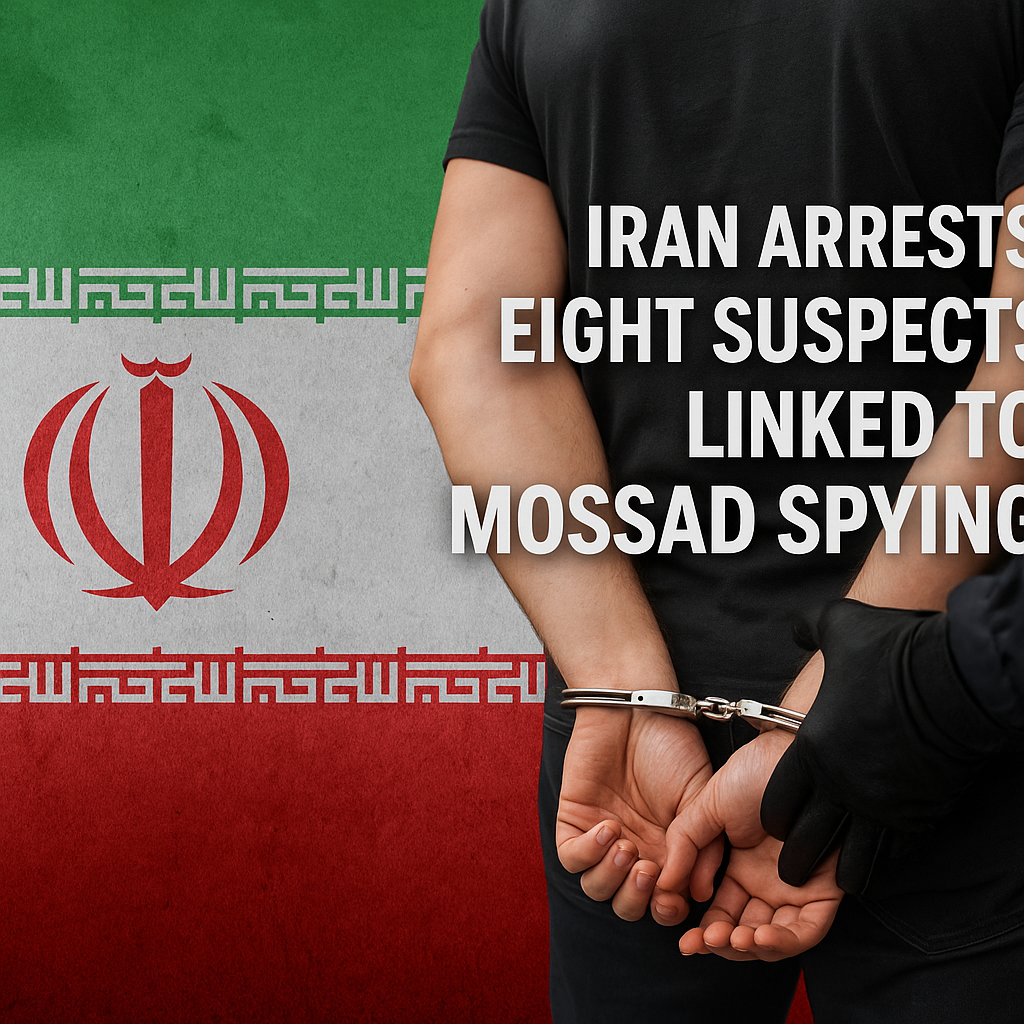
Iran Arrests Eight Suspects Linked to Mossad Spying

Iran Arrests Eight Suspects Linked to Mossad Spying
In a significant development that underscores the ongoing tensions in the Middle East, Iranian officials have announced the arrest of eight individuals suspected of espionage activities for Israel’s Mossad. This incident has sparked a flurry of commentary in various international media outlets, reflecting the complex geopolitical dynamics in the region.

Context of the Arrests
The arrests occurred amid an escalating atmosphere of suspicion and conflict, especially following the recent military confrontations in the region that some analysts describe as an “ongoing war” of attrition between Iranian interests and those of Israel. The timing of the arrests aligns with a broader Iranian strategy to safeguard its national security against perceived threats from foreign intelligence operatives.


According to Al Jazeera, Iranian officials claim that the suspects were arrested during a coordinated 12-day operation, which led to the exposure of a network allegedly working for Mossad. They assert that these individuals were engaged in various espionage activities that aimed to undermine Iran’s internal security and military capabilities.


Conversely, RT presents an alternative viewpoint, suggesting that these arrests may be part of a broader narrative by the Iranian government designed to bolster domestic support. It raises the possibility that, amid economic challenges and international isolation, the Iranian regime is leveraging the arrests to illustrate its effectiveness in combatting foreign threats. Such a stance could serve to unify the populace and distract from internal issues.
Evidence and Reactions
The Iranian government has released few specifics about the detainees or the details of their alleged activities. However, they have indicated that intelligence operations are ongoing. Observers note that Iran often employs such arrests as a means to reinforce its anti-Western and anti-Israeli rhetoric, providing a rallying point for nationalist sentiments.
– National Security Claims: Iranian authorities assert that protecting national sovereignty is paramount and have pledged to intensify efforts against espionage. This aligns with a historical pattern of Iran emphasizing its resistance against external threats, particularly from perceived adversaries like the U.S. and Israel.
– Skepticism and Concerns: Critics, including some Western analysts, express skepticism about the motives behind the arrests. They highlight that Iran has a track record of using alleged espionage accusations to root out dissent and consolidate power. This perspective raises questions about the legitimacy of the claims and the potential for these arrests to suppress opposition within Iran.
Increasingly, the Israeli government has refrained from directly commenting on such arrests, adhering to a policy of ambiguity about its operations in the region.
A Complex Landscape
The espionage narrative adds layers of complexity to the already intricate geopolitical arrangement in the Middle East. Iran’s claims highlight its ongoing struggle with external intelligence agencies, while critics suggest that the arrests might also be a tool in a domestically-focused power struggle.
– Domestic Dynamics: With the Iranian economy under severe strain due to sanctions and internal unrest, the regime’s focus on counterintelligence could serve dual purposes: reaffirming its authority and diverting attention from pressing economic conditions.
– Regional Impacts: As Iran participates in various proxy conflicts across the Middle East, including in Syria and Iraq, the implications of this spy saga ripple outward. Each arrest can influence relations in the region and fuel further confrontational postures, especially with Israel, which views Iranian military and intelligence advancements as direct threats.
In the broader context, other nations in the region—including Arab states—are watching these developments closely. The evolving relationship between Iran and Israel has implications for regional alliances and power balances, further complicating diplomatic efforts.
Conclusion: An Ongoing Saga
The recent arrests of eight individuals suspected of being connected to Mossad activities serve as a microcosm of the larger narrative surrounding Iran’s geopolitical stance and internal dynamics. While it highlights Iran’s efforts to assert control over its security environment, uncertainties linger about the real motivations behind these cases and the implications for both domestic and international politics.
As the situation unfolds, it remains critical to seek a balanced understanding rooted in multiple perspectives. The intricate dance of espionage, international relations, and domestic politics will undoubtedly shape the future of regional stability and security. With the complexities inherent in the broader geopolitical landscape, the nuances of this situation deserve informed observation and analysis.















