
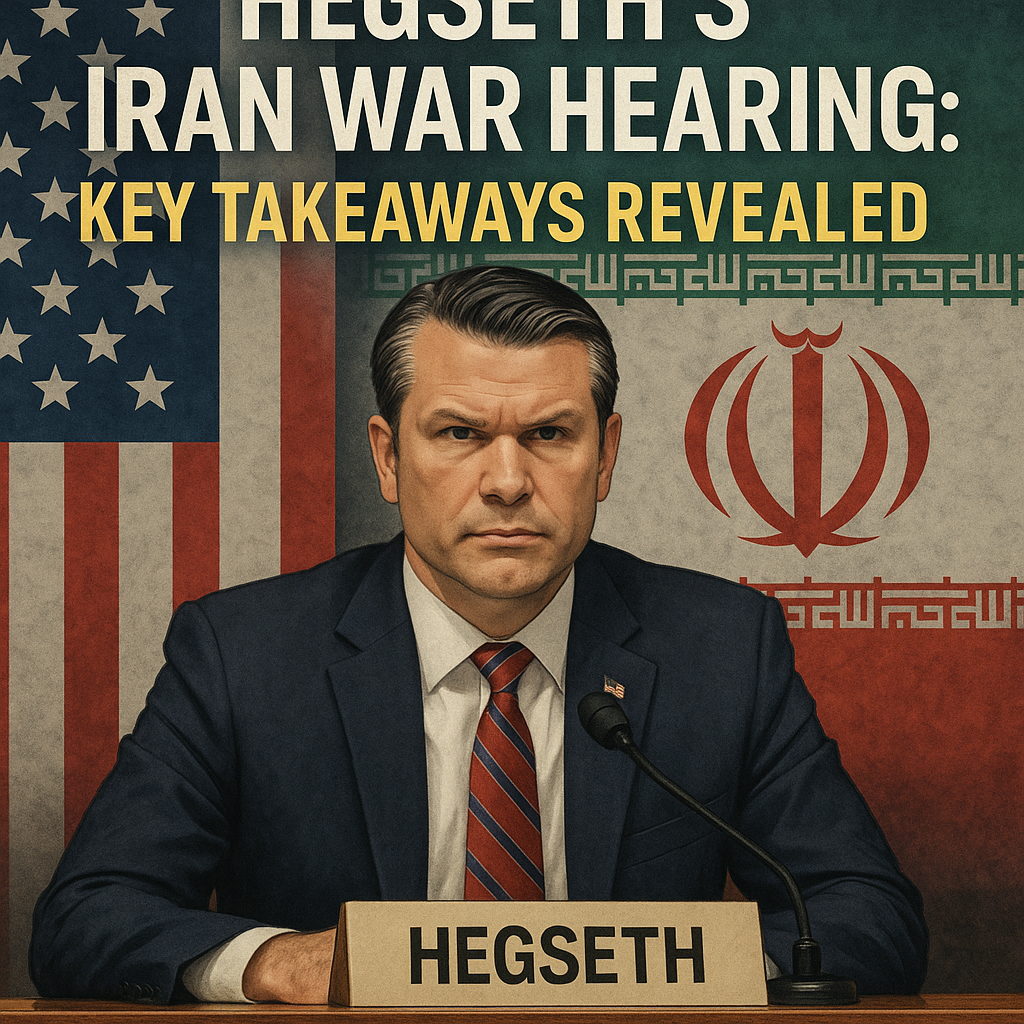
Hegseth’s Iran War Hearing: Key Takeaways Revealed

Hegseth’s Iran War Hearing: Key Takeaways Revealed
In a crucial moment for American foreign policy, the recent hearing led by Pentagon Chief Pete Hegseth focused on the complexities surrounding the potential escalation of hostilities with Iran. This pivotal event has sparked significant discussions about U.S. military strategy and the implications of a potential conflict in the Middle East.

Insights from the Hearing
During the hearing, Hegseth articulated the current assessment of U.S. military readiness concerning Iran. He emphasized a need for vigilance, stating that Iran was “the most significant destabilizing factor in the region.” This sentiment was echoed by various experts who argue that a proactive stance is necessary to deter Tehran’s aggressive maneuvers, particularly in light of their nuclear ambitions.


Diverse Perspectives on Military Strategy
However, the notion of military readiness and intervention is not universally agreed upon. Some sources highlight a growing wariness among lawmakers and military officials regarding a direct confrontation with Iran. For instance, RT provided insights from war critics who pointed out that past military engagements in the Middle East have often led to prolonged conflicts with substantial human and economic costs. They advocate for diplomatic solutions, emphasizing that war might exacerbate tensions rather than resolve them.


Conversely, Hegseth and supporters in the hearing stress the necessity of preemptive measures. They argue that Iran’s support for proxy groups in the region poses an immediate threat to U.S. allies, particularly Israel and the Gulf States. This group cites data showing increased Iranian influence and military capabilities, which could necessitate a stronger U.S. response.
The Regional Implications
The hearing also touched upon how an escalation in Iran could affect regional stability. Hegseth emphasized that U.S. military presence in the region was critical not just for deterrence but also for maintaining the balance of power. Al Jazeera reported that some officials believe that a more aggressive U.S. posture is needed to reassure allies and counteract Iranian expansionism.
On the other hand, some analysts caution that increased military action might provoke further animosity and push Iran closer to its nuclear ambitions. They suggest that a robust diplomatic approach could yield more sustainable outcomes without escalating military tensions. This underscores a crucial debate: is a hardline military stance truly the best way to manage the Iranian threat, or does it risk igniting a larger conflict?
Economic and Human Costs of Conflict
Both proponents and critics of U.S. military action against Iran seem to agree—war has both tangible and intangible costs. The hearing acknowledged that the resources required for military engagement could limit spending on domestic issues. In a time of rising inflation and economic uncertainty at home, the question arises: can the nation afford another war?
Public sentiment appears mixed, with some Americans voicing support for strong action against perceived threats, while others recall the lessons learned from previous conflicts in Iraq and Afghanistan. According to Sky News, many citizens are skeptical of military solutions after witnessing the protracted struggle and the aftereffects of earlier engagements.
The Path Ahead
Moving forward, the U.S. must navigate a complex landscape regarding Iran. The discussions during Hegseth’s hearing reveal a spectrum of opinions, all grounded in the desire for a safer world. Critics argue for restraint and diplomacy, believing that escalating military operations might increase rather than decrease threats. Conversely, advocates for a stronger military stance urge immediate action to counter what they see as a palpable danger.
In light of these diverse viewpoints, one thing remains clear: the conversation surrounding the U.S. response to Iran is far from settled. As policymakers weigh these perspectives, they will need to consider not only the strategic implications but also the broader impact on international relations and domestic well-being.
In summary, Hegseth’s Iran War hearing has underscored the critical need for continuous dialogue and debate around U.S. military engagement in the Middle East. Whether through military might or diplomatic avenues, the quest for stability will depend on a nuanced understanding of the complex dynamics at play in this historically tumultuous region.















