
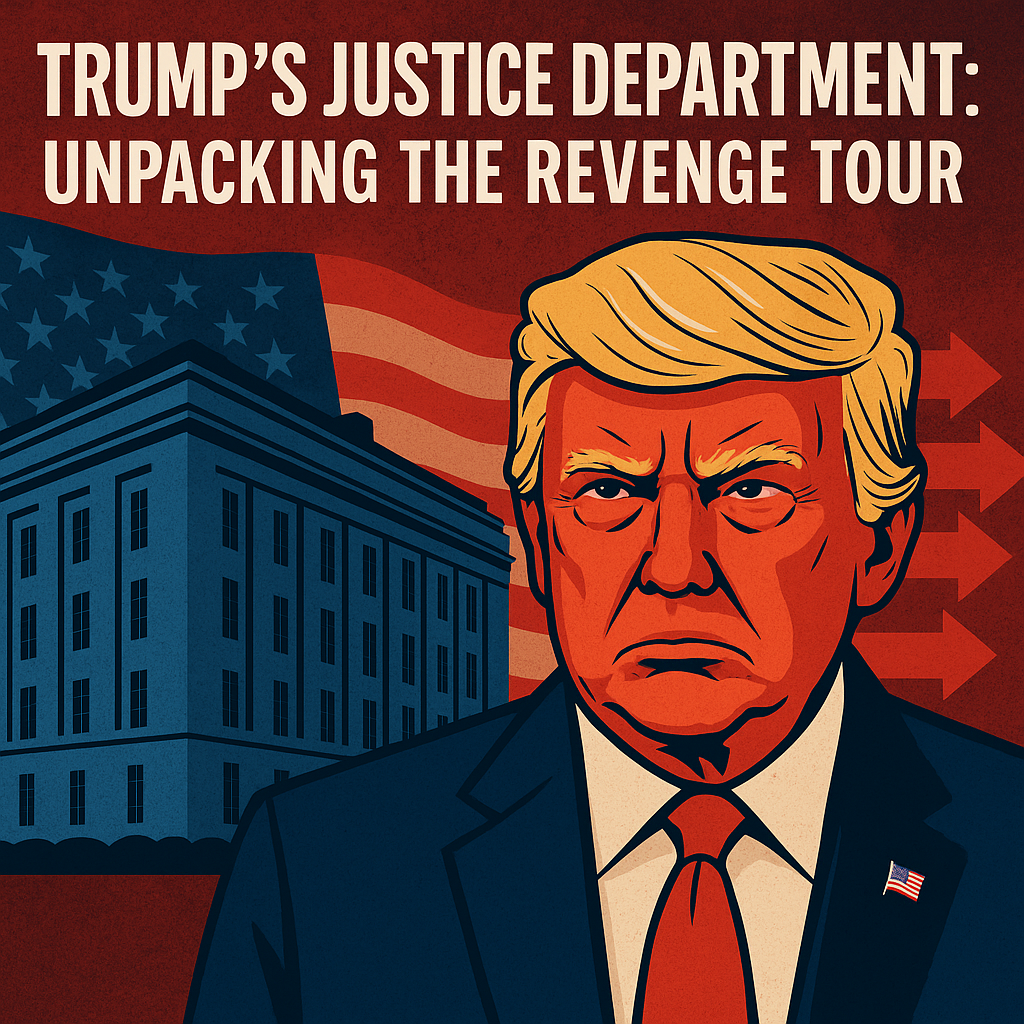
Trump’s Justice Department: Unpacking the Revenge Tour

Trump’s Justice Department: Unpacking the Revenge Tour
The discourse surrounding Trump’s Justice Department has evolved significantly, especially with the former president’s recent rhetoric framing his administration’s judicial actions as a “revenge tour.” This characterization raises essential questions about the role of the Justice Department, the implications of its politicization, and the broader impact on the American legal landscape.

The Context of the “Revenge Tour”
In recent interviews and rallies, Donald Trump has described various legal actions targeting him and his allies as part of a vindictive campaign orchestrated by the Biden administration. This narrative seems to gain traction within segments of the Republican base, suggesting a struggle over the legitimacy and impartiality of federal law enforcement.


Diverse Viewpoints
Opinions on Trump’s portrayal of the Justice Department vary widely, reflecting the polarized nature of American politics. Proponents of Trump’s narrative argue that the prosecutions he faces are politically motivated, contrasting it with what they perceive as leniency towards similar actions by Democrats. For instance, a recent Al Jazeera report emphasized that Trump’s supporters equate the legal challenges he endures to a broader witch hunt aimed at undermining his legacy and alarming voters about the political use of legal frameworks.


Conversely, critics argue that Trump’s assertions are a tactical strategy to evade accountability. According to analysis from RT News, legal scholars and commentators assert that the Justice Department operates independently and holds individuals accountable based not on politics but on the rule of law. This perspective highlights the necessity of a nonpartisan legal system, underscoring the dangers that arise when justice is viewed through a partisan lens.
Legal Implications and Accountability
The legal proceedings associated with Trump encapsulate broader themes of accountability and governance. With multiple indictments on various fronts, including actions related to election interference and financial improprieties, the response from the Justice Department is examined under a microscope. While Trump’s defenders describe these indictments as revenge tactics, many legal experts point out that these investigations are rooted in established legal frameworks.
Reactions from Political Figures
Political figures from both sides have weighed in on the implications of Trump’s claims. Some Republican leaders have expressed worry about the potential consequences of undermining trust in judicial institutions. For instance, a number of GOP commentators have called for a clear separation between political rhetoric and legal proceedings. On the Democratic side, officials have reiterated the importance of adhering to the law and maintaining a clear distinction between politics and justice.
The contrasting narratives contribute to a growing divide within the American political landscape. As citizens consume news from various outlets, a clear understanding of the facts often becomes muddled by political loyalty and media framing.
Public Sentiment and the State of Trust
Public sentiment regarding the Justice Department and its role during Trump’s presidency is nuanced. Polls indicate a significant partisan divide; while many Republican voters rally behind Trump’s claims of a politically biased Justice Department, a considerable portion of Democratic voters believes that accountability is being rightly enforced. This divide reveals a broader issue: the erosion of trust in institutions fundamental to American democracy.
The Path Forward
As the discourse surrounding Trump’s Justice Department evolves, it is crucial for citizens to consider diverse viewpoints and critically evaluate the portrayal of legal actions within the political arena. As the country navigates through this complex landscape, fostering discussions grounded in facts, respectful dialogue, and a commitment to the rule of law becomes vital for maintaining the integrity of democratic institutions.
In reflecting on Trump’s assertion of a “revenge tour,” it’s clear that while political motivations may shape perceptions, the reality of legal proceedings necessitates a careful balance of scrutiny and respect for judicial independence. Ultimately, ensuring that justice prevails, free from partisanship, remains a fundamental tenet of a healthy democracy.















