
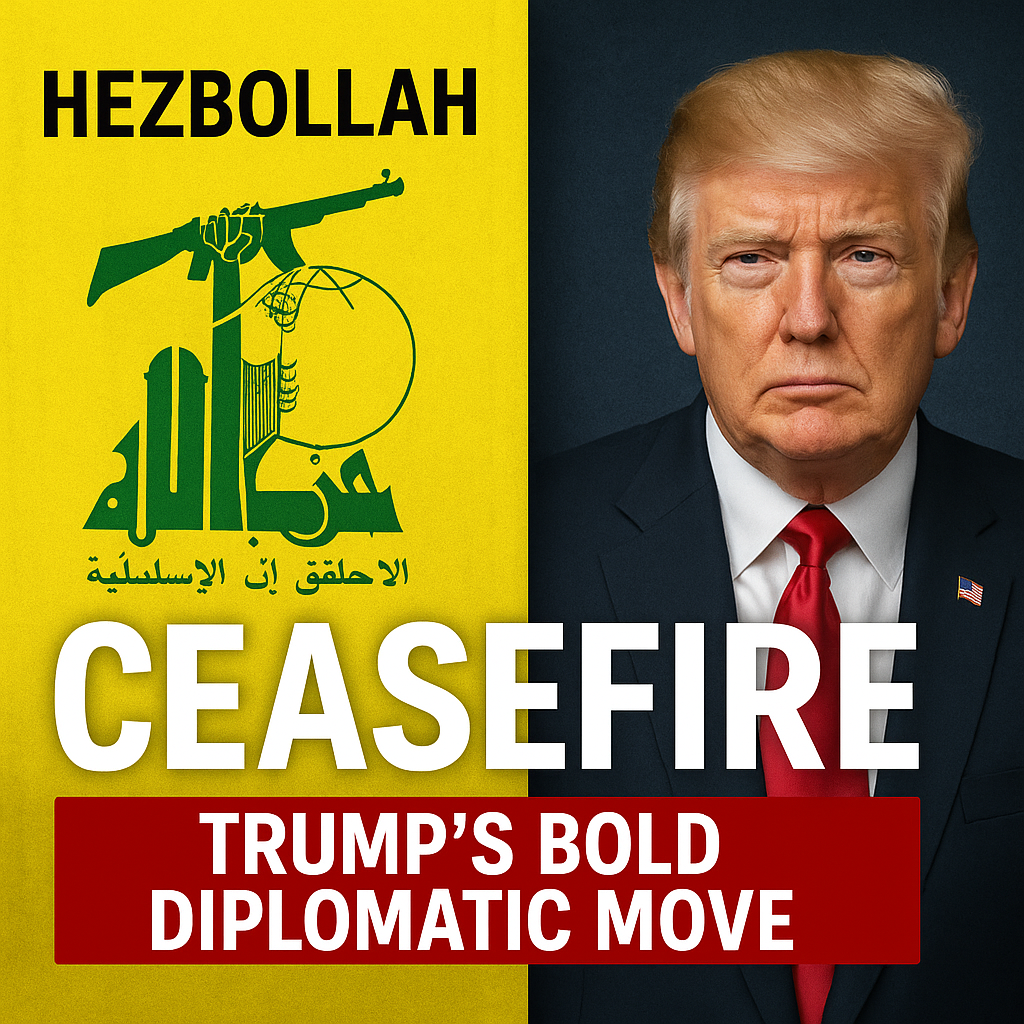
Hezbollah Ceasefire: Trump’s Bold Diplomatic Move

Hezbollah Ceasefire: Trump’s Bold Diplomatic Move
The recent discussions surrounding a potential ceasefire involving Hezbollah mark a significant development in the ongoing complexities of Middle Eastern diplomacy. Former President Donald Trump is at the forefront of these talks, and his bold approach has sparked a spectrum of reactions, revealing the intricacies of international relations.

Context of the Conflict
The tense dynamics between Israel, Hezbollah, and Lebanon have a long history, marred by violence and entrenched grievances. The recent flare-ups have escalated concerns over regional stability, with Hezbollah’s militant activities frequently drawing international scrutiny. In response to heightened tensions, Trump has stepped in, advocating for a negotiated ceasefire that could potentially lead to a more lasting peace.


Various analysts note that Trump’s assertive re-entry into Middle Eastern diplomacy is intriguing, especially after his previous presidency’s policy decisions. Trump’s administration previously emphasized a hardline approach, particularly regarding Iran and its proxies, including Hezbollah. This shift toward negotiation represents a noticeable departure from earlier strategies focused on deterrence and pressure.


The Diverse Reactions
Support for Diplomatic Engagement
Supporters of Trump’s recent diplomatic efforts argue that engagement rather than isolation could be more effective in mitigating regional conflicts. The possibility of a ceasefire is seen as a pragmatic step, potentially leading to broader discussions encompassing key stakeholders, from Iranian officials to various Arab states. This viewpoint is underscored by geopolitical experts who believe that a ceasefire could pave the way for more comprehensive peace talks, addressing not just military hostilities but also longstanding economic and humanitarian issues.
Quote from an Expert:
“Engaging with Hezbollah could lead to a de-escalation of violence, which benefits all parties involved,” emphasizes Dr. Sara El-Sharif, a political analyst at the Middle East Institute.
Skepticism regarding Trump’s Motives
Contrastingly, many observers view Trump’s renewed involvement with skepticism. Critics question whether his motives are genuine or strategically opportunistic. Some believe that Trump’s approach may be more about solidifying his political relevance rather than fostering true peace. Concerns are raised that his previous rhetoric and actions might undermine any genuine negotiation efforts, especially given Hezbollah’s characterization as a terrorist organization by several nations.
In addition, the reliance on a figure like Trump for meaningful dialogue has been met with caution. Historical context suggests that trust is paramount in such negotiations, and Trump’s controversial legacy complicates this. As one commentator articulated, “Trust is fragile in diplomacy; previous actions can’t easily be forgotten.”
Challenges Ahead
A Stalemate in Trust?
While diplomatic engagement is a critical step towards resolving conflict, it is fraught with challenges. The historical mistrust between the involved parties cannot be overlooked. Hezbollah, for instance, remains loyal to its ideals and the backing of Iranian influence, which complicates any potential compromises.
Furthermore, the internal political landscapes of Lebanon and Israel shape their respective approaches to negotiating peace. In Lebanon, political factions have significant influence, while in Israel, government policy is deeply intertwined with national security concerns.
Potential Outcomes: Hope or Disillusionment?
The potential outcomes of Trump’s push for a ceasefire remain uncertain. On one hand, a successful negotiation could indeed spark a newfound diplomatic era in the region. However, if talks falter, the repercussions could lead to intensified hostilities, further complicating an already tense situation.
Neglecting the need for multilateral dialogues that include diverse voices risks alienating essential players in the peace process. Future negotiations must deliberate the roles of Russia, China, and European nations, each of which holds strategic interests in the Middle East.
Conclusion: A Complex Path Forward
Trump’s involvement in the proposed Hezbollah ceasefire exemplifies the multi-faceted challenges of Middle Eastern diplomacy. While his efforts at engagement hold promise, they also raise questions about legitimacy and historical context. The road to peace is seldom linear, and whether this political maneuvering yields lasting stability remains to be seen.
Ultimately, the diverging viewpoints surrounding Trump’s bold diplomatic move highlight the complexities of the current geopolitical climate. For now, the international community watches with bated breath, wary yet hopeful for a breakthrough that may shift the tide of conflict.















