
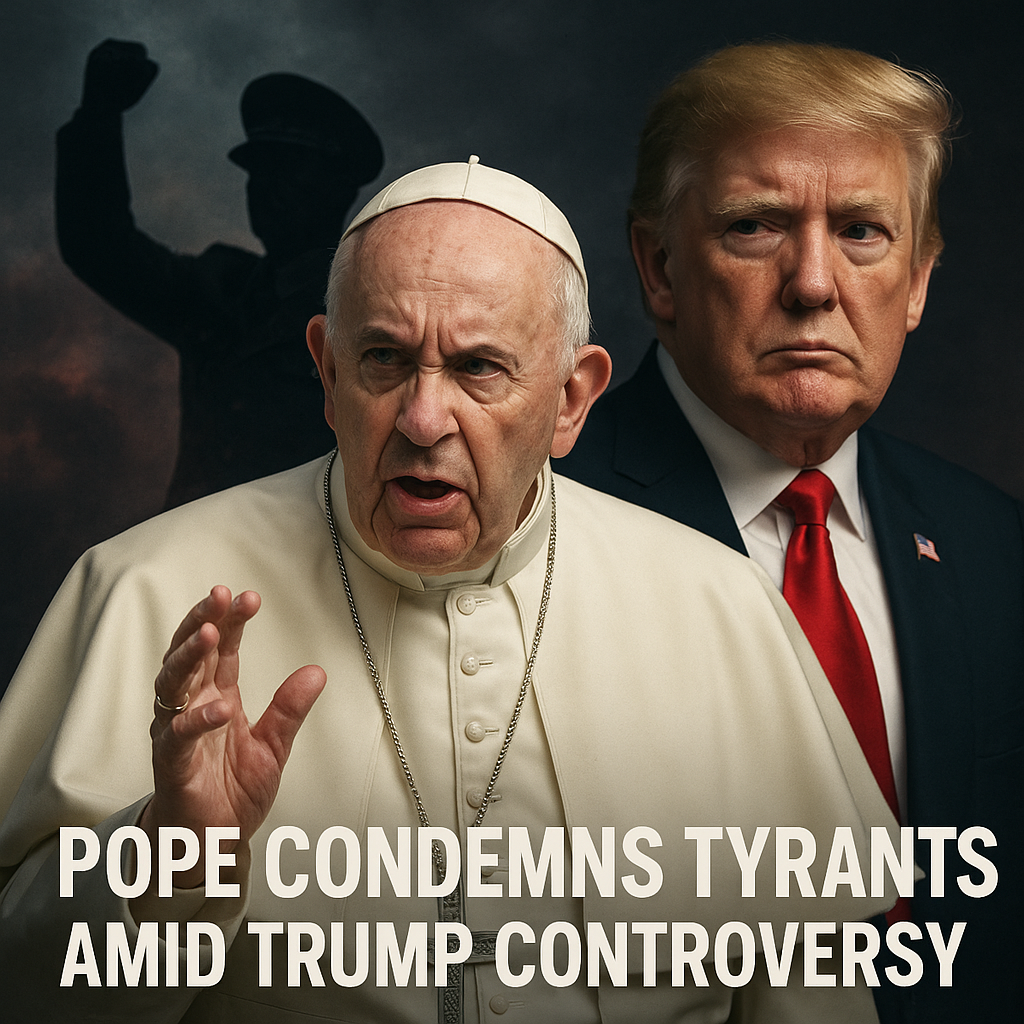
Pope Condemns Tyrants Amid Trump Controversy

Pope Condemns Tyrants Amid Trump Controversy
In recent weeks, the world has witnessed a profound discourse around leadership, morality, and accountability, particularly as Pope Francis publicly condemned tyrants who “ravage the world with war.” The Pope’s statement comes against the backdrop of renewed controversies surrounding former President Donald Trump, adding layers to the ongoing conversation about global leadership and ethics.

The Papal Perspective on Tyranny
Pope Francis has long advocated for peace and justice, often using his platform to address the suffering caused by oppressive governments. His recent remarks highlight the moral duty of leaders to promote peace and protect vulnerable populations. According to reports from Sky News, the Pope stated that tyranny breeds hopelessness and fear, which can plunge societies into chaos.


This condemnation appears particularly timely, given the political landscape in several countries where authoritarian regimes have been on the rise. The Vatican released a statement emphasizing the need for leaders to prioritize dialogue over conflict, a sentiment echoed in many of the articles reviewed. Pope Francis’s approach suggests that spiritual and moral leadership encompasses an active stance against injustice and requires accountability from those in power.


Contextualizing Trump’s Controversies
Simultaneously, the controversies surrounding Donald Trump add complexity to this discussion. Critics argue that his political maneuvers often resonate with authoritarian tendencies, prompting questions about the ethical nature of leadership. Al Jazeera noted that Trump’s polarizing rhetoric has been a significant factor in shaping public opinion, making it essential to scrutinize how leaders wield power in the service of the people versus personal gain.
Supporters of Trump, however, argue that his administration focused on deregulation and economic growth, emphasizing that effective leadership can manifest through various ideologies. They maintain that his policies benefited a segment of the population, illustrating a fundamental tension between differing worldviews on leadership efficacy and moral responsibility.
Weighing Evidence and Sentiments
The juxtaposition of the Pope’s condemnation and Trump’s controversial actions invites a broader examination of what constitutes ethical leadership. On one hand, the Pope’s advocacy for justice and peace seeks to build a framework for leadership based on compassion and responsibility. On the other, Trump’s approach underscores a pragmatic, results-oriented style that his supporters claim addressed fundamental economic needs.
However, this dichotomy does not yield simple conclusions. Reports from both RT and Al Jazeera present varied perspectives on the implications of Trump’s leadership style. While many see his behavior as emboldening tyrannical tendencies worldwide, others point to his administration’s efforts to negotiate peace deals in the Middle East and highlighted economic growth, asserting that leadership cannot be distilled to binary terms of good and bad.
The Broader Implications for Global Leadership
The Pope’s denunciation of tyranny, particularly in the face of rising global authoritarianism, raises vital inquiries about the responsibilities of world leaders. As authoritarianism gains ground in multiple regions, the importance of moral leadership becomes increasingly evident. Public trust in institutions is fragile, and leaders are seen as either upholding democratic values or betraying them.
One significant takeaway from the current discourse is the need for a nuanced understanding of leadership. The examples set by various leaders, including Trump and others, underline different pathways to power and influence. Yet, as the Pope cautioned, the eventual consequences of tyrannical rule extend beyond borders, leading to widespread human suffering that must be addressed collaboratively within the international community.
Conclusion: A Call for Ethical Leadership
In light of the Pope’s statements and the ongoing discussion surrounding Trump, it is clear that governance should focus not only on power and authority but also on ethical responsibility toward humanity. As societies navigate complex political landscapes, the need for leaders who inspire trust, dialogue, and peace remains paramount.
Ultimately, the conversation initiated by the Pope is not just about condemning tyranny but also about reimagining leadership for a new era. Individuals and communities must hold their leaders accountable, promoting a paradigm whereby moral clarity and responsibility guide decision-making in governance. As the world looks toward the future, fostering ethical leadership could prove crucial in dismantling the cycles of war and oppression that have long plagued human history.















