
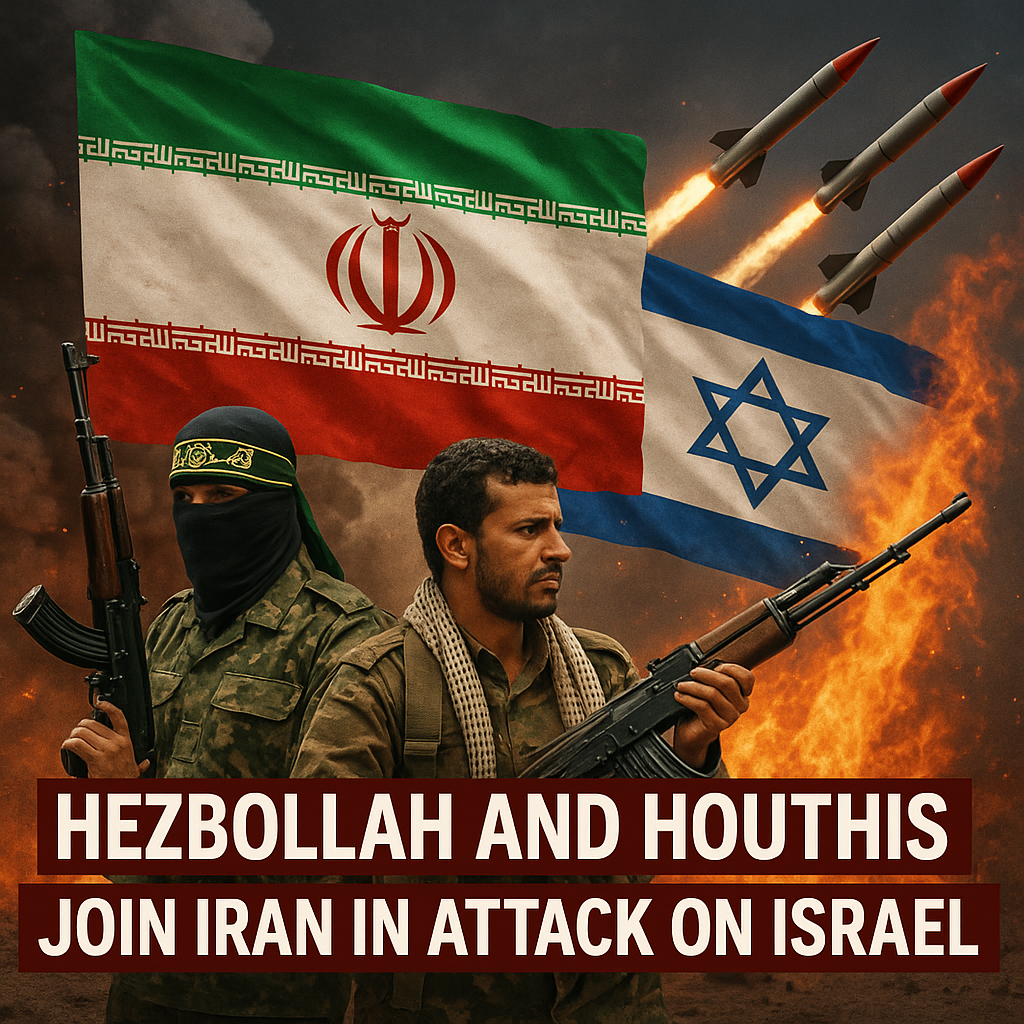
Hezbollah and Houthis Join Iran in Attack on Israel

Hezbollah and Houthis Join Iran in Attack on Israel: Analyzing the New Dynamics
The recent escalation in tensions involving Hezbollah and the Houthis joining Iran in attacks on Israel marks a significant shift in regional alignments. This development invites a closer examination of the implications for the Israeli-Palestinian conflict and broader Middle Eastern geopolitics.

The Context of Alliance: Hezbollah and Houthis
Hezbollah, the Lebanese militant group, and the Houthis, a rebel movement in Yemen, have historically acted as proxies in Iran’s efforts to assert its influence in the Middle East. The recent coordinated attacks signal not just a military collaboration but a strategic alliance that can reshape existing conflicts in the region.


A New Phase in Tensions
Reports indicate that the collaboration between these groups coincides with ongoing unrest in Israeli-occupied territories, where tensions have risen sharply amid protests and violent confrontations. Analysts see this solidarity amongst Iran-backed groups as a direct response to perceived provocations from Israel, particularly in Gaza.


For instance, while Al Jazeera highlights that Hezbollah has long been a staunch ally of Iran, this new alliance with the Houthis reflects a realization within Iran’s leadership of the necessity for unified regional action against Israel. On the other hand, RT provides insight into how this partnership is rooted in a shared anti-Israeli sentiment, aiming to foster unity against a common adversary.
Diverging Perspectives on the Implications
The implications of this alliance are multifaceted, with varying perspectives emerging from analysts and political leaders.
Escalation of Conflict
Some experts warn that this joint operation could lead to a significant escalation in the Israeli-Palestinian conflict. The potential for a broader war drawing in additional state and non-state actors increases the stakes for all involved parties. Sky News sources reflect this viewpoint, emphasizing warnings from Israeli officials about the possibility of an all-out confrontation emerging from these developments.
A Strategic Calculus
Conversely, other analysts argue that while Hezbollah and the Houthis are indeed increasing their military coordination, actual capabilities and intentions may not align with immediate calls for aggressive confrontation. They suggest that these attacks could be more about signaling strength and solidarity rather than stepping toward a full-blown war. This sentiment aligns with sentiments expressed in various Al Jazeera reports, where the call for restraint amid frustrations in Gaza is echoed.
Internal Reactions and Global Perspectives
Reactions from within the countries involved also highlight a spectrum of sentiments. In Lebanon and Yemen, both pro-Hezbollah and pro-Houthi factions express support for the attacks, seeing them as a rightful defense against Israeli aggression. However, there are also voices amid the populations that caution against deepening military involvement in a conflict that could bring unwanted consequences, including increased military retaliation from Israel.
Internationally, reactions have varied. Western governments, alongside regional allies of Israel, have expressed concern over the escalation, seeing the collaboration as a serious threat to stability in the Middle East. This stark contrast in perceptions underscores the challenges in navigating this increasingly complex geopolitical landscape.
The Road Ahead: Uncertainties and Challenges
As the situation evolves, numerous questions remain unanswered. How will Israel respond to this newfound threat? Will the attacks from Hezbollah and the Houthis incite further military intervention? And perhaps most crucially, will the unity among these Iranian-aligned groups hold in the face of potential Israeli retaliation?
In weighing the evidence from cited sources, it is evident that there is no consensus on the outcome of this alliance. While some analysts predict a potential escalation, others advocate for a more cautious interpretation of the situation, suggesting that this may simply be another chapter in the ongoing saga of regional instability wrought by historical grievances and geopolitical competition.
In conclusion, the collaboration between Hezbollah, the Houthis, and Iran concerning the attacks on Israel marks a critical juncture that challenges existing narratives surrounding Middle Eastern politics. This will require careful monitoring, as the ensuing dynamics could either deepen divisions or unexpectedly open avenues for dialogue. As we move forward, maintaining a balanced understanding of these complex layers will be essential in anticipating future developments.















