
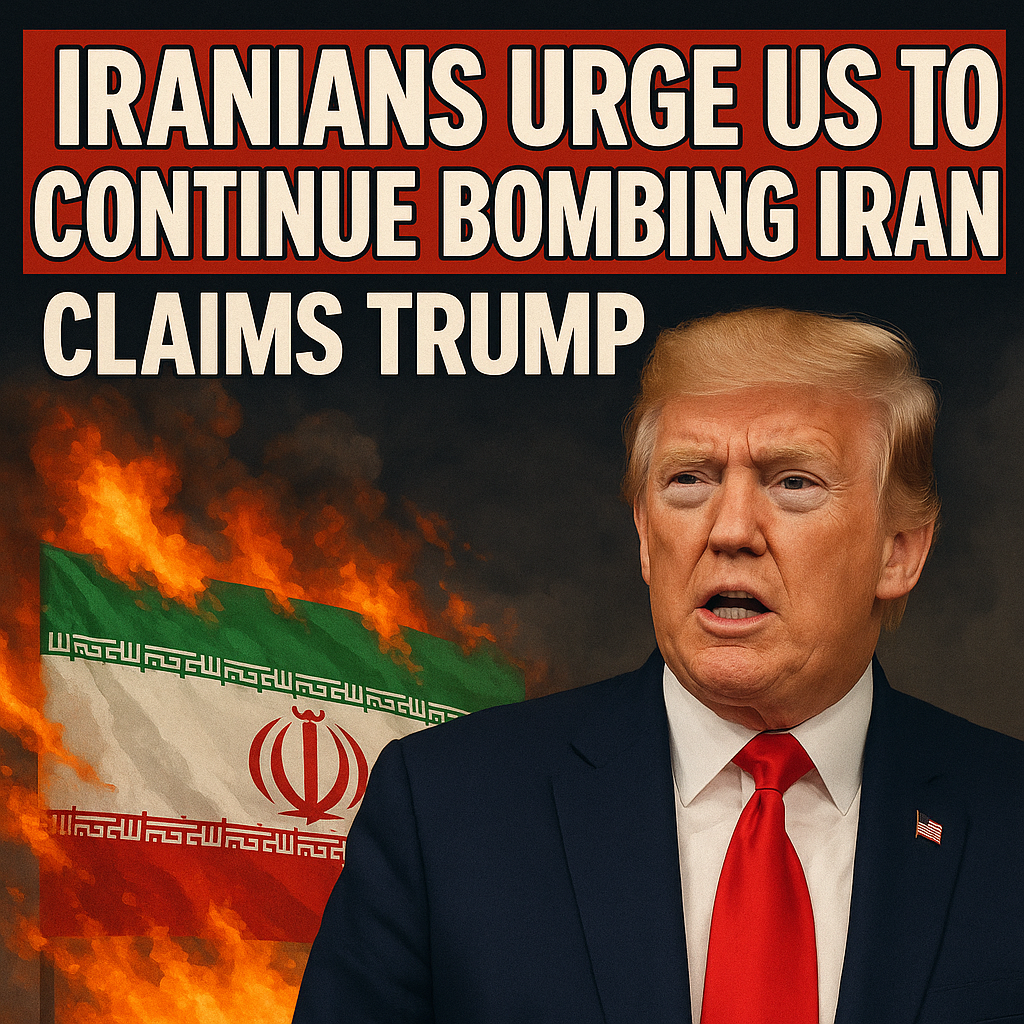
Iranians Urge US to Continue Bombing Iran, Claims Trump

Iranians Urge US to Continue Bombing Iran, Claims Trump
In a recent claim that has ignited widespread debate, former President Donald Trump stated that Iranians are allegedly urging the United States to continue its military actions against Iran. This assertion raises complex questions regarding the perceptions and sentiments of Iranian citizens, as well as the broader geopolitical implications of U.S.-Iran relations.

Context: The Current State of U.S.-Iran Relations
U.S.-Iran relations have been tumultuous for decades, characterized by periods of heightened tension, diplomatic negotiations, and military confrontations. The narrative emerging from Trump’s comments suggests a significant shift in perspective that warrants examination. While he portrays his assertion as a reflection of public sentiment among Iranians, the reality is complex and multifaceted.


Diverse Perspectives on Trump’s Claim
1. Support for Military Action: Some factions within Iran are indeed known to express discontent with the current regime, which may incite calls for foreign intervention. Proponents of this view suggest that a portion of the Iranian population may see U.S. military actions as a means to destabilize a government they perceive as oppressive. Historical data indicates that strategic military pressure can sometimes create openings for civil movements.


2. Anti-Intervention Sentiment: Conversely, many Iranians and international observers criticize foreign intervention, arguing that it often exacerbates tensions and suffering. Voices against U.S. military action underscore the destructive consequences of bombings, which may result in civilian casualties and further entrenchment of the existing regime’s power. In fact, a considerable segment of the population, including notable political factions, argue that U.S. actions ultimately harm the very people they intend to help.
Examining Quantitative and Qualitative Evidence
To understand the complexities behind this issue, both quantitative and qualitative analyses are beneficial. Polling data and surveys are often scarce due to the repressive environment in Iran, which complicates the extraction of genuine public sentiment. Furthermore, anecdotal evidence, including testimonies from Iranian nationals, suggests a mix of hope for reform and resentment toward external powers that have historically intervened in Iranian affairs.
Moreover, the nuanced relationship between the Iranian government and its citizens is often obscured by loud political rhetoric. Many Iranians express a desire for reform and democratic governance, yet are wary of the methods through which such changes might be facilitated. The nationalistic sentiment against external political interference remains strong, a legacy shaped by decades of foreign interventions.
The Broader Geopolitical Implications
The consequences of U.S. military actions on Iran extend beyond immediate tactical benefits and involve long-term strategic ramifications:
Potential Destabilization Across the Region
– Increased Tensions: Any renewed military action could not only destabilize Iran but could also impact neighboring countries, particularly those involved in proxy conflicts with Iran, such as Iraq and Syria. The potential for spillover effects into the larger Middle East may exacerbate existing conflicts.
– Impact on U.S. Foreign Policy: Should the U.S. amplify its military involvement based on Trump’s claims, it could redefine its foreign policy approach, which has been criticized for fostering instability rather than promoting peace. Additionally, it may catalyze further anti-American sentiments across the region.
The Human Cost of Military Engagement
– Civilian Casualties: The human toll of bombing campaigns often outweighs any potential military gains. Civilian casualties could aggravate public sentiment against the foreign interventions, uniting Iranians across differing ideologies against an external aggressor.
– Refugee Crises: Increased military action could lead to mass displacements, triggering refugee crises that strain international resources and provoke regional tensions among host countries.
Conclusion: A Call for Caution
While Trump’s claims may suggest a certain narrative of Iranian populace sentiment, a deeper investigation reveals a tapestry of opinions and sentiments that complicate the situation. The historical context of foreign intervention, coupled with the real-life consequences of military actions, calls for a nuanced approach to U.S.-Iran relations.
Navigating the complexities of this geopolitical landscape requires sober assessment and a firm commitment to understanding the diverse voices within Iran. Engaging with these realities—rather than relying solely on political rhetoric—could unlock more constructive pathways toward peace and stability in the region.















