
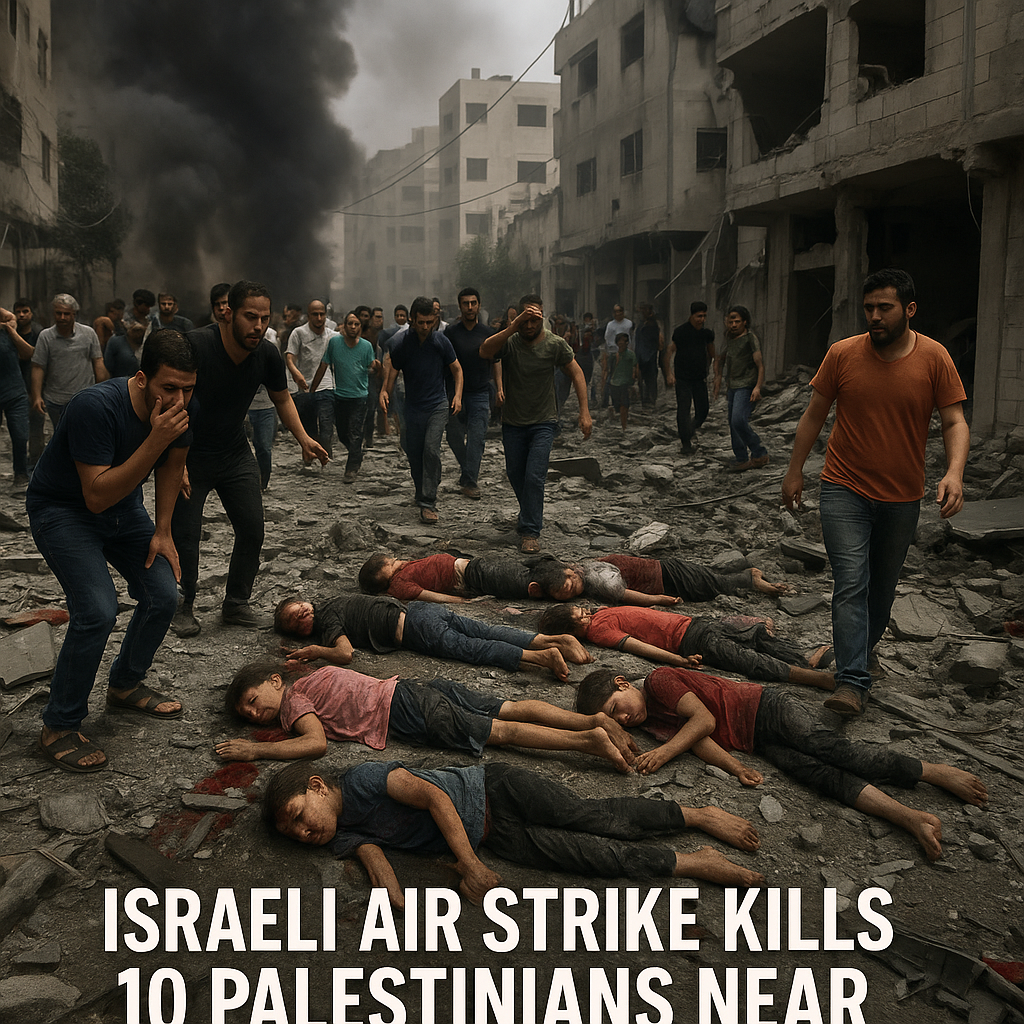
Israeli Air Strike Kills 10 Palestinians Near Gaza School

Israeli Air Strike Claims Lives Near Gaza School: A Complex Tragedy
The recent Israeli air strike near a school in Gaza, resulting in the death of at least ten Palestinians, has sparked outrage and drawn global attention to the ongoing conflict in the region. This incident underscores the complex realities of warfare, where civilian lives are often caught in the crossfire of broader geopolitical issues.

Context of the Air Strike
On April 6, an Israeli air strike targeted what the military referred to as a Hamas stronghold near a school. Reports from various news sources indicate that among the casualties were not just combatants but also civilians, including children. Al Jazeera reported that the attack has drawn international condemnation, with humanitarian organizations calling for an immediate review of targeting protocols in conflict zones.


Divergent Perspectives
Opinions on the air strike vary widely, reflecting the deeply polarized views surrounding the Israel-Palestine conflict. On one side, Israeli officials argue that such strikes are necessary for national security and aim at neutralizing threats posed by Hamas, which they categorize as a terrorist organization. Their narrative emphasizes the need for defense against ongoing rocket fire aimed at Israeli territories. In their defense, an Israeli spokesperson stated, “Our operations focus specifically on operational targets used by terrorists to plan and launch attacks against our civilians.”


Conversely, Palestinian representatives and rights groups condemn the strike as an egregious violation of human rights, particularly given its proximity to a school—a place meant for refuge and learning. The United Nations has urged all parties involved to exercise restraint and prioritize the protection of civilians. Amnesty International highlighted that “the indiscriminate nature of such air strikes, especially near civilian infrastructures, constitutes a serious breach of international humanitarian law.”
Humanitarian Impact and Responses
The fallout from the air strike extends beyond the immediate loss of life. Families have been left devastated, and the humanitarian crisis in Gaza has grown more profound. Children and non-combatants often bear the brunt of military actions, which raises questions about the ethics of wartime strategies that potentially endanger innocent lives.
Healthcare facilities in Gaza already struggle with limited resources. The local hospitals faced an influx of casualties and many more remain traumatized. According to a Sky News report, the medical services were overwhelmed, further complicating an already dire situation. Many are now calling for increased humanitarian aid to alleviate the suffering of the Palestinians who find themselves in a continuous cycle of conflict.
Calls for Restraint and Diplomatic Solutions
As the international community reacts to this tragic event, voices calling for diplomatic dialogues grow louder. Some analysts suggest that military action, such as the recent air strike, often exacerbates tensions rather than resolving them. Diplomatic efforts are seen as essential for establishing a long-lasting peace, particularly by renewing discussions around the two-state solution—a goal that has remained elusive for decades.
The contrasting narratives surrounding this air strike reflect a broader debate about warfare ethics and the impact of military decisions on civilian lives. Many experts warn that without a fundamental change in approach to the Israeli-Palestinian relationship, such tragedies are likely to recur.
Conclusion: A Path Forward?
The air strike near a Gaza school that killed ten Palestinians illustrates the tragic intersection of military action and civilian life in conflict zones. While both sides present arguments rooted in a desire for security and protection, the humanitarian consequences call for urgent reflection and re-evaluation of strategies employed in warfare.
The complex realities on the ground demand an empathetic understanding of the lives affected. Ongoing discussions among global leaders and local stakeholders must prioritize peace-building measures. Until a comprehensive strategy emerges that respects human rights while addressing security concerns, the cycle of violence is poised to continue, leaving many innocents caught in the middle.
As we grapple with this incident and its implications, it becomes increasingly clear that fostering dialogue, encouraging restraint, and placing the value of human life at the forefront of military decision-making are essential steps toward a more peaceful future in the region.















