
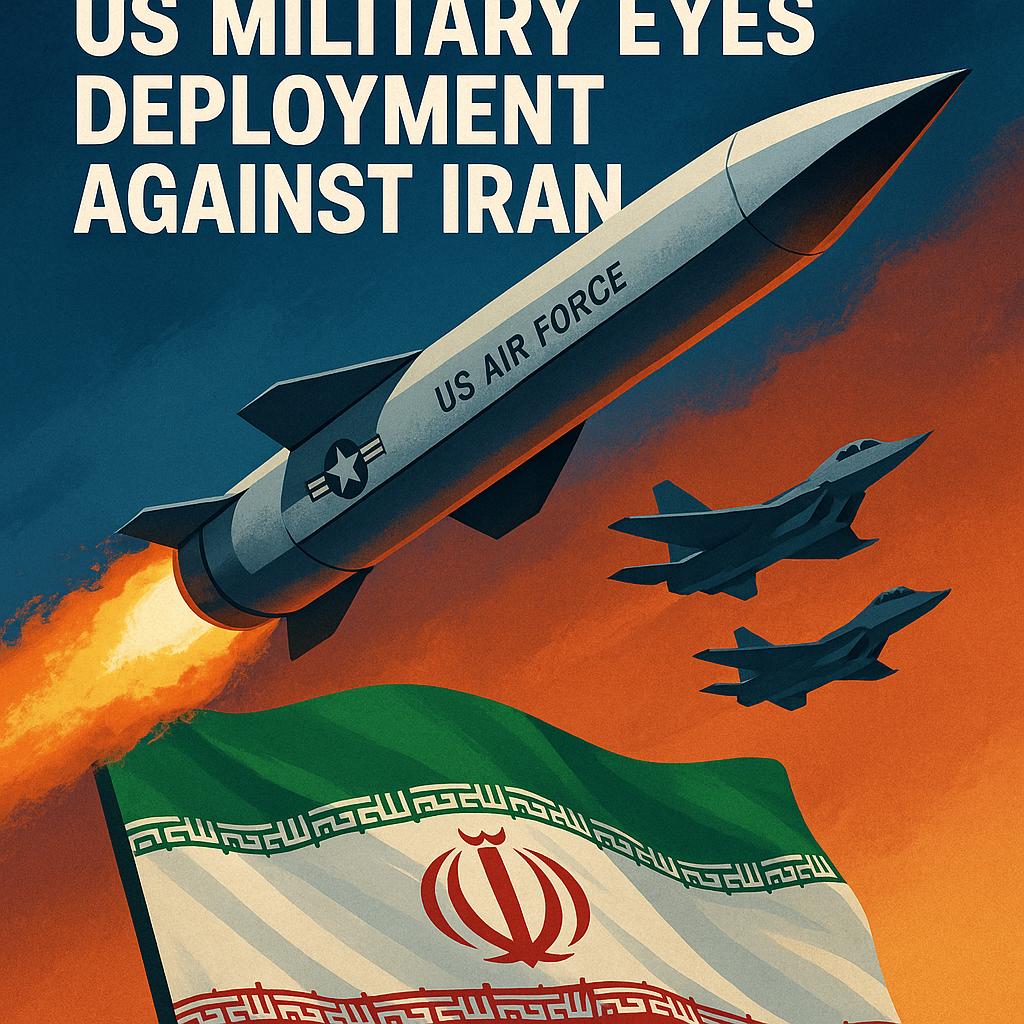
Hypersonic Missiles: US Military Eyes Deployment Against Iran

Hypersonic Missiles: US Military Eyes Deployment Against Iran
In the realm of modern warfare, hypersonic missiles represent a cutting-edge technology that militaries are eager to harness. Recently, discussions surrounding the potential deployment of hypersonic missiles by the U.S. military against Iran have gained momentum, stirring a complex dialogue among defense experts, political analysts, and international relations scholars.

The Tactical Advantage of Hypersonic Missiles
Hypersonic missiles, capable of exceeding speeds of Mach 5, have become a focal point for military strategies due to their unique capabilities. Unlike traditional ballistic or cruise missiles, which follow predictable trajectories, hypersonic missiles can maneuver during flight, making them significantly harder for current missile defense systems to intercept.


The strategic importance of these missiles is reflected in recent statements from military officials. For instance, a report by RT highlighted that U.S. officials are considering these advanced weapons as a crucial tool to deter threats from Iran. The reasoning is that their rapid deployment and low-altitude trajectory would complicate Iran’s defense efforts.


The Iranian Perspective
On the flip side, Iran has expressed concerns over the U.S.’s military advancements. Iranian officials have raised alarms regarding the balance of power in the region, arguing that such deployments could escalate military tensions and lead to an arms race. A report from Al Jazeera underscored this sentiment, mentioning that Iran’s defense strategy increasingly emphasizes the development of its own advanced missile systems. This countermeasures approach aims to ensure a robust defensive posture amid perceived threats from neighboring nations, particularly the U.S.
In response to these developments, Iran’s military has reiterated its commitment to maintaining sovereignty and territorial integrity. By bolstering their military capabilities, they contend that they are preparing for potential confrontations while making a case against what they perceive as aggressive U.S. posturing.
A Closer Look at the Geopolitical Implications
The consideration of hypersonic missile deployment brings forth a series of geopolitical questions that extend beyond just military strategy. The concept of deterrence, primarily rooted in the balance of power, becomes even more intricate in light of hypersonic capabilities. The U.S. insists that possessing these weapons serves a defensive purpose, but critics argue that it could provoke more aggressive posturing from adversaries like Iran.
Assessing the Risks of an Arms Race
One of the significant concerns regarding hypersonic weapons lies in the potential triggers for an arms race. Arms experts warn that the proliferation of such technologies may compel adversarial nations to develop similar capabilities, further destabilizing the regional power dynamics. As noted in various analyses, including those from Sky News, a race to develop hypersonic systems could lead to a cycle of escalation, as nations scramble to achieve superiority in an already volatile landscape.
The discourse surrounding these weapons is not merely academic; it manifests into real-world implications that define the security architecture of the Middle East. The previous decades have shown that military enhancements often prompt reciprocal actions that risk military confrontations.
Navigating the Path Forward
As the U.S. contemplates the deployment of hypersonic missiles against Iran, both policymakers and military strategists face a convoluted path laden with risks and considerations. The dual-edge nature of hypersonic technology—simultaneously acting as a deterrent and potential catalyst for conflict—needs meticulous evaluation.
The stakes are higher than mere military might; they encompass diplomatic relationships, economic sanctions, and the humanitarian implications of conflict in a region ardently seeking stability. Moreover, the influence of global dialogue on disarmament and weapons control becomes crucial. The need for international frameworks that can effectively manage these challenges cannot be overstated.
Conclusion: The Delicate Dance of Deterrence
While hypersonic missiles may indeed afford the U.S. military a new tactical advantage, their deployment should be approached with cautious prudence. Reactions from Iran and the broader implications for regional stability underscore the complexity of this matter. As military leaders and political officials engage in dialogue, the challenge will be to balance national security interests with the risk of escalation.
The global community must stay vigilant and engage in open dialogues aimed at de-escalation, understanding that the introduction of hypersonic missiles into the theater of international relations is not just a matter of military superiority—it is about safeguarding peace and stability in an increasingly interconnected world.















