
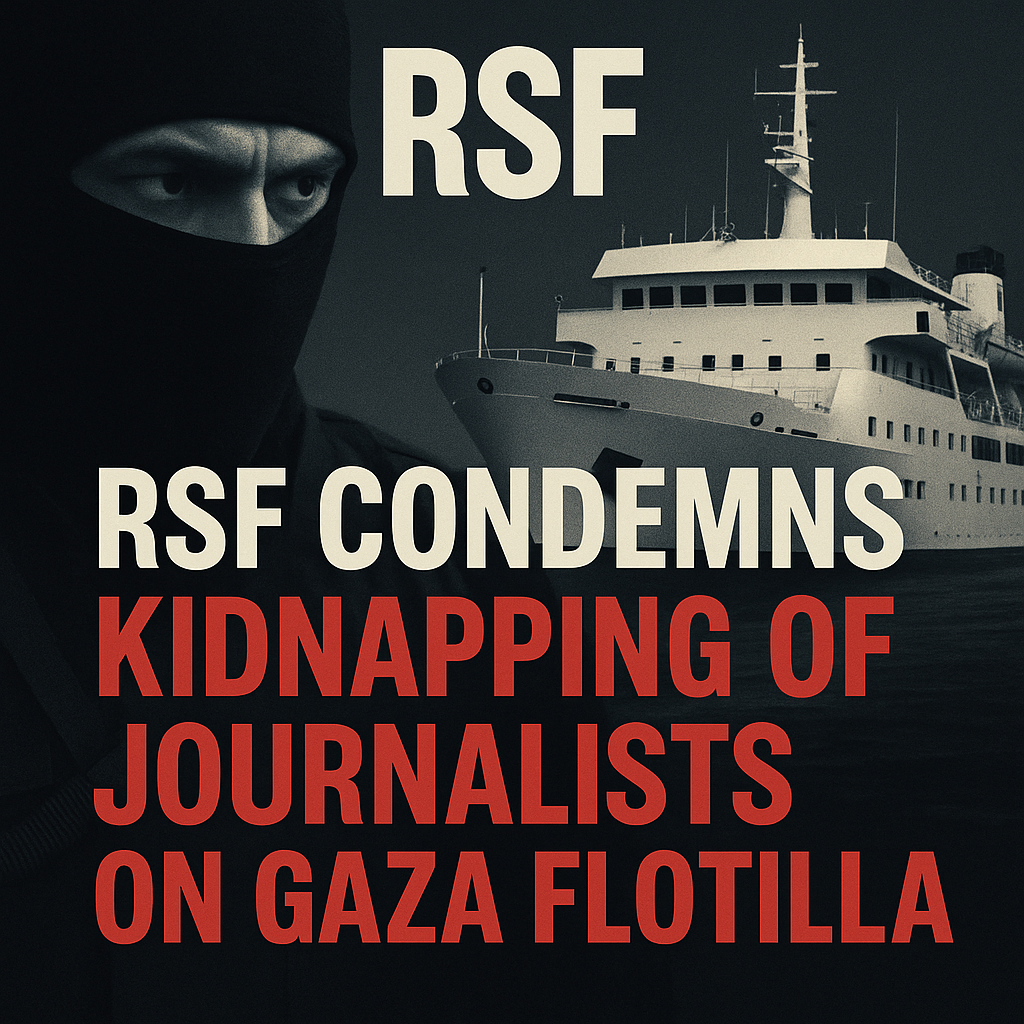
RSF Condemns Kidnapping of Journalists on Gaza Flotilla

RSF Condemns Kidnapping of Journalists on Gaza Flotilla
The recent kidnapping of journalists aboard a Gaza-bound aid flotilla has prompted strong condemnation from Reporters Without Borders (RSF), highlighting the ongoing risks faced by media personnel in conflict zones. Amidst increasing tension in the region, this incident underscores the vulnerability of journalists tasked with covering humanitarian missions.

Context of the Incident
On April 30, 2026, three journalists were taken hostage while they were part of a flotilla intended to deliver aid to Gaza. This event drew significant media attention not only due to the abduction itself but also because it raises critical questions regarding press freedom in conflict areas. RSF released an official statement expressing alarm over the circumstances surrounding the kidnapping, emphasizing that attacks on journalists can severely restrict the public’s right to receive information.


A spokesperson for RSF described the kidnapping as “a dangerous escalation” that threatens to further limit the already constricted space for independent journalism in regions affected by conflict. The organization reinforced the idea that such actions are direct attacks not just on the individuals affected but on the fundamental principles of free speech and transparency.


Diverging Perspectives on Press Freedom
Several points of view have emerged surrounding this incident. While RSF and other press advocates stress the need for safeguarding journalists, some political analysts argue that in regions experiencing intense military conflict like Gaza, the lines blur between combatants and non-combatants, and journalists often find themselves in perilous positions that can jeopardize their safety.
1. Advocacy for Journalistic Safety:
– Many organizations, including the Committee to Protect Journalists (CPJ), echo RSF’s sentiments. They highlight that the media acts as a watchdog, providing critical coverage of humanitarian issues. Robbed of this function, public awareness wanes, leading to unchallenged power dynamics.
2. Military and Political Context:
– Opponents point out that journalists, especially in politically charged areas, can become entwined in the conflicts they report on. Their presence can sometimes be exploited by factions within the conflict, complicating the narrative and placing them at risk. Political viewpoints often suggest that the role of journalists should be reassessed in such complex scenarios to enhance their protection, rather than solely relying on external condemnations.
The Need for Solidarity and Action
In light of this kidnapping incident, there is an urgent call for increased protection for journalists, particularly in war-torn areas. This situation points to a critical gap in the implementation of safety protocols for media professionals, coupled with a need for greater international solidarity against such acts of violence.
– Global Responses: Many nations and advocacy groups are now speaking out against the normalization of violence toward journalists, calling for global standards that would provide safeguards and ethical requirements for protecting media personnel in conflict zones.
– Local Engagement: Initiatives aimed at fostering collaboration between journalists and local communities could serve as a safeguard, where journalists can receive vital intel on threats while also empowering local voices through their reporting.
Navigating a Complex Landscape
As the world continues to witness rising incidents of violence against journalists, the abduction on the Gaza flotilla presents a complex web of challenges that necessitates open dialogue. The reactions from RSF and other media organizations reflect a critical stance against the ongoing threat to press freedom while also acknowledging the multifaceted environment in which journalists operate.
While there is consensus that journalists must be protected, the varying interpretations of their role indicate that solutions might not be straightforward. Striking a balance between the risks of reporting and ensuring safety will require concerted efforts from media, political, and community leaders alike.
In conclusion, the incident underscores the precarious nature of journalism in conflict zones and emphasizes the pressing responsibility that comes with this profession. A collective commitment to enhance the safety of journalists is essential to securing a robust and informed discourse on humanitarian issues, ensuring that the truth continues to be told amidst adversity. The kidnapping not only disrupts the lives of those directly affected but also sends a chilling message to other media professionals operating in similar environments.















