
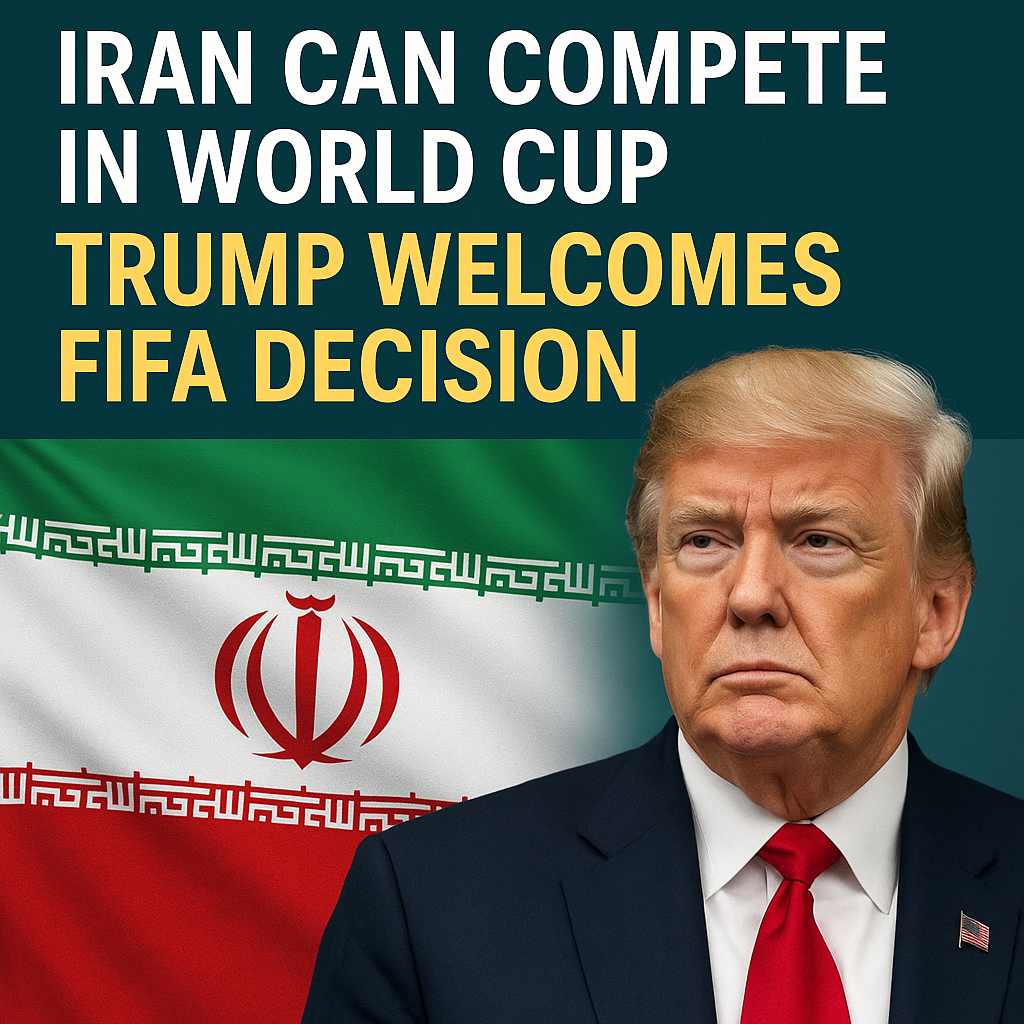
Iran Can Compete in World Cup: Trump Welcomes FIFA Decision

Iran Can Compete in World Cup: Trump Welcomes FIFA Decision
The recent decision by FIFA to allow Iran to compete in the upcoming World Cup has sparked a significant amount of discussions, with figures like former President Donald Trump weighing in on the implications of this news. This decision not only highlights the evolving political landscape but also emphasizes the complexity of sports as a platform for diplomacy and national representation.

The Political Landscape
The relationship between Iran and the United States has been fraught with tension for decades. Trump’s comments welcoming FIFA’s decision reflect a nuanced understanding of the potential for sports to bridge divides. “Iran has a rich history in football, and it’s good for them to be able to showcase their talent on a global stage,” Trump stated, emphasizing the importance of inclusivity in sports.


This perspective is not universally accepted, however. Critics argue that allowing Iran a platform at such a prestigious event could detract attention from human rights issues within the country, particularly in light of recent protests surrounding women’s rights and freedom of expression. Iran’s national football team has historically been a source of national pride, yet it has often been intertwined with the country’s political narratives, which complicates the conversation.


Diverse Perspectives on Iran’s Participation
Support for Iran’s World Cup participation is echoed by sports analysts and international relations experts who see the event as an opportunity for diplomacy. According to a recent piece in Al Jazeera, the visibility that comes with competing in global tournaments could foster a more open dialogue between Iran and other nations. This sentiment, while optimistic, raises questions about where the line should be drawn between sports and politics.
On the opposing side, voices from various human rights organizations argue that such platforms should not be granted without accountability. They assert that the Iranian government has used international sporting events to distract from domestic issues. As RT reported, several activists are calling for a conditional participation that requires Iran to address human rights issues before taking the field. This perspective reflects a growing understanding that sporting events can, and perhaps should, double as stages for advocacy and awareness.
The Broader Implications for International Relations
The decision for Iran to compete also opens the door for discussions about broader implications on international relations. A FIFA-sanctioned platform allows countries into the global narrative, potentially nudging them to align more closely with international norms. Analysts suggest that increased interaction through sports could provide a pathway for soft diplomacy, facilitating exchanges that might not occur in political arenas.
However, some experts caution that this optimism may be naive. The complexities of Iran’s internal politics—especially under the current regime—mean that sports alone are unlikely to remedy longstanding grievances. According to a Sky News report, Iranian players often face pressure from their government to serve as pawns in larger political agendas, diluting the purity of the sport itself.
Finding Common Ground
As countries like the United States navigate their relationships with Iran, the World Cup serves as a reminder of the potential for human connection through sport. Many citizens advocate for the use of sporting platforms to advance human rights and democracy, transcending the barriers typically erected by governments.
It’s worth noting that while the participation of Iran in the World Cup could be a step towards engagement, it must be accompanied by a commitment to accountability. During high-stakes events like the World Cup, the international community can amplify voices demanding change, using the spotlight to advocate for reforms within Iran.
In summary, as the landscape surrounding Iran’s participation in the World Cup unfolds, it reveals both the promise and the pitfalls entwined in the relationship between sport and politics. While figures like Trump frame the decision positively, highlighting the value of global representation, the concerns raised by human rights advocates remind us that the stakes are high. Ultimately, the conversation surrounding Iran at the World Cup captures the complexity of using sports as a vehicle for dialogue, reconciliation, and change.















