
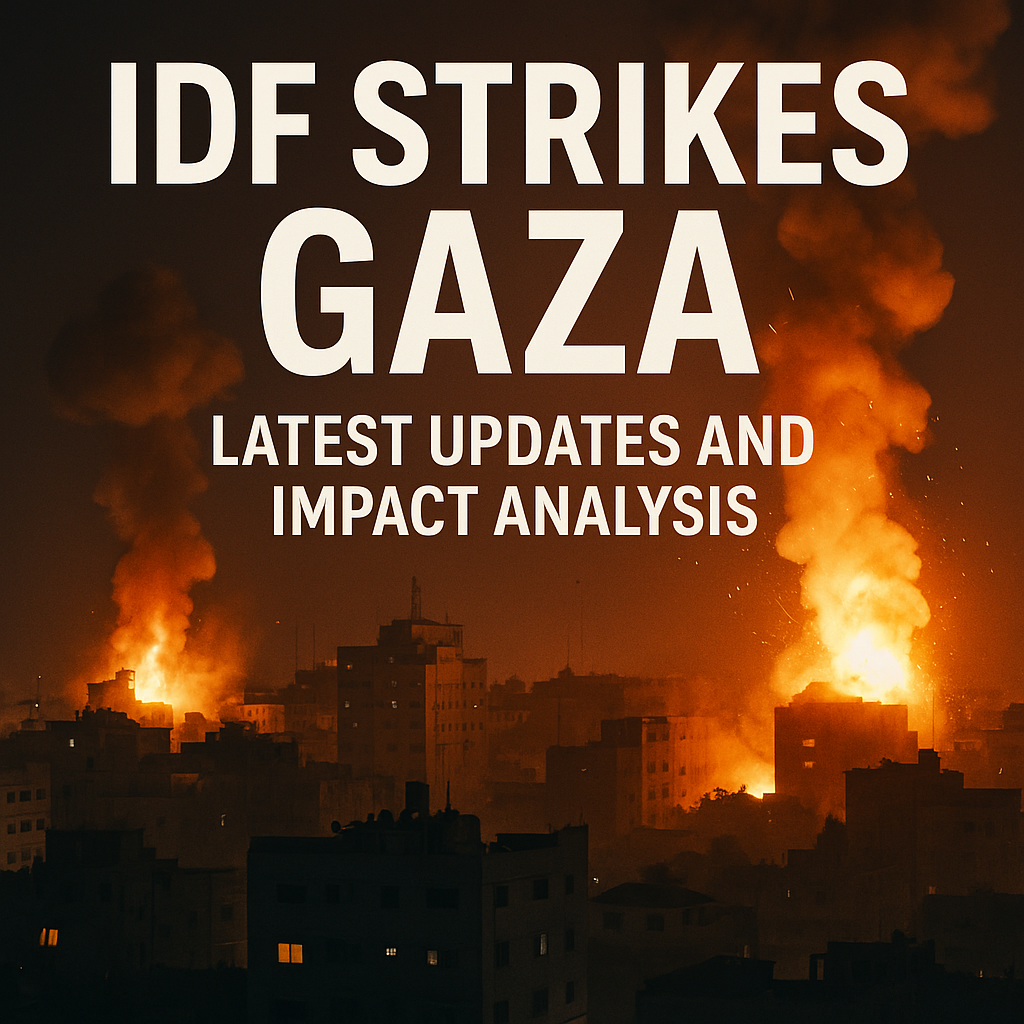
IDF Strikes Gaza: Latest Updates and Impact Analysis

IDF Strikes Gaza: Latest Updates and Impact Analysis
The ongoing conflict in the Gaza Strip continues to escalate, with the Israel Defense Forces (IDF) intensifying airstrikes in response to recent incidents. This situation, which has garnered significant media attention, presents a complex array of perspectives, emotions, and geopolitical ramifications.

The Context of the Strikes
In recent weeks, tensions have surged between Israel and Palestinian factions, culminating in a series of Israeli airstrikes across Gaza. According to reports from various sources, including Al Jazeera and RT, these strikes were a direct retaliation to rocket fire aimed at Israeli territories. The IDF claims that their operations are focused on eliminating military objectives, asserting their right to defend their citizens against hostile acts.


However, civilian casualties and widespread destruction have raised serious humanitarian concerns. The United Nations and various human rights organizations have condemned the strikes, calling for immediate de-escalation. The impact on Gaza’s already fragile infrastructure, which has suffered through years of blockade and previous conflicts, is severe. Schools, hospitals, and homes have been damaged or destroyed, exacerbating the humanitarian crisis in the region.


A Humanitarian Crisis Unfolding
Statistics reveal the dire consequences of the increased military engagement. Reports indicate that hundreds of civilians have been affected, with rising numbers of injured and displaced individuals. Organizations like the World Health Organization have raised alarms regarding the implications for health services, which are already under strain due to ongoing nascent crises.
Furthermore, the psychological toll on the population, particularly on children and the elderly, poses long-term challenges. The repeated cycles of violence leave deep emotional scars, contributing to a community already plagued by trauma. This urgency has compelled activists and international bodies to call for ceasefire negotiations and humanitarian aid provision.
Diverging Perspectives on Military Justifications
On one hand, Israeli officials maintain that the strikes are essential for national security and aim to target militants responsible for aggression. They argue that any military action taken is in self-defense and is aimed explicitly at neutralizing imminent threats. The Israeli government, through its IDF spokespersons, has emphasized the importance of protecting its citizens from incessant rocket fire emanating from Gaza.
Conversely, Palestinian authorities and various advocacy groups argue that such military actions disproportionately impact civilians and contribute to further unrest. The cycles of retaliation create an environment where mutual distrust flourishes, making the prospect of peace negotiations increasingly difficult. This dual narrative emphasizes the complexity of the situation, where both sides present compelling arguments rooted in their own experiences and history.
International Reactions and Calls for Peace
The international community is watching closely, with varying responses to the latest developments. Some countries have rallied behind Israel’s right to defend itself, while others criticize the scale of the military response and urge restraint. The United Nations Secretary-General has called for an immediate halt to hostilities, illustrating the urgent need for dialogue and peace efforts.
Civil society groups are stepping up their efforts to mediate and advocate for the affected populations. While debates continue within the UN regarding resolutions and potential sanctions, grassroots initiatives emerge globally, pushing for peaceful resolutions based on mutual recognition and respect.
The Path Forward: Seeking Resolution
As the IDF continues its operations, the future remains uncertain. The conflict highlights deep-seated issues that transcend military actions, rooted in decades of territorial disputes, historical grievances, and socio-political dynamics. Finding a resolution will require not just halting violence but addressing underlying tensions and pursuing genuine dialogue.
Negotiations must consider the rights and aspirations of both Israelis and Palestinians. The intricate web of relationships, grievances, and historical narratives complicates this endeavor, but it is essential for lasting peace.
Conclusion: A Call for Dialogue
The current situation, marked by heightened airstrikes in Gaza and retaliatory actions by Israel, brings urgency to the ongoing dialogues surrounding peace and humanitarian aid. As civilians continue to bear the brunt of the conflict, a concerted effort toward dialogue and mutual understanding will be paramount in seeking a path to stability. The need for empathy amidst turmoil challenges all involved to reconsider not just their military strategies, but also their broader approach to peace in a deeply divided region.
As communities on both sides of the conflict grapple with fear, loss, and hope, the commitment to find common ground remains a daunting but necessary objective for leaders worldwide.















