
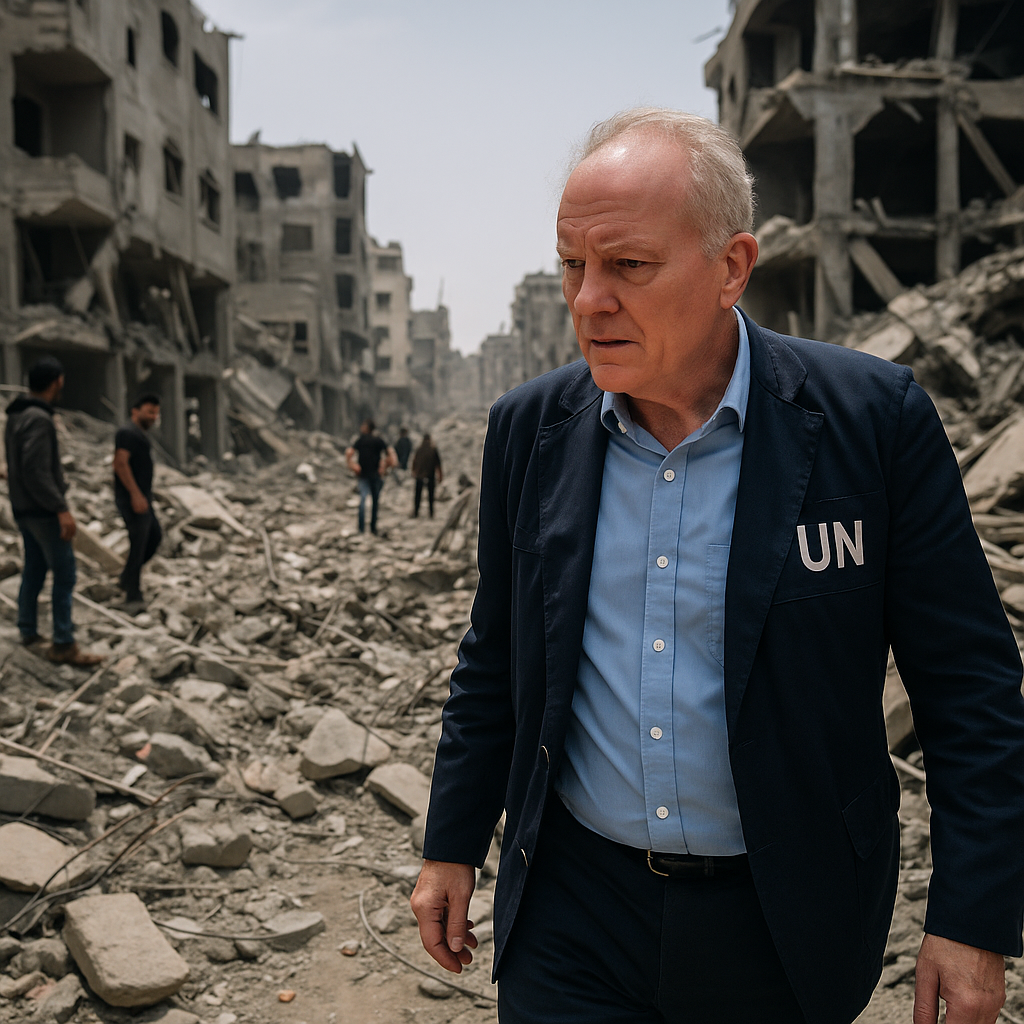
UN Relief Coordinator Tours Gaza City Devastation

UN Relief Coordinator Tours Gaza City Devastation: A Complex Crisis Unveiled
The recent visit by the UN Relief Coordinator to Gaza City has brought to light the staggering humanitarian crisis unfolding in the region. With reports of widespread destruction and dire living conditions, the need for urgent assistance has never been more pressing.

A Dire Humanitarian Situation
The UN Relief Coordinator’s tour illustrated the profound impact of ongoing conflicts in Gaza City. Eyewitness accounts and footage reveal streets lined with rubble, crumbled buildings, and families displaced from their homes. The conditions are stark, with the International Organization for Migration (IOM) estimating that nearly 600,000 people have been displaced due to recent violence.


Al Jazeera reported that many areas of Gaza have been deprived of essential services, including clean water and electricity. With virtually no infrastructure left intact in certain neighborhoods, humanitarian agencies are grappling with the logistics of delivering aid to desperate families.


Key Challenges Faced by Humanitarian Agencies
Humanitarian workers face numerous challenges when attempting to provide relief in such a chaotic environment. Access to affected areas is fraught with danger, as ongoing military operations complicate matters. Furthermore, restrictions on supplies due to border controls impede the timely delivery of critical resources.
According to Sky News, the blockade on Gaza has severely limited the passage of food, medicine, and other essentials, making the work of relief agencies even more complex. Some relief workers report that the emotional toll taken on both the workers and the affected families is severe, with many feeling a sense of helplessness against the scale of the disaster.
Divided Opinion on Solutions
Despite the gravity of the situation, opinions diverge on the best path forward for Gaza. Some analysts advocate for increased international intervention, suggesting that more robust efforts are needed to address both immediate needs and long-term solutions. “Aid cannot be the only answer; we need a political solution,” warned a spokesperson from the Office for the Coordination of Humanitarian Affairs (OCHA).
Conversely, some voices emphasize the importance of respecting local governance structures in Gaza, arguing that external intervention can sometimes exacerbate existing tensions. RT reported on various activist groups that call for a focus on peace-building measures, arguing that humanitarian aid should go hand-in-hand with efforts to facilitate dialogue among conflicting parties.
The Role of International Aid
A pressing question remains: how can international aid be effectively channeled to those who need it most without inadvertently contributing to the ongoing strife? The UN Relief Coordinator’s observations highlight the necessity of a coordinated approach to ensure resources reach vulnerable populations while taking local dynamics into account.
Aid organizations have recognized that setting up efficient response mechanisms requires not just material support but also fostering local capacities. A report by Al Jazeera indicates that sustainable recovery in Gaza hinges on empowering local communities to utilize available resources more effectively.
Looking Ahead: A Fragile Future
While the situation may seem overwhelmingly bleak, experts caution against despair. The UN Relief Coordinator’s visit is a vital step in raising awareness of the crisis and galvanizing support from the international community. As relief operations ramp up, the hope is that a combination of immediate humanitarian assistance and long-term political solutions can be sought.
Continuing dialogue among various stakeholders—including regional governments, NGOs, and civil society—will be crucial in navigating the complexities of Gaza’s humanitarian landscape. The pathway to recovery is undoubtedly fraught with challenges, but it is a conversation that must continue if there is any hope for a brighter future.
Conclusion: A Call for Action
The recent tour of Gaza City by the UN Relief Coordinator serves as a clarion call for action. With the humanitarian situation reaching critical levels, the combined efforts of local and international actors are essential. Only through a collaborative approach—one that acknowledges the nuanced realities on the ground—can a potential roadmap toward relief and recovery be established.
As this crisis continues to unfold, vigilance and engagement from the global community will be needed to amplify the voices of those suffering and pave the way for meaningful change.















