
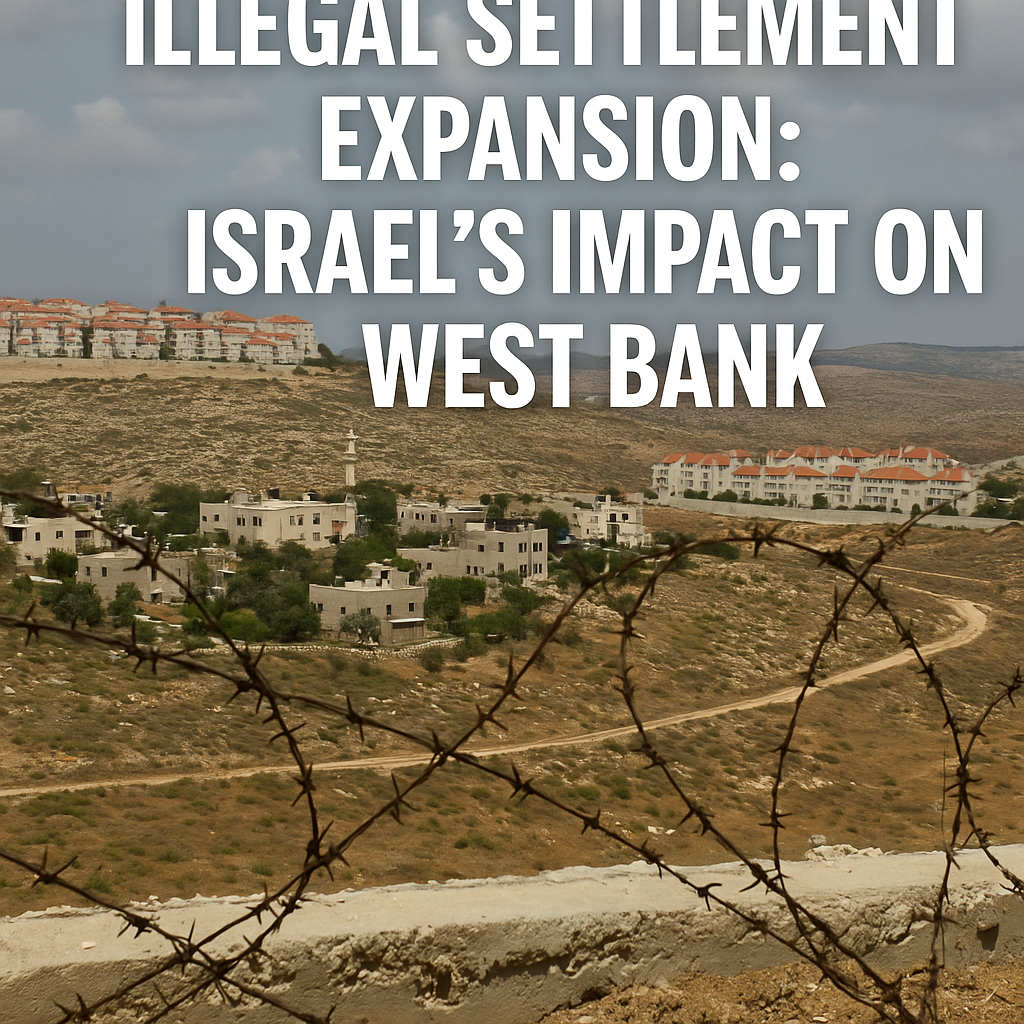
Illegal Settlement Expansion: Israel’s Impact on West Bank

Illegal Settlement Expansion: Israel’s Impact on the West Bank
Illegal settlement expansion is a contentious issue that continues to shape the geopolitical landscape of the West Bank. As Israel moves forward with plans to expand its settlements, the ramifications on the local Palestinian population and international relations complicate an already fragile scenario.

The Current Landscape of Settlement Expansion
Settlement expansion in the West Bank has gained renewed focus due to recent reports detailing how these actions are influencing the region. According to Al Jazeera, the Israeli government has significantly accelerated the growth of its settlements, with plans for thousands of new homes in what is termed “Area C,” which is predominantly under Israeli control. The implications of this expansion are vast, affecting not only the demographics of the area but also the daily lives of Palestinians who often find themselves marginalized and dispossessed.


The expansion is characterized by both official government plans and informal outposts that often operate with little oversight. Reports indicate that the current Israeli leadership is committed to bolstering these settlements, which some factions view as a crucial part of Israel’s security strategy while others see it as a blatant disregard for international law. The Israeli government cites historical and religious claims to the land, but this reasoning is met with skepticism from many international observers.


Palestinian Perspectives on Settlements
The Palestinian response to the expansion of illegal settlements is one of deep concern and frustration. Many Palestinians perceive these actions as an existential threat to their claims to land and sovereignty. In various reports from RT News, Palestinian officials have consistently condemned the settlement expansion, labeling it a significant barrier to peace. They argue that these settlements not only encroach on vital land but also contribute to an increasingly fragmented geography for Palestinians, hindering their ability to build a coherent state.
Furthermore, the United Nations has repeatedly voiced its opposition to the settlements, insisting that they contravene international law. Resolutions passed have called for an end to settlement activities, yet enforcement remains elusive. The ongoing expansion has led many Palestinians to believe that negotiations for a two-state solution are being undermined, presenting a dire outlook for future peace efforts.
International Reactions and Divisions
International reactions to Israel’s settlement expansion have been varied, reflecting a complex geopolitical landscape. While some Western nations have expressed tacit or direct opposition to the settlements, others, particularly within the U.S. administration, have been more circumspect. Historically, the U.S. has provided substantial diplomatic support to Israel, often softening criticisms of its settlement policies, which many view as inconsistent with its advocacy for a two-state solution.
On the other hand, organizations like the European Union have been more vocal in their disapproval of the expansion, stating that it undermines peace efforts and could incite further violence. The international community finds itself at a crossroads as it weighs the foundational principles of sovereignty and self-determination against strategic alliances and historical contexts.
Looking Ahead: Prospects for Peace
The future of the West Bank remains uncertain amidst ongoing settlement expansion. The Israeli government’s unwavering commitment to these settlements raises questions about the feasibility of a two-state solution. Conversely, as Palestinian grievances deepen, calls for solutions beyond traditional negotiations, such as greater recognition of Palestinian rights in international forums, are becoming more pronounced.
In conclusion, the issue of illegal settlement expansion in the West Bank encapsulates a complex tapestry of legal, political, and emotional threads. As the Israeli government continues its expansionist policies, the impact on Palestinian communities and the broader quest for peace in the region becomes increasingly precarious. The situation demands a nuanced understanding and a commitment from all parties to seek equitable solutions amidst a landscape fraught with historical grievances and present-day challenges.















