
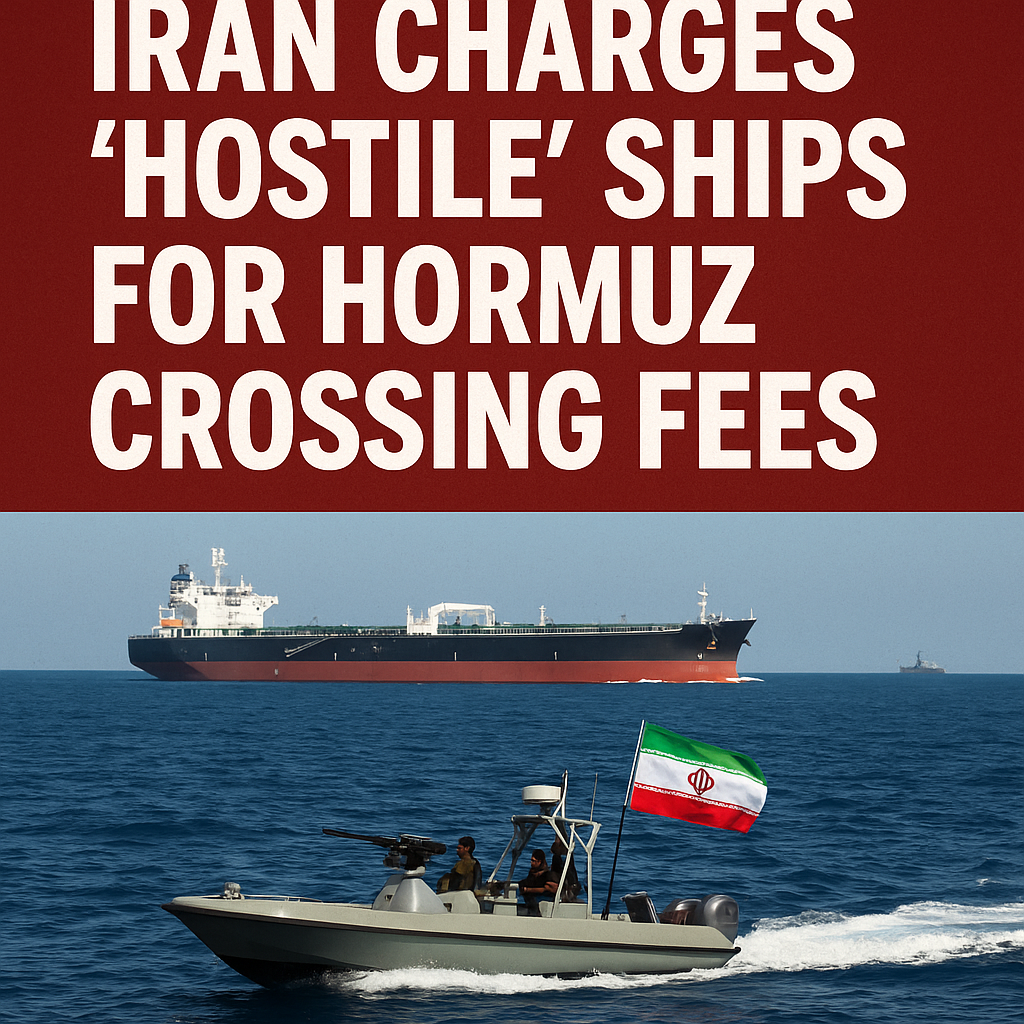
Iran Charges ‘Hostile’ Ships for Hormuz Crossing Fees

Iran Charges ‘Hostile’ Ships for Hormuz Crossing Fees
Iran’s recent decision to impose crossing fees on what it deems “hostile” ships in the Strait of Hormuz has sparked significant debate among maritime security analysts and international political commentators. The Strait of Hormuz is one of the world’s most critical shipping lanes, responsible for transporting roughly 20% of the oil traded globally. This article will explore the implications of Iran’s actions, the varying international perspectives, and the wider context of maritime security in the region.

The Shifting Dynamics in the Strait of Hormuz
Iran’s maritime strategy reflects its broader geopolitical aims, particularly in response to what it sees as threats from rival powers, including the United States and Israel. Amid increasing tensions, particularly regarding military presence in the Gulf, Tehran’s tactics involve both economic pressure and a form of deterrent action.


According to reports, Iran’s navy has begun charging fees to foreign ships that it considers potentially hostile, suggesting that vessels not adhering to these fees may face consequences or be denied passage through this vital waterway. An Iranian official explained that the charge is intended to “protect the Islamic Republic’s naval interests” and ensure safety in the region. This action ostensibly aims to reaffirm Iran’s sovereignty and control over its territorial waters.


Implications for International Trade
The potential fallout from this policy is significant. Several maritime analysts have raised concerns about the implications of such fees on international trade routes. The Strait of Hormuz is indispensable for the global oil supply chain; disruptions or escalated tensions could lead to increased shipping costs or delays.
Countries heavily reliant on oil shipments from the Gulf may find themselves navigating an uncertain landscape. According to a Sky News report, analysts predict that these fees could lead to either enhanced security measures from nations with interests in the region or retaliation, further escalating the ongoing tensions between Iran and Western nations.
Contrasting Responses
Responses to Iran’s policy have been mixed on the international stage. U.S. officials have condemned the fees, labeling them as a violation of international norms governing maritime law. They warn that the U.S. and its allies might increase naval patrols to ensure the safety of shipping lanes. In contrast, some analysts maintain that Iran’s actions reflect its strategic goals of asserting dominance over the Gulf region, particularly to deter adversaries.
On the Iranian side, officials view this move as a legitimate exercise of their rights in response to what they perceive as the hostile presence of foreign naval forces in the Gulf. This perception of encirclement relates to broader regional conflicts, including tensions with Saudi Arabia and ongoing issues surrounding nuclear agreements.
The Broader Context: Regional and Global Security
The situation in the Strait of Hormuz is emblematic of greater regional conflicts. The maritime domain is not just about free passage; it also intersects with arms races, territorial disputes, and overarching national strategies.
Iran has consistently sought to leverage its geographic position as a means of exerting influence over regional affairs. Reports from Al Jazeera highlight that this financial maneuver could act as leverage in broader diplomatic negotiations, particularly concerning Iran’s nuclear program and its role in regional conflicts. While the international community grapples with these complex interdependencies, the question remains: can the Strait of Hormuz remain a secure corridor for commerce amidst geopolitical rivalries?
Future Outlook
As the debate continues over Iran’s crossing fees, the implications for maritime trade, national security, and international relations will likely remain complex and fluid. Experts suggest that stakeholders, including oil-dependent nations and international maritime organizations, must engage diplomatically to mitigate risks.
The urgency to establish a framework that allows for safe passage through the Strait of Hormuz becomes paramount, as rising tensions might eventually compel nations to rethink their strategies regarding defense and trade. In a world where maritime routes are essential for economic stability, understanding the significance of Iran’s actions is crucial for all concerned parties.
In summary, Iran’s decision to charge ‘hostile’ ships for crossing the Strait of Hormuz brings to light the intricate web of security, diplomacy, and international economics. While its sovereignty claims resonate within a broader narrative of power dynamics, the risks posed to global trade routes invite scrutiny and require collaborative solutions among nations striving for stability. The evolving situation underscores that maritime security is not just about the protection of shipping lanes but also about navigating the geopolitical currents that flow through them.















