
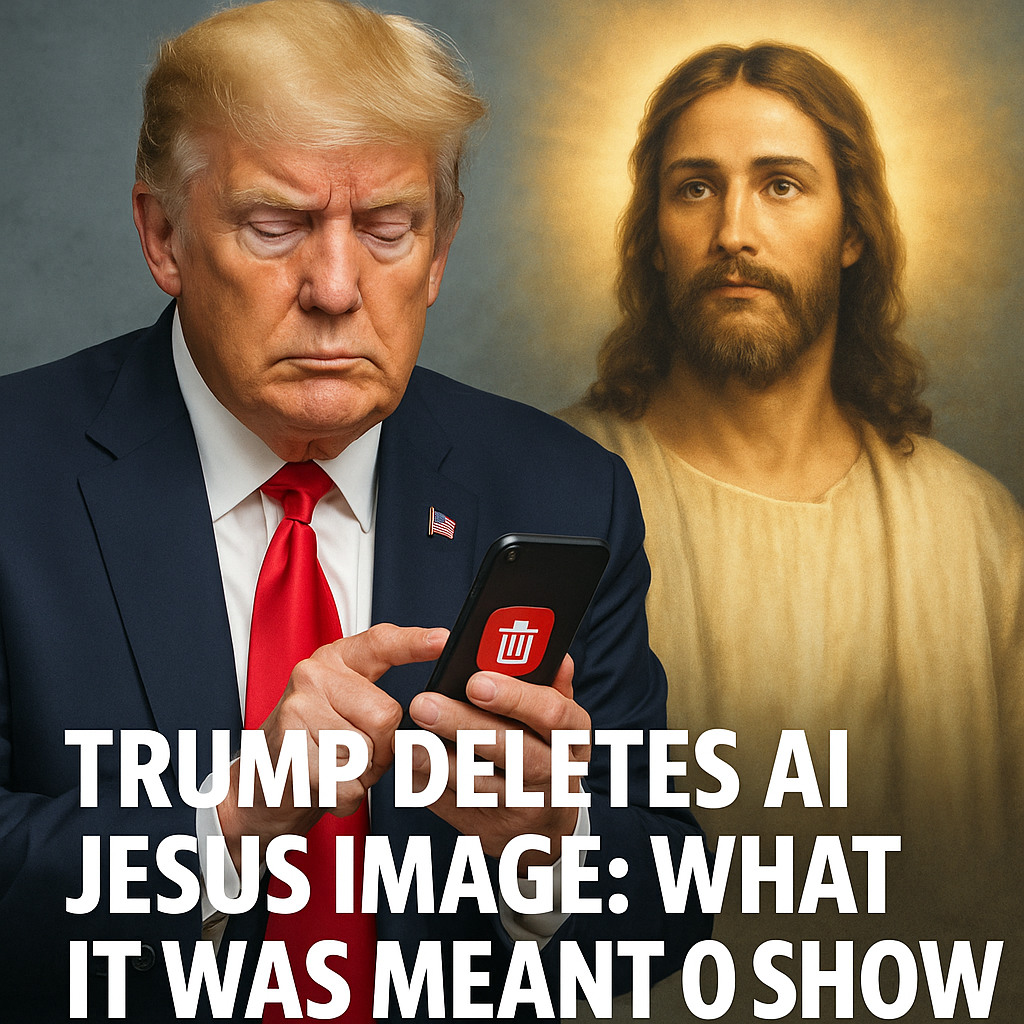
Trump Deletes AI Jesus Image: What It Was Meant to Show

Trump Deletes AI Jesus Image: What It Was Meant to Show
In a highly publicized incident, Donald Trump recently made the decision to delete an AI-generated image depicting himself as Jesus Christ, sparking discussions around the implications of such portrayals in contemporary social and political life. The backlash that followed this image’s release illuminates ongoing cultural tensions and raises important questions about the intersection of technology, religion, and public figures.

The Controversy Surrounding the AI Image
The AI-rendered image that stirred significant debate features Trump as a divine figure, complete with a halo and religious iconography. Initial reactions ranged from amusement to outrage, with critics arguing that this portrayal trivializes religious sentiments. Al Jazeera reported that many detractors perceived the image as an egotistical move, framing it within a broader context of Trump’s controversial relationship with faith and morality.


Some supporters, however, viewed the image as a critique of media sensationalism, suggesting that it sought to satirize how public figures manipulate their images. Trump’s choice to delete the image can thus be seen as an acknowledgment of the communal sensitivity toward religious symbols and figures.


Different Perspectives on the Image
The Backlash
Critics maintained that the image blurs the line between reverence and ridicule. Sky News elaborated on this perspective, illustrating how many religious individuals felt affronted by the notion of equating any public figure with Jesus. This feeling was compounded by the longstanding debate about Trump’s behavior during his presidency, which many faith-based groups find incongruent with Christian values.
1. Emotional Impact: Many commenters expressed that the image disrespected the sanctity of religious beliefs, pointing to how public figures can sometimes exploit religion for personal gain.
2. Public Discourse: The symbolic nature of the image led to broader conversations about the role of faith in politics and how celebrity culture has intertwined with traditional values.
Support for Trump’s Vision
Conversely, supporters contended that the image was never intended as a direct affront to religious beliefs but rather as a commentary on media perception. RT highlighted this notion, discussing how Trump’s image often interacts with satire and meme culture. Proponents suggest that the image illustrates a transformation of political discourse, where figures can both critique and embrace their public personas.
1. Satirical Edge: Supporters argue that the image reflects the absurdity of political hyperbole and the media’s tendency to present figures larger than life.
2. Cultural Commentary: In embracing such representations, some see it as a method of confronting and questioning mainstream narratives, revealing underlying tensions in contemporary society.
Understanding the Complexities
The debate surrounding the AI-generated image transcends mere aesthetics or even political preferences. Rather, it encapsulates a broader conversation about the blending of technology, art, and cultural discourse in the modern era. The removal of the image post-backlash presents a significant insight into how public figures manage their representations in the face of polarizing reactions.
The Role of Technology in Art and Expression
With advances in artificial intelligence, the potential for artistic creation has expanded drastically. This raises important questions about the ethics of AI-generated imagery, particularly when it comes to sensitive topics like religion. As technology evolves, so too does our interpretation of what such representations mean.
– Ethical Concerns: Many are concerned about the implications of AI in art, particularly regarding cultural appropriation and the potential misrepresentation of deeply-held beliefs.
– Future Implications: As AI-generated images become more commonplace, navigating the line between free expression and respect for individual beliefs will become increasingly critical.
Conclusion
The decision by Trump to delete the AI image of himself as Jesus reflects not only an acute awareness of public sentiment but also a recognition of the broader implications of such portrayals in today’s society. While opinions diverge on whether this was a satirical comment or an egotistical display, the incident certainly highlights the fragile relationship between technology, public figures, and cultural beliefs. As the lines between art, commentary, and personal expression continue to blur, society must grapple with the complex emotional and ethical questions that arise.
Ultimately, the incident serves as a reminder of the powerful influence that images—whether generated by humans or machines—can exert in interpreting our world and the figures we choose to elevate.















