
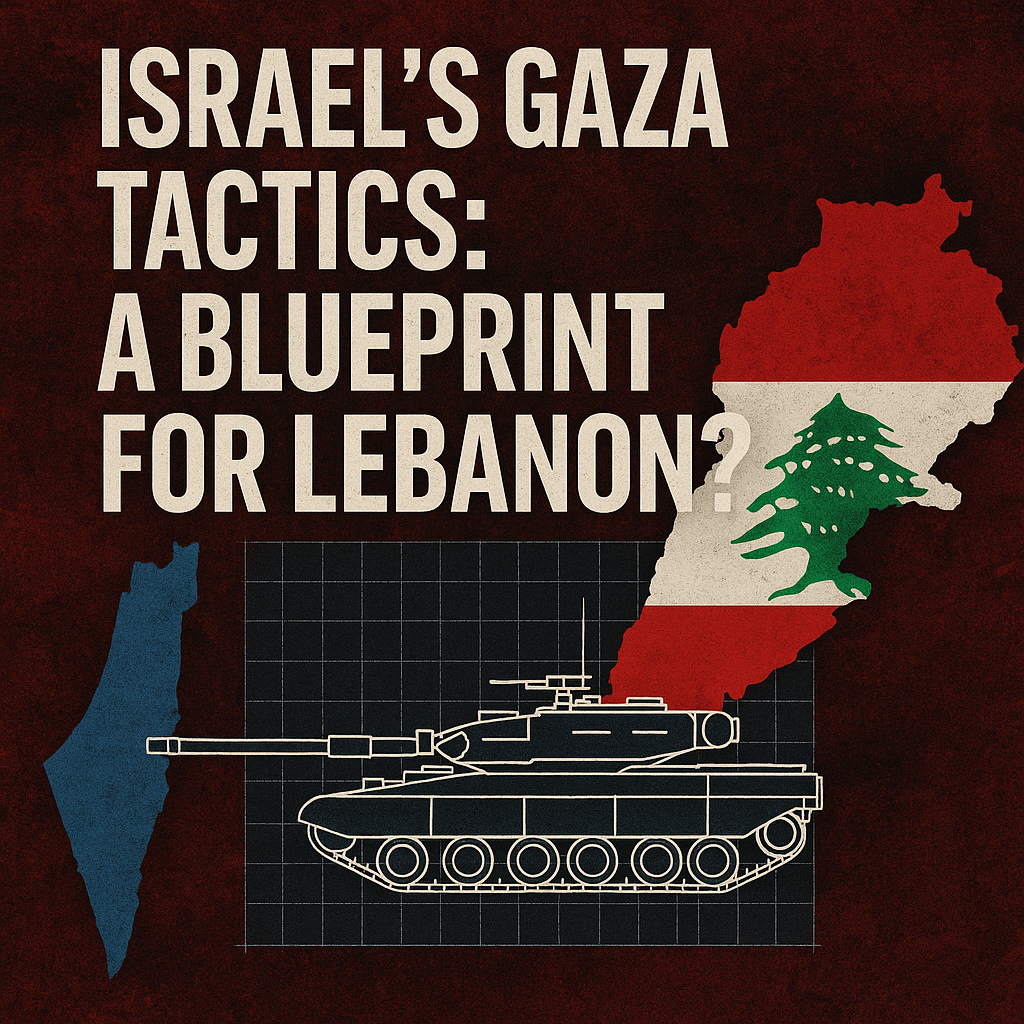
Israel’s Gaza Tactics: A Blueprint for Lebanon?

Israel’s Gaza Tactics: A Blueprint for Lebanon?
In recent months, Israel’s military strategies in Gaza have drawn significant attention, raising questions about whether these tactics are being adapted for use in Lebanon. The complex interplay of military operations, political dynamics, and humanitarian concerns in both regions necessitates a closer examination of Israel’s methodologies and their broader implications.

Analyzing Military Tactics
Israeli defense operations in Gaza have historically centered around a combination of precise air strikes, ground incursions, and technology-driven intelligence gathering. The IDF (Israel Defense Forces) has often employed these strategies to neutralize key threats, with a strong emphasis on minimizing civilian casualties—a claim that remains controversial.


In sharp contrast, some analysts argue that the inherent complexities of Lebanon, with its diverse sectarian composition and more extensive urban environments like Beirut, complicate the direct application of Gaza tactics. “What works in Gaza may not work as effectively in Lebanon due to the urban density and the presence of Hezbollah,” one military expert noted. Hezbollah’s entrenched position, fortified by extensive underground tunnels and weapons caches, presents a unique challenge that changes the calculus of military engagement.


Public Sentiments and Political Context
Public opinion in Israel regarding its military actions is significantly polarized. Supporters argue that these tactics are essential for national security, viewing operations as necessary measures to counter threats from groups like Hezbollah. A segment of Israelis believes that strong military actions are justified responses to perceived existential threats.
Conversely, humanitarian organizations and some political factions contend that continued reliance on heavy-handed tactics only exacerbates tensions and leads to long-term instability. Civilians often bear the brunt of the conflict, fueling cycles of violence that affect both the Israeli and Palestinian populations. Human Rights Watch recently reported on the grave implications of such tactics, emphasizing the need for a shift toward diplomacy and reconciliation rather than armed conflict.
The ongoing tension in Lebanon is similarly complex, as Lebanese citizens grapple with their national identity against the backdrop of external threats and internal divisions. The potential for Israel to apply its Gaza strategy in Lebanon not only elevates military risks but could also inflame sectarian tensions. As one observer commented, “The Lebanese landscape is littered with historical grudges, and any military intervention risks igniting a broader conflict.”
The Future of Israel’s Military Doctrine
Strategically, Israel is likely to weigh the pros and cons of adapting its Gaza tactics in Lebanon. The Israeli government has emphasized that it will not hesitate to act decisively against threats from its northern neighbor. Yet, military leaders also understand the importance of maintaining strategic deterrence while engaging in targeted operations that minimize civilian repercussions.
Moreover, the critical question arises: can Israel realistically replicate its successful strategies in Gaza within the Lebanese context? As noted by experts, any military escalation could provoke a multi-faceted response from Hezbollah and its allies, challenging Israel’s strategic objectives.
In summary, while there may be elements of Israel’s military strategy in Gaza that can inform actions in Lebanon, a simplistic application could lead to unanticipated consequences. Heightened military operations might achieve short-term objectives but could ultimately destabilize the region further.
Concluding Thoughts
The evolving situation highlights the necessity for a well-rounded approach that combines military readiness with diplomatic channels. The international community, including regional players, must engage more deeply in mediation efforts to prevent conflict escalation. With both Israel and Lebanon facing intricate challenges, a nuanced understanding of the implications of military tactics is more crucial than ever.
In light of these factors, Israel’s approach to its security concerns in Gaza cannot be easily transferred to Lebanon without significant adjustments. A careful balance of military and diplomatic efforts is essential for long-term peace and stability in the region. Understanding these nuances will be key for policymakers as they chart a course forward amidst the ongoing complexities of Middle Eastern geopolitics.















