
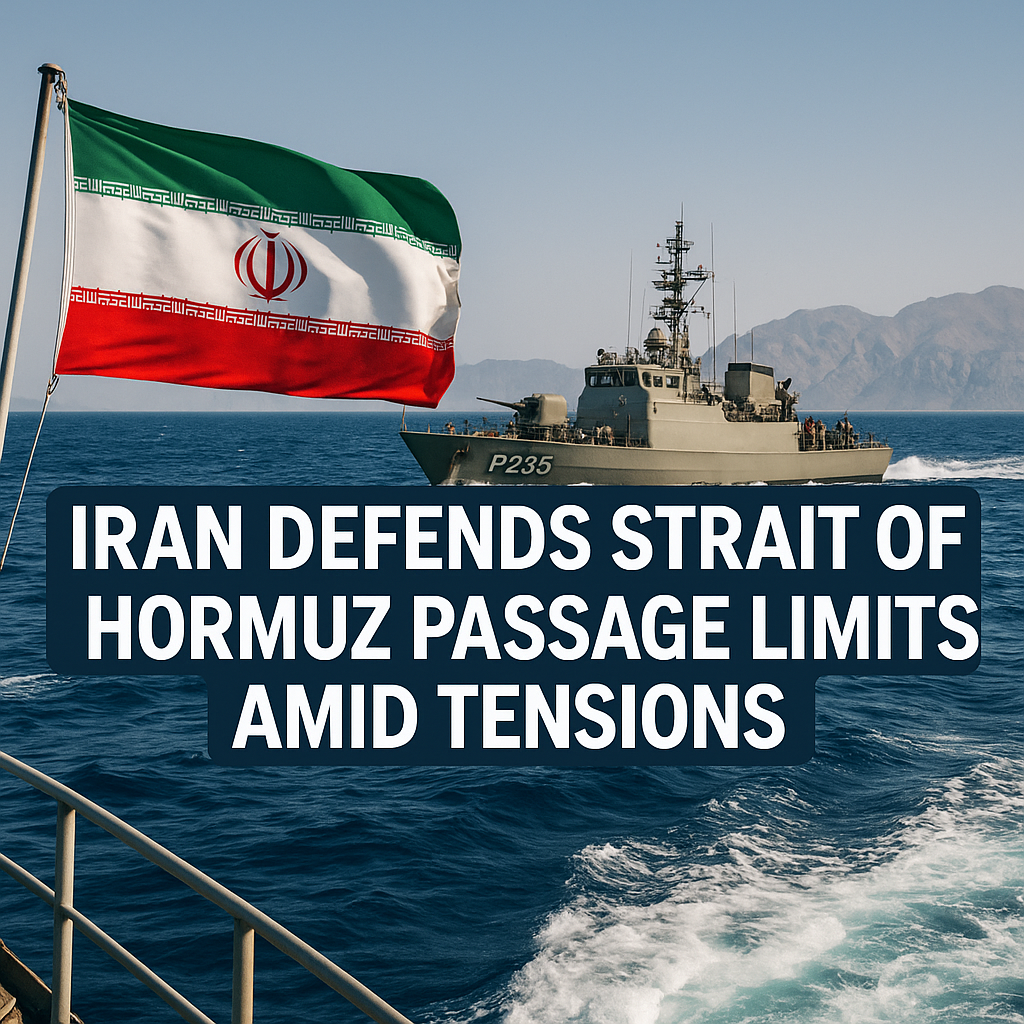
Iran Defends Strait of Hormuz Passage Limits Amid Tensions

Iran Defends Strait of Hormuz Passage Limits Amid Tensions
The Strait of Hormuz, one of the world’s most critical maritime chokepoints, has recently become a focal point of geopolitical tension, with Iran firmly defending its right to impose passage limits. This article delves into the complexities surrounding the Strait, examining the rationale behind Iran’s stance and the reactions it has elicited from various stakeholders.

The Strategic Importance of the Strait of Hormuz
The Strait of Hormuz is a narrow strait that connects the Persian Gulf to the Arabian Sea. It is a pivotal route for oil shipments, with approximately 20% of the world’s crude oil passing through it. Given its significance, control over this waterway has been a contentious issue, particularly as regional tensions rise.


Iran’s recent declarations underscore its strategic military positioning, emphasizing that it has the right to regulate maritime traffic to safeguard its national security. As reported by RT, Iran has heightened its military presence in the area, asserting that it will continue its vigilance against perceived threats, particularly from the U.S. and allied forces.


Iran’s Justification for Passage Restrictions
Iran’s leadership has articulated that limiting passage through the Strait is essential for defending national sovereignty. According to various sources, including Al Jazeera, Iranian officials contend that this stance is not merely about exerting control but is rather a necessary measure to counterbalance foreign naval operations that they view as provocative.
Iran has pointed to recent military drills aimed at showcasing its capabilities as part of its deterrence strategy. While other nations may perceive these drills as aggressive posturing, Iran insists they are defensive in nature, aimed at preventing potential blockades or threats from foreign military incursions. This has created a narrative where Iran positions itself as a guardian of regional stability, albeit from a viewpoint that often involves a strong military presence.
International Reactions and Concerns
The tension surrounding Iran’s actions in the Strait has elicited a mix of condemnation and concern from various international actors. The United States, for instance, perceives Iran’s restrictions as part of a broader pattern of aggression that threatens global oil supplies and freedom of navigation.
Responses from Regional and Global Players
Countries reliant on oil transit through the Strait have voiced their apprehensions. The UAE, for instance, has indicated that it would support international operations aimed at ensuring safe passage through this vital route. In contrast, responses from other countries, such as China and Russia, tend to favor a more diplomatic approach, advocating for dialogue over military presence.
Consensus appears elusive; while some advocate for a robust military response to deter Iran’s actions, others, including European nations, urge for diplomatic negotiations to resolve underlying tensions. However, the potential for miscalculation remains high, as military presence in the region could exacerbate rather than alleviate the situation.
Economic Implications of Tension in the Strait
Beyond geopolitical dynamics, the economic ramifications of limiting passage through the Strait could be significant. Oil prices could skyrocket if major shipping lanes are obstructed, affecting both producers and consumers globally. According to analysis from Sky News, disruptions in oil supply due to increased tensions could lead to broader economic instability, reminding the world of the interconnectedness of energy resources and national security.
Navigating a Path Forward
As the situation evolves, the potential solutions appear complex. The international community may need to revisit long-standing strategies regarding engagement with Iran. Balancing security concerns with the need for diplomatic dialogue could be crucial in mitigating future conflicts.
Key Takeaways:
– Iran is defending its right to impose limitations on maritime passage as a measure of national security.
– Military drills and a strong naval presence signal Iran’s commitment to safeguarding what it views as its territorial rights.
– International reactions range from calls for military intervention to diplomatic negotiations, highlighting differing approaches to regional stability.
– The economic stakes are high, with potential disruptions in oil supplies that could have far-reaching consequences for global markets.
In conclusion, the situation surrounding the Strait of Hormuz is emblematic of broader geopolitical tensions that blend issues of security, sovereignty, and economic interests. By examining diverse perspectives and evaluating the consequences, we can appreciate the multifaceted nature of this ongoing conflict. As the discourse evolves, the hope remains that dialogue will pave the way for a stable resolution that respects both navigational rights and regional security concerns.















