
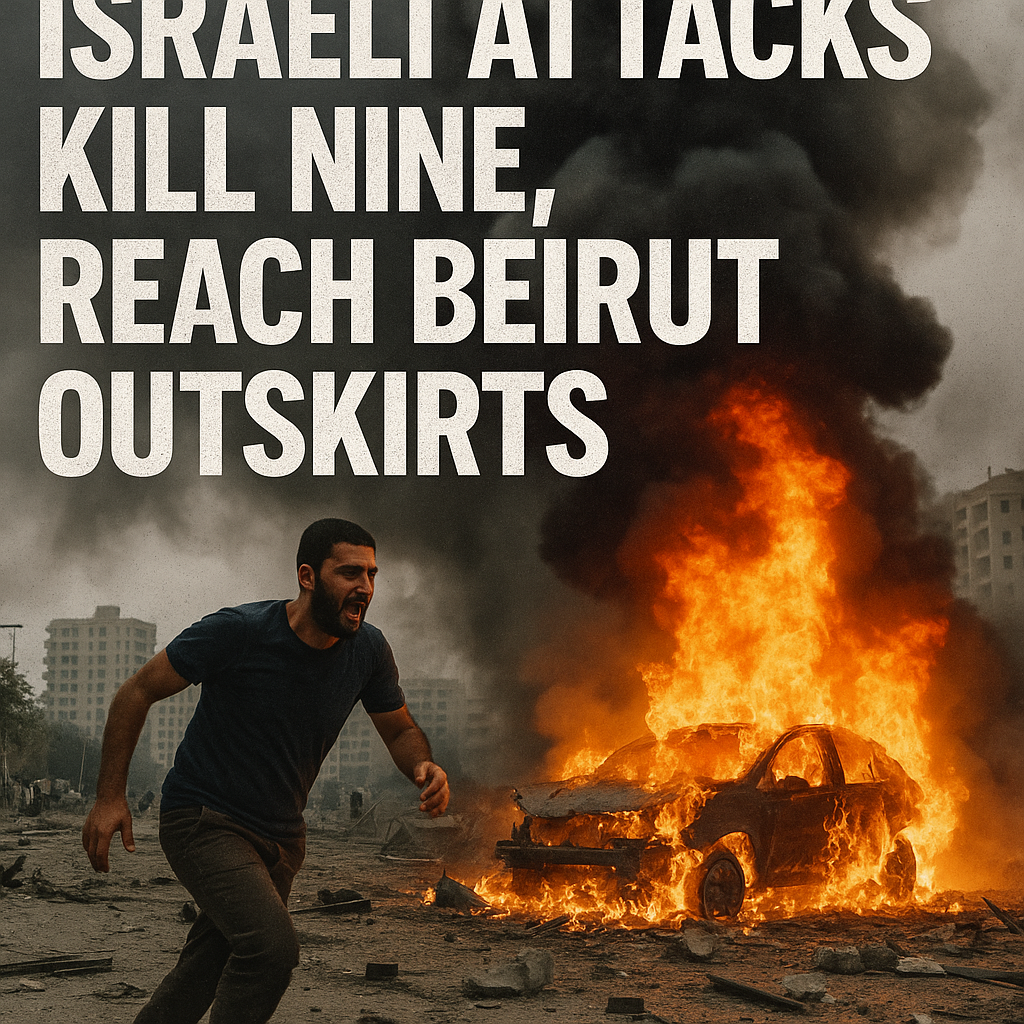
Israeli Attacks Kill Nine, Reach Beirut Outskirts

Escalation of Conflict: Israeli Attacks Kill Nine, Reach Beirut Outskirts
In a shocking turn of events, Israeli attacks have reportedly led to the deaths of nine individuals, marking a significant escalation in hostilities that have recently been centered on the Lebanon-Israel border. This series of strikes, which have now reached the outskirts of Beirut, highlights the fragile security situation in the region and raises questions about the potential for broader conflict.

Context of the Attacks
The recent violence can be seen as an extension of long-standing tensions between Israel and militant factions within Lebanon, particularly Hezbollah. Al Jazeera reports that the Israeli airstrikes targeted a range of sites believed to be affiliated with Hezbollah, a response that Israel termed a preemptive measure against potential threats. According to local accounts, the strikes occurred in areas that have historically been known for militant activities, further complicating the already intricate security dynamics between the two nations.


Conversely, Russian news outlets, such as RT, provide a different perspective, framing the attacks as part of Israel’s broader geopolitical strategy in the Middle East. Analysts suggest that these offensive actions may be aimed not only at Lebanon but are also reflective of a larger contest for influence in the region involving other players like Iran. This is particularly critical given Iran’s support for Hezbollah, which complicates the security landscape in Lebanon and the surrounding areas.


Reactions and Implications
The response from the Lebanese government has been one of condemnation, with officials insisting that such attacks violate Lebanese sovereignty and exacerbate existing tensions. Lebanese Prime Minister Najib Mikati expressed his deep concern over the violence, emphasizing that civilians are suffering the most in this renewed cycle of conflict. In contrast, Israeli officials have defended their operations as necessary for national security, claiming that the threat posed by Hezbollah warrants such preemptive actions.
From a humanitarian perspective, the casualties from these attacks have raised alarms among various international organizations. Reports indicate that among the victims are civilians, which has spurred calls for restraint from multiple humanitarian groups. They stress the need to protect civilians in conflict zones, underscoring the moral obligations of both state and non-state actors in armed engagements. This duality of military objectives and humanitarian concerns paints a complex picture of the ongoing conflict.
Broader Regional Consequences
The impact of these escalations extends beyond Lebanon and Israel, potentially affecting the entire Levant region. Various news sources highlight that this conflict could lead to a ripple effect, increasing tensions among neighboring countries already on the edge due to civil wars, sectarian divisions, and external meddling. Both Al Jazeera and Sky News report concerns from regional analysts who warn that an escalation could lead to a wider conflict involving multiple actors, including Iran and Syria, which shares a close alliance with Hezbollah.
Additionally, there are fears that persistent violence could destabilize the already delicate balance in the region, allowing extremist groups to gain traction in the chaos. This situation underscores the necessity of diplomatic efforts aimed at de-escalation, a sentiment echoed by peace advocacy groups. They emphasize that negotiations, rather than military interventions, may offer the only viable path to long-term peace.
Conclusion: A Path Forward?
As the situation unfolds, it remains to be seen how both Israel and Hezbollah will maneuver in the wake of these recent attacks. While Israel maintains that its operations are crucial for its security, the loss of life and the humanitarian implications cannot be overlooked. Understanding the nuances of such conflicts involves recognizing the multiple perspectives involved and the wide-ranging consequences that outbursts of violence can have on regional stability.
In summary, the events surrounding the Israeli attacks that resulted in nine deaths and reached the outskirts of Beirut illuminate the complexities of the ongoing conflict. As international and local actors respond, the crisis serves as a sobering reminder of the challenges that lie ahead in achieving stable peace in one of the world’s most volatile regions.















