
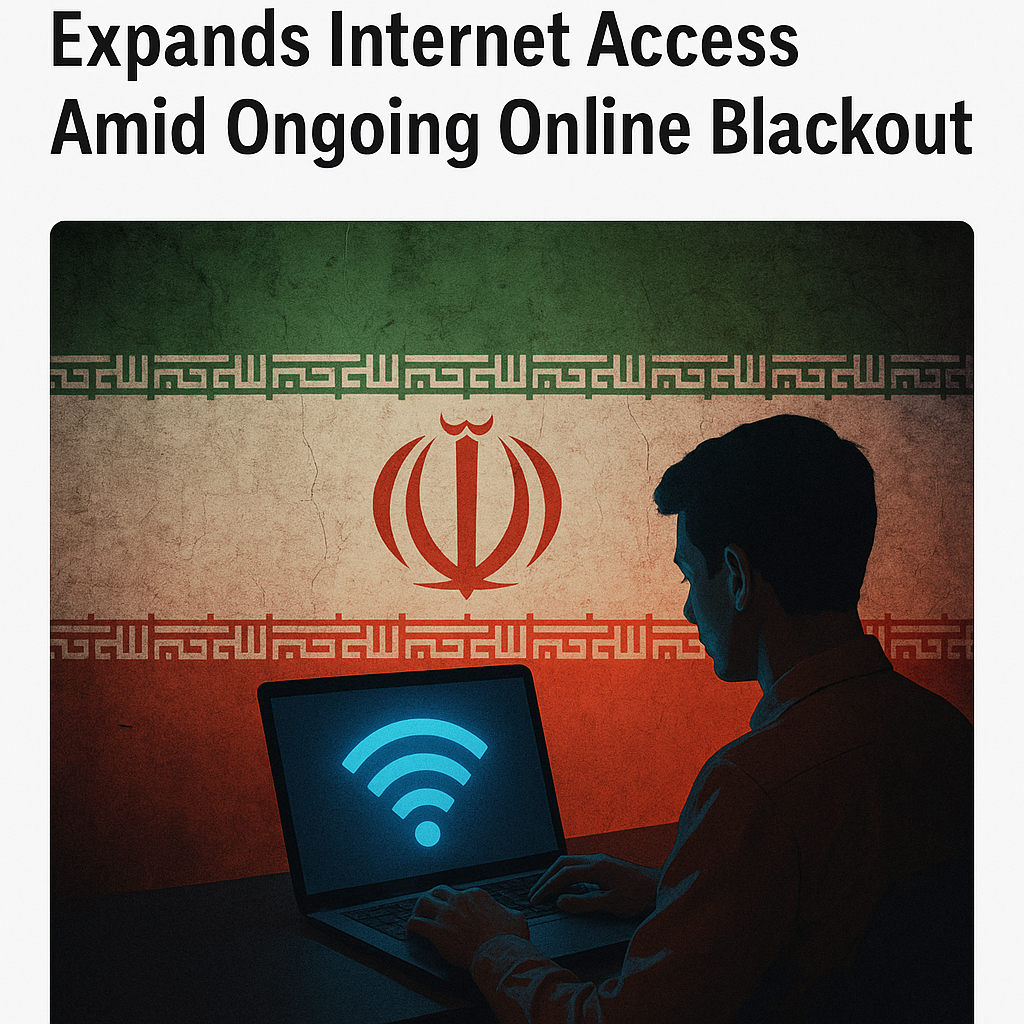
Iran Expands Internet Access Amid Ongoing Online Blackout

Iran Expands Internet Access Amid Ongoing Online Blackout
In a significant move, Iran is expanding its internet access while grappling with a sustained online blackout. This development highlights the complex relationship between governmental control, public demand for information, and international scrutiny.

The Current Situation: A Tenuous Balance
Over the past few months, Iran has faced a series of protests and civil unrest that have led to increased government restrictions on internet access. Following the death of Mahsa Amini in police custody, protests erupted nationwide, prompting authorities to impose a near-total internet shutdown in an effort to quell dissent. While this blackout has stifled communication and access to real-time information, the Iranian government is now attempting to reestablish a semblance of internet access—albeit on its own terms.


According to reports, the Iranian government has initiated a tiered system of internet access that prioritizes certain services. This means that while basic communication tools may be available, access to international news outlets and social media platforms remains limited. A recent analysis from Al Jazeera emphasizes the government’s strategy of controlling narratives by selectively allowing internet access based on political considerations.


This tiered internet system has stirred mixed reactions among the Iranian populace. Many citizens welcome any form of connectivity, seeing it as a small victory amidst widespread repression, while others criticize the government for failing to restore full access. As stated in an article from RT, many Iranians express frustration over ongoing restrictions, highlighting a desire for a more open digital landscape where information flows freely.
Implications for Freedom and Control
The Iranian government’s decision to expand internet access not only seeks to appease citizens but also serves as a calculated measure to portray a commitment to reform in response to international criticism. As noted by Sky News, the regime’s actions appear tailored to improve its image abroad, particularly in light of increasing diplomatic tension over human rights issues.
However, this expansion raises critical questions about the balance of freedom and control in an authoritarian context. Authorities have historically justified internet restrictions as necessary for national security, claiming that such measures are essential to prevent the spread of misinformation and unrest. This argument often resonates with segments of the public who value stability over unrestricted access to information. Yet, the broader impact of these measures on civil society cannot be overlooked.
In light of these ongoing developments, several experts argue that the tiered internet approach may serve to entrench state control rather than foster genuine reform. The differentiation between “acceptable” and “unacceptable” content reflects a broader trend of digital authoritarianism, characterized by the manipulation of internet access as a means of social engineering.
The Path Forward: Questions of Trust and Transparency
As Iran continues to navigate its complicated internet landscape, the implications for trust and transparency are profound. With a history of disinformation and propaganda, the public’s skepticism regarding the government’s intentions is palpable. Many citizens remain doubtful that the newly expanded internet access will lead to meaningful changes or facilitate open discourse.
Moreover, the international community remains watchful. Several nations have condemned Iran’s internet restrictions, viewing them as violations of basic human rights. The dichotomy of expanding access while simultaneously enforcing strict controls illustrates the intricate challenges faced by both the Iranian government and its citizenry.
In conclusion, while Iran’s expansion of internet access represents a cautious step towards bridging the gap between governmental authority and public demand, it is imperative to discern the underlying motives of such actions. The ongoing online blackout combined with a tiered access framework presents a complex matrix of compliance, control, and the quest for a more open society. Moving forward, the hope remains that increased access could eventually pave the way for genuine dialogue and reform, although significant obstacles persist.















