Iran Missiles Target Israel: Shocking Video Footage Revealed

Iran Missiles Target Israel: A Complex Web of Geopolitics
In recent days, the world has been shocked by the emergence of video footage claiming to show missiles launched from Iran aimed at Israel. This alarming development raises critical questions about the escalating tensions in the Middle East, which have simmered for years and recently intensified. In this article, we will explore the complexities surrounding these missile launches, dissect different viewpoints, and examine the implications of these actions on regional stability.

A Closer Look at the Video Footage
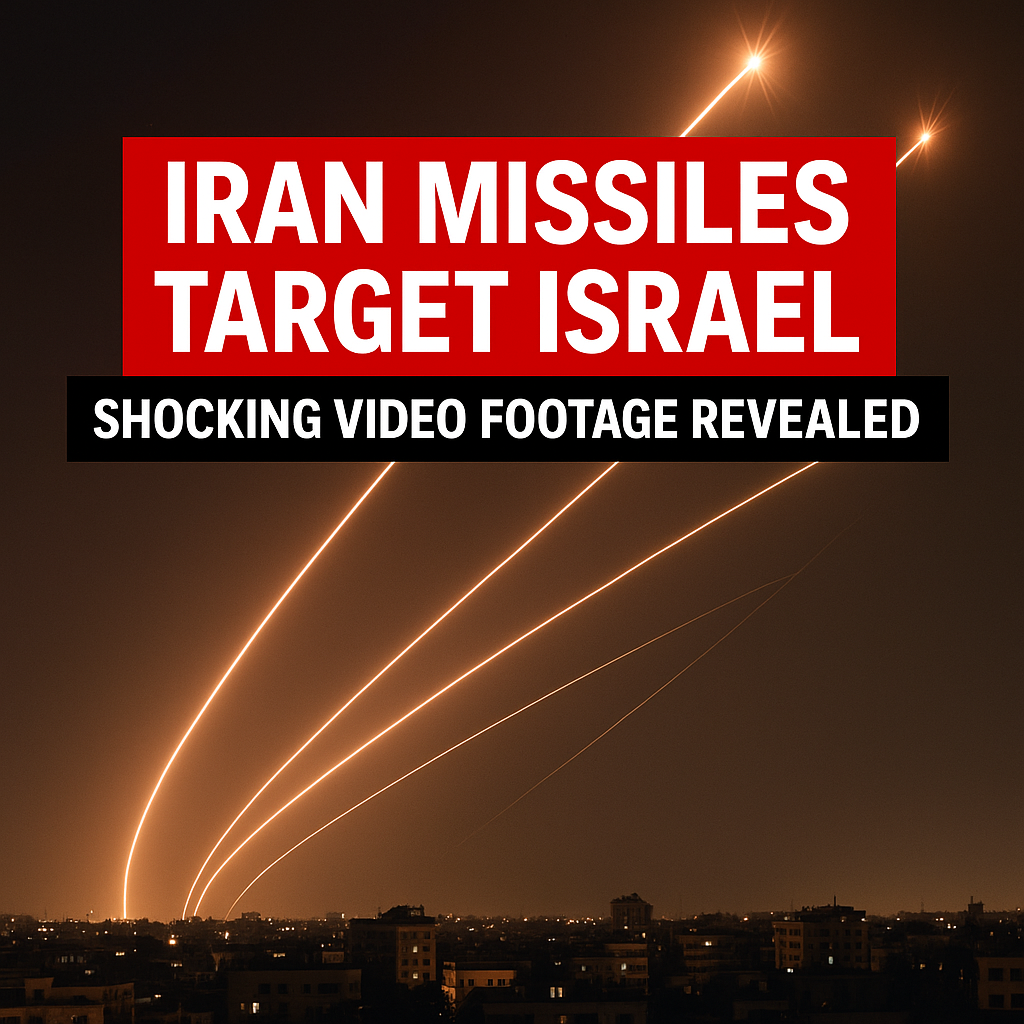
The video released and circulated on various platforms, including reports from Al Jazeera, showcases missiles being launched from Iranian territory. This has garnered attention not just for its dramatic visuals but also for the potential ramifications it may have in an already volatile region. The footage purports to depict a show of military might from Iran, sending a significant message that cannot be ignored.


Iran’s Position and Justifications
Iran has long maintained that its military capabilities are defensive rather than offensive. Officials in Tehran argue that their missile program is essential for maintaining national sovereignty and deterring foreign aggression, primarily from Israel and its allies. This perspective finds resonance among some segments of the Iranian populace, who feel surrounded by hostile forces in the region.


In a statement following the video release, a high-ranking Iranian military official asserted that these displays of power serve as a necessary deterrent against perceived threats. This rhetoric is consistent with Iran’s historical narrative, which posits that foreign intervention has disrupted its security and necessitates a robust response.
Israel’s Response: Heightened Alert and Security Concerns
From the Israeli perspective, the revelation of these missile launches is not merely a provocation but a direct threat to national security. Israeli military officials have expressed grave concerns over Iran’s missile capabilities, emphasizing that such acts increase the likelihood of conflict. The Israeli Defense Forces (IDF) have ramped up their defensive measures in response, including heightening surveillance along their borders with Iran and other neighboring countries.
While Israel considers itself to be under constant siege from various militant groups, Iran’s missile program adds a new layer of complexity. Israel has openly stated that it will not allow Iran to develop nuclear weapons, which they believe could be launched using these missile systems. This commitment stems from the historical context of the Iranian-Israeli conflict, which is marked by a series of confrontations and proxy wars across the region.
Regional Implications and Global Concerns
The prospect of missile launches directly from Iran into Israel could destabilize the entire region, drawing in global powers and complicating the geopolitical landscape. U.S. officials have remarked on the importance of a unified approach to counter Iran’s military advancements. A diplomatic solution is critical; however, the route to negotiations is fraught with challenges given deep-seated mistrust on both sides.
Reports indicate that the international community is closely monitoring these developments, with calls for dialogue emphasized in various forums. Countries like Russia and China, which maintain strategic relationships with Iran, also find themselves at a crossroads. Their responses to the tension could significantly influence future diplomatic efforts.
The Path Forward: Seeking Stability
As the footage continues to circulate and tensions rise, one thing becomes increasingly clear: a rapid escalation may not be in anyone’s best interest. The potential for miscalculations and unintended consequences remains high. Events in the Middle East are often unpredictable, and the situation requires careful management to prevent conflict from spiraling out of control.
Engaging in diplomatic discussions that include not just Iran and Israel but also regional stakeholders is crucial. A balanced approach that acknowledges the security concerns of both parties can pave a pathway toward coexistence. As the international community watches closely, there remains an urgent need for dialogue to dissolve hostilities.
Conclusion: A Call for Understanding
In light of the recent missile launches and the accompanying geopolitical discourse, it becomes evident that simplistically framing the situation will not lead to resolution. While Iran asserts its right to self-defense and deterrence, Israel’s concerns over security and existential threats are real and palpable. The path to stability in the Middle East relies on nuanced understandings and willingness on both sides to engage in a dialogue that prioritizes peace over provocation.
As events unfold, the world must remain vigilant but also hopeful that forums for negotiation and understanding will open. Continuous monitoring of the situation and maintaining open lines of communication between key players could determine the future of not just the Iranian-Israeli relationship, but the broader geopolitical climate in the region.