
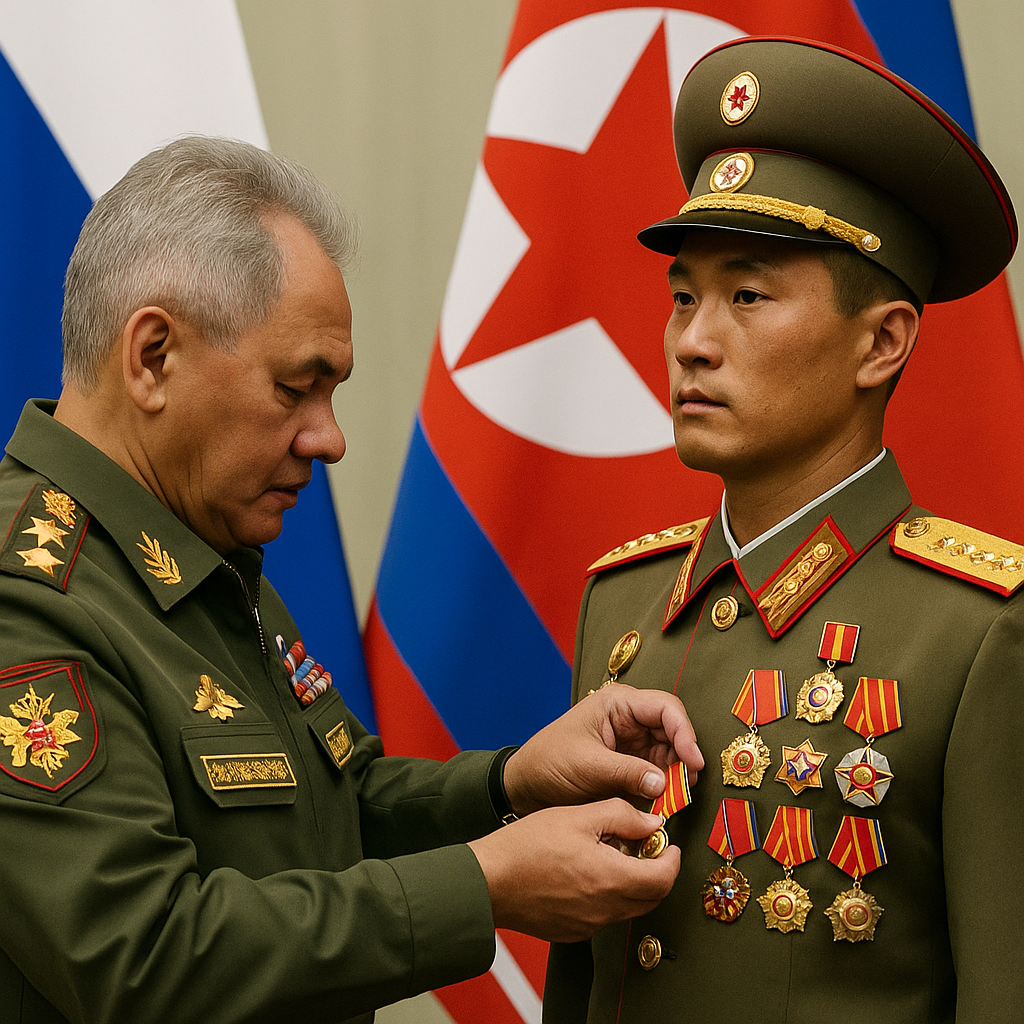
North Korean Troops Decorated by Russian Defense Minister

North Korean Troops Decorated by Russian Defense Minister: An Examination of Geopolitical Implications
In recent news, North Korean troops received awards from the Russian Defense Minister in a ceremony that has raised eyebrows across the international community. This development underscores the ongoing collaboration between North Korea and Russia, complicating an already intricate geopolitical landscape.

Historical Context of North Korea-Russia Relations
The relationship between North Korea and Russia traces back to historical alliances during the Cold War, characterized by a mutual interest in countering U.S. influence in the region. However, the dynamics have evolved significantly since then. Currently, Russia, under President Vladimir Putin, appears to be solidifying ties with North Korea as both nations face Western sanctions and geopolitical isolation.


A Symbol of Solidarity
The recent decoration of North Korean troops by Russian Defense Minister Sergei Shoigu is less a mere ceremonial act and more a sign of solidarity and mutual support between the two nations. As reported by RT, this ceremony involved the presentation of awards to North Korean soldiers who had reportedly participated in military cooperation efforts. This kind of recognition serves to reinforce the narrative of camaraderie, particularly in the face of external pressures from the West.


On the other hand, Al Jazeera highlights the symbolic nature of this gesture. North Korea’s Kim Jong-un aims to showcase his military strength to both domestic and international audiences. By receiving accolades from a major military power like Russia, Kim strategically boosts his regime’s legitimacy at home while also sending a clear message to his adversaries.
Divergent Perspectives on Implications
The reactions to this ceremony have varied across different platforms. For some analysts, the strengthening of military ties signals an alarming shift in global alliances. Sky News notes that as both nations become increasingly isolated, they may draw closer together as they face common adversaries—primarily the United States and its allies.
A Potential Threat to Regional Stability
The joint military ventures could potentially escalate tensions in the region. Observers are concerned that North Korea’s bolstered military confidence may provoke further missile tests or aggressive posturing, raising the stakes in an already volatile region. A North Korean spokesperson, cited by RT, emphasized that these military ties are essential for maintaining their sovereignty and resisting perceived threats.
Conversely, some analysts suggest that the growing relationship may not pose an immediate threat. They argue that while the ceremony has symbolic meaning, both Russia and North Korea have historically exercised caution in their military collaborations. Given the internal struggles both countries face, it could be that they are more focused on national cohesion than on provoking aggressive actions abroad.
Uncertain Future: A Thawing or Further Isolation?
The overarching uncertainty surrounding North Korea’s alignment with Russia is palpable. As international partnerships evolve, various scenarios could unfold. The potential for enhanced cooperation is significant, yet it could lead to further sanctions or military countermeasures from the West. Authorities from NATO, for example, have already expressed concerns about this burgeoning partnership, insisting it could destabilize the region even more.
Experts are divided on the implications. On one side, some assert that this development could signal a dangerous trend, wherein sanctioned countries rally around each other, thereby challenging the status quo. Others counter that such alliances are often fraught with complications, suggesting that both parties may not fully trust one another in the long term.
Conclusion: Navigating the Complexity
The decoration of North Korean troops by Russia’s Defense Minister serves as a complex indicator of the current geopolitical landscape. As both nations seek to defy Western pressures, the implications of this relationship are multifaceted and carry significant weight.
While the immediate impacts may not be clear-cut, it is essential to monitor these developments closely. Factors such as internal political stability, international diplomatic maneuvers, and the broader context of U.S.-Russia relations will likely shape the outcomes of this partnership. Ultimately, as the world watches this unfolding situation, it raises crucial questions about the future of international alliances and the balance of power in the Asia-Pacific region.















