
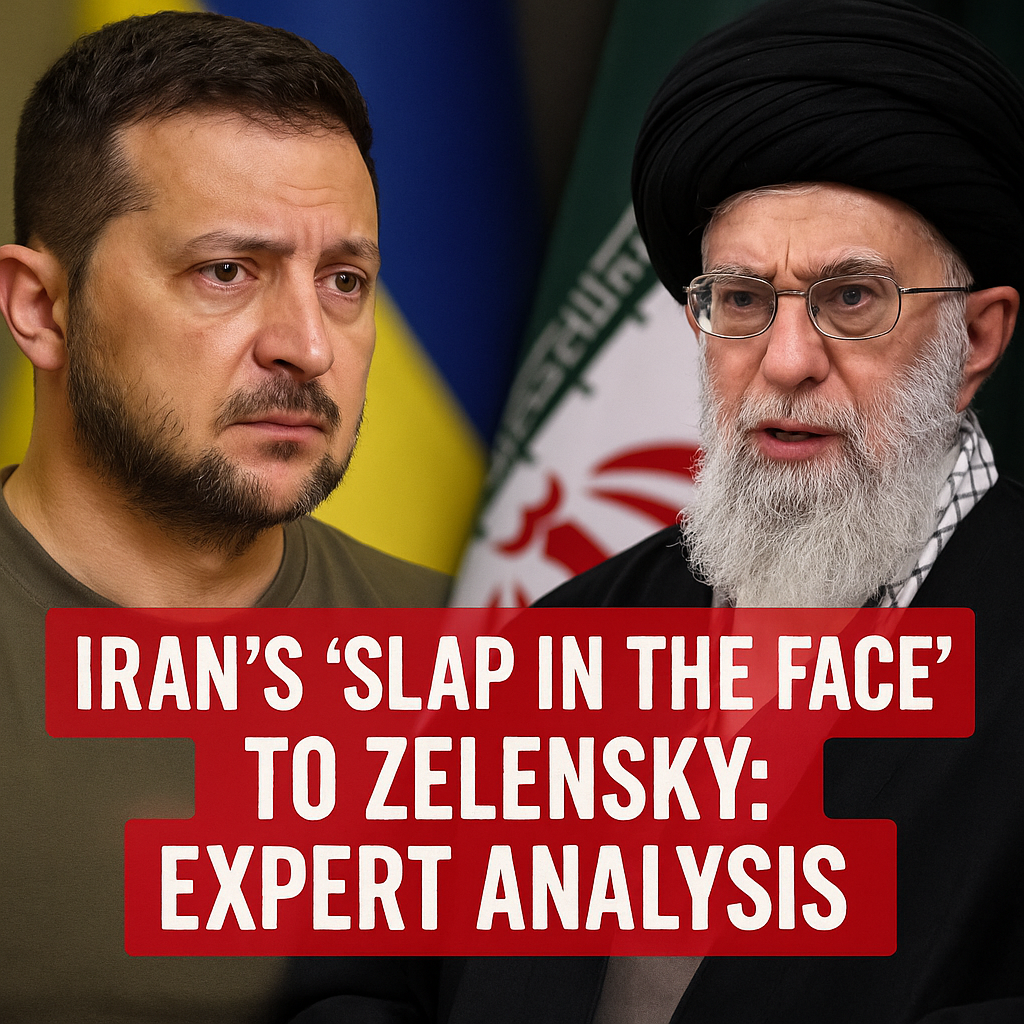
Iran’s ‘Slap in the Face’ to Zelensky: Expert Analysis

Iran’s ‘Slap in the Face’ to Zelensky: Expert Analysis
In a striking move, Iran has publicly declared its support for Russia amidst the ongoing conflict in Ukraine, an action that some experts have described as a “slap in the face” to Ukrainian President Volodymyr Zelensky. This geopolitical development has sparked intense debate about its implications, reflecting deep-rooted complexities in international relations.

Iran’s Strategic Alignment with Russia
Recent reports indicate that Iran’s support for Russia is not merely ideological but also strategic. During a meeting of foreign ministers, Iranian officials reaffirmed their commitment to deepening ties with Russia, viewing it as a counterbalance to Western influence. This alignment is particularly notable given the burgeoning military cooperation between the two nations, including Iran supplying drones to Russia for its operations in Ukraine.


Some analysts note that Iran’s actions signal a shift in regional power dynamics. The Islamic Republic is eager to solidify its position in a multipolar world where it can counterbalance U.S. and NATO hegemony. According to a report from RT News, Iranian officials characterized their relationship with Russia as essential for mutual defense and strategic interests, emphasizing that their support is aimed at opposing perceived Western aggression.


This partnership has not gone unnoticed. Zelensky’s administration has condemned Iran’s military assistance to Russia, framing it as a betrayal of Ukraine’s sovereignty. The geopolitical implications are profound; as Iran leans towards Russia, it sends a message that may embolden other nations to reassess their own international alignments.
Diverging Perspectives on Iran’s Role
While some experts argue that Iran’s actions are detrimental to Ukraine and its allies, others view them through a different lens. According to an analysis by Al Jazeera, the situation underscores the intricacies of international diplomacy, where nations often make decisions based on their own national interests rather than moral considerations.
Critics of Iran’s involvement argue that it complicates the ongoing conflict in Ukraine and further entrenches the divide between Eastern and Western blocs. “Iran is not just participating in the conflict but is actively seeking to reshape regional alliances in a way that undermines global stability,” asserts a geopolitical analyst.
Conversely, supporters of Iran’s position contend that every nation has the right to form alliances and act in accordance with its strategic goals. They argue that by supporting Russia, Iran is asserting its sovereignty against what it perceives as Western encroachment. However, the moral implications of supplying military aid to a nation involved in a contentious war have raised ethical questions both internationally and domestically within Iran.
The Impact on Ukraine’s Position and Western Response
Zelensky’s reaction to Iran’s stance has been a mix of condemnation and frustration. His administration has sought to rally international support against Iranian actions, emphasizing the need for a united front. Nonetheless, the question remains: how will the West respond to this new layer of complexity? Reports indicate that Western nations are evaluating their strategies not just in terms of military support, but also regarding diplomatic efforts, especially as Iran gains more leverage.
The contrast in viewpoints highlights a central paradox in the current geopolitical landscape. As nations like Iran and Russia forge deeper ties, the response from Western countries could either escalate tensions or perhaps prompt a re-evaluation of diplomacy in the region. Some analysts warn that a hardened stance could further alienate countries like Iran, pushing them into closer alliances with Russia and China.
Conclusion: A Complex Web of Alliances
The relationship between Iran and Russia, as highlighted by the recent developments, exemplifies the intricate web of international alliances and rivalries shaping today’s world. As Iran publicly aligns itself with Russia, the implications for Ukraine and global diplomacy are profound and multifaceted.
While some view Iran’s support as a significant setback for Ukraine, others suggest that it may catalyze a stronger international response. The tumultuous nature of these alliances serves as a reminder that global politics rarely presents clear answers, often leaving stakeholders to navigate a landscape rife with uncertainty.
In the end, how this geopolitical game will evolve remains unclear, but what is evident is that each nation’s actions resonate far beyond their own borders, creating ripples that affect global stability. As we attempt to make sense of these developments, the need for nuanced understanding and flexible diplomacy becomes more crucial than ever.















