
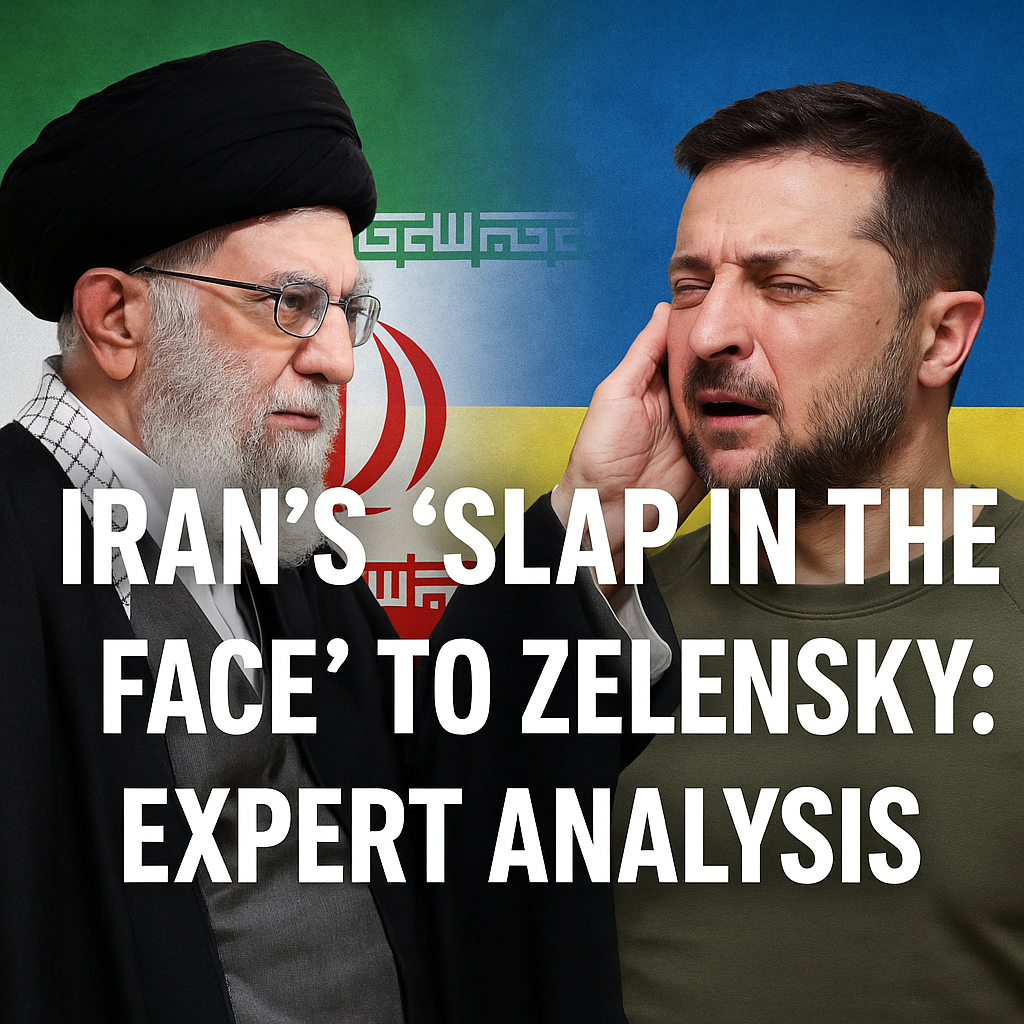
Iran’s ‘Slap in the Face’ to Zelensky: Expert Analysis

Iran’s Approaching Diplomacy: “A Slap in the Face” to Zelensky
Iran’s recent diplomatic maneuvers surrounding the Ukraine conflict have sparked significant discourse, notably when many commentators term them as a “slap in the face” to Ukrainian President Volodymyr Zelensky. This characterisation stems from Tehran’s attempts to strengthen ties with Russia while engaging with Kyiv under certain conditions. In evaluating this complex situation, it’s essential to explore various perspectives to understand its broader implications.

Iran’s Dual Approach: Balancing Relationships
Iran’s overture towards Ukraine comes at a time when the global dynamics are particularly charged due to Russia’s ongoing conflict with Ukraine. While Iran has been subjected to international scrutiny and sanctions, its support for Russia in the conflict has raised eyebrows, particularly in Kyiv.


Support for Russia Amid War
From one perspective, Iran’s provision of military support to Russia—evidenced by the supply of drones—positions the regime as an ally to a major power against Western influence. According to RTNews, Iran’s link to Russia not only serves to counteract Western expansion but also strengthens its own regime stability amidst external pressures. By forming this bond, Iran sends a clear message of solidarity with Moscow, which many see as a slight to Zelensky and Ukraine, who are seeking international support against the invasion.


Diplomatic Overtures Toward Kyiv
However, Iran’s overtures to Ukraine reflect a desire for multifaceted engagement rather than outright hostility. Reports indicate that during recent diplomatic channels, Iran expressed its willingness to engage in discussions with Ukraine, albeit while still supporting Russia’s geopolitical ambitions. Al Jazeera provides insight into Iran’s efforts to smooth relations with Kyiv, noting that Tehran aims to preserve its interests in any potential post-war landscape.
By sending messages of cooperation, Iran appears to be trying to navigate a fine line, suggesting that it can maintain relations with both Kyiv and Moscow. This stance is not without its complications, especially given the ongoing conflict in Ukraine. It raises the question: Can Iran genuinely pursue diplomacy with Ukraine while simultaneously aligning closely with Russia?
The Complexities of Alliances
Iran’s approach to Ukraine highlights the intricacies of international diplomacy, underscoring the often thin line between partnership and rivalry.
Echoes of Historical Context
Historically, Iran’s relationships with both Russia and Ukraine have been turbulent. The historical context introduces layers of skepticism on both sides. Iran must tread carefully to avoid alienating Ukraine further, especially as Kyiv calls for stronger international support against Russian aggression. The phrase “slap in the face” reflects exactly this perspective within Ukraine, as they expect solidarity from countries historically sympathetic to their plight.
Conversely, Iran’s leadership, facing internal and external challenges, may calculate that its alliance with Russia yields vital strategic advantages. This juxtaposition raises pressing questions about the sustainability of such a strategy and its ramifications for Ukraine’s future.
National Interests Prevailing
An important aspect of Iran’s behavior is the focus on national interests. This pragmatic approach often drives countries to seek partnerships that might appear contradictory to their overt political stances. Analysts argue that Iran’s need to bolster its economy, address its internal crises, and recognize the potential benefits of being part of a multipolar world likely informs its actions. Thus, its diplomatic communications with Ukraine may not signal betrayal so much as a calculated outreach, albeit from a position of perceived strength.
Conclusion: Moving Forward in a Polarized Landscape
As tensions persist in Ukraine and Iran’s relationships with global powers evolve, understanding the nuances of this diplomatic dance becomes crucial. The characterization of Iran’s moves as a “slap in the face” to Zelensky emphasizes the fragility of alliances where historical grievances exist alongside present political realities.
While Iran seeks to balance its interests between Russia and Ukraine, the question remains: can these diplomatic efforts yield a constructive outcome? As of now, a clear consensus fails to emerge amid a landscape rife with competing narratives and strategic motivations. Each step taken by Iran will undoubtedly continue to be scrutinized in light of its dual commitments, particularly as the conflict in Ukraine unfolds further.
Navigating this geopolitical landscape will require careful assessment of intentions, actions, and the overarching need for stability in an increasingly polarized world.















