
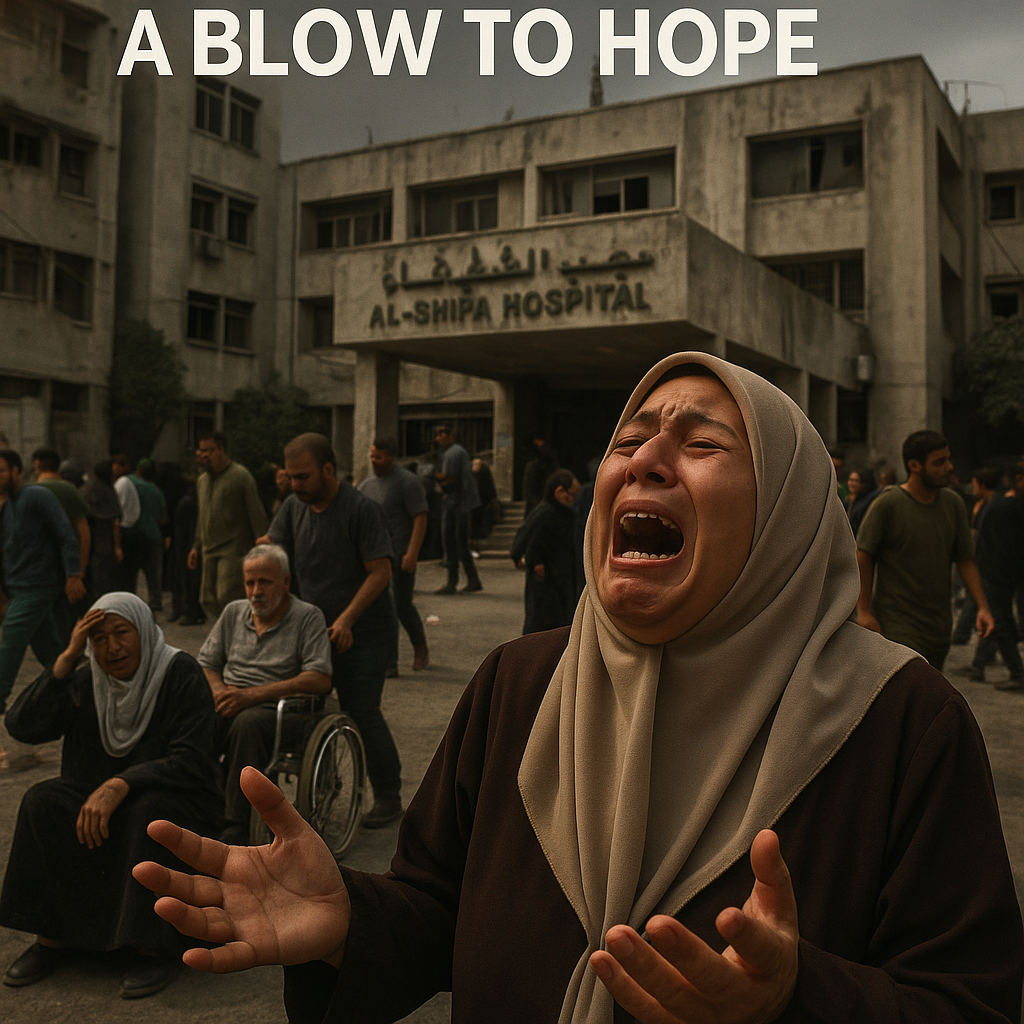
Israel’s Al-Shifa Hospital Evacuation: A Blow to Hope

Israel’s Al-Shifa Hospital Evacuation: A Blow to Hope
The recent evacuation of Al-Shifa Hospital in Gaza has sent waves of debate and despair across both local and international spheres. Within the context of the ongoing Israeli-Palestinian conflict, this decision raises critical questions about humanitarian priorities and the broader implications for peace.

The Context of the Evacuation
Al-Shifa Hospital, recognized as one of the largest medical facilities in Gaza, has been a focal point for medical care amid the turmoil of conflict. Reports indicate that the evacuation was initiated by Israeli military forces under the pretext of targeting Hamas, a claim met with skepticism from various humanitarian organizations and observers. The evacuation, deemed necessary for military operations, has been justified by Israeli authorities as a measure of public safety. However, critics argue it reflects a troubling approach to healthcare under siege.


Multiple sources, such as Al Jazeera and RT, offer different interpretations of Israel’s motives. Al Jazeera describes the situation as “a blow to hope,” emphasizing the risk it poses to civilian lives and the disruption of essential medical services. In contrast, RT focuses on Israel’s argument that the evacuation is essential for maintaining security and removing what it labels as terrorist threats. This dichotomy encapsulates a broader struggle, wherein humanitarian needs often clash with national security narratives.


Humanitarian Concerns
One of the most alarming consequences of the evacuation is the potential impact on healthcare access for vulnerable populations. Hospitals like Al-Shifa are not merely facilities; they represent lifelines for many residents in a region already grappling with profound medical shortages and limited resources. Health organizations highlight that the evacuation complicates efforts to treat individuals suffering from chronic illnesses, injuries, and those in need of urgent care.
A report from Sky News points to the palpable fear among medical staff and patients alike. Many health workers express that they feel abandoned under the pressure of military operations. This sentiment is echoed among civilians, who often take to social media to voice their frustrations and fears. The ethical implications of such actions raise critical questions about the prioritization of military objectives over humanitarian imperatives.
Competing Perspectives on the Evacuation
The difficult balance between military objectives and humanitarian needs emerges as a contentious issue. Proponents of the evacuation argue that removing alleged militant elements from hospitals is necessary for legitimate national defense. Yet, opposing voices assert this line of reasoning represents a broader pattern of military strategy that marginalizes civilian needs.
For instance, commentary from humanitarian agencies calls for immediate access to trauma care and medical assistance, distinguishing the roles of combatants and civilians. They contend that hospitals should be sanctuaries free from military incursions. Additionally, various NGOs warn that such evacuations could widen the ongoing humanitarian crisis, reducing public trust in international organizations that aim to advocate for peaceful resolutions.
Despite the differences in perspective, one common thread persists: the humanitarian crisis has reached unprecedented levels. According to numerous news reports, many in Gaza view the evacuation not just as a loss of a hospital but as an existential threat to their communities’ very survival.
The Call for a Balanced Approach
As the situation unfolds, the urgency for a balanced approach becomes increasingly critical. Analysts suggest that any military operation should carefully consider its impact on civilian life and healthcare systems. This delicate balancing act is essential not only for immediate conflict resolution but also for long-term peace in the region.
Moreover, discussions about the evacuation should incorporate deeper systemic concerns—such as the need for resilient healthcare systems in conflict zones and an inclusive approach to peace that transcends military tactics. Calls for dialogue between conflicting parties alongside humanitarian aid appear necessary for moving forward.
Conclusion
The evacuation of Al-Shifa Hospital symbolizes a profound challenge that encapsulates the ongoing strife in the region. It raises difficult questions about how to protect civilian lives in the face of military operations while also considering the implications for broader peace efforts. As international observers and local populations attempt to navigate this turmoil, the need for robust dialogue and humanitarian priorities remains paramount.
While the complexities of the Israeli-Palestinian conflict continue to unfold, the gravity of each decision—especially those affecting healthcare infrastructure—will likely resonate far beyond the immediate circumstances of evacuation. In the long run, a holistic approach that values both security and humanitarian considerations may offer the path toward lasting peace.















