
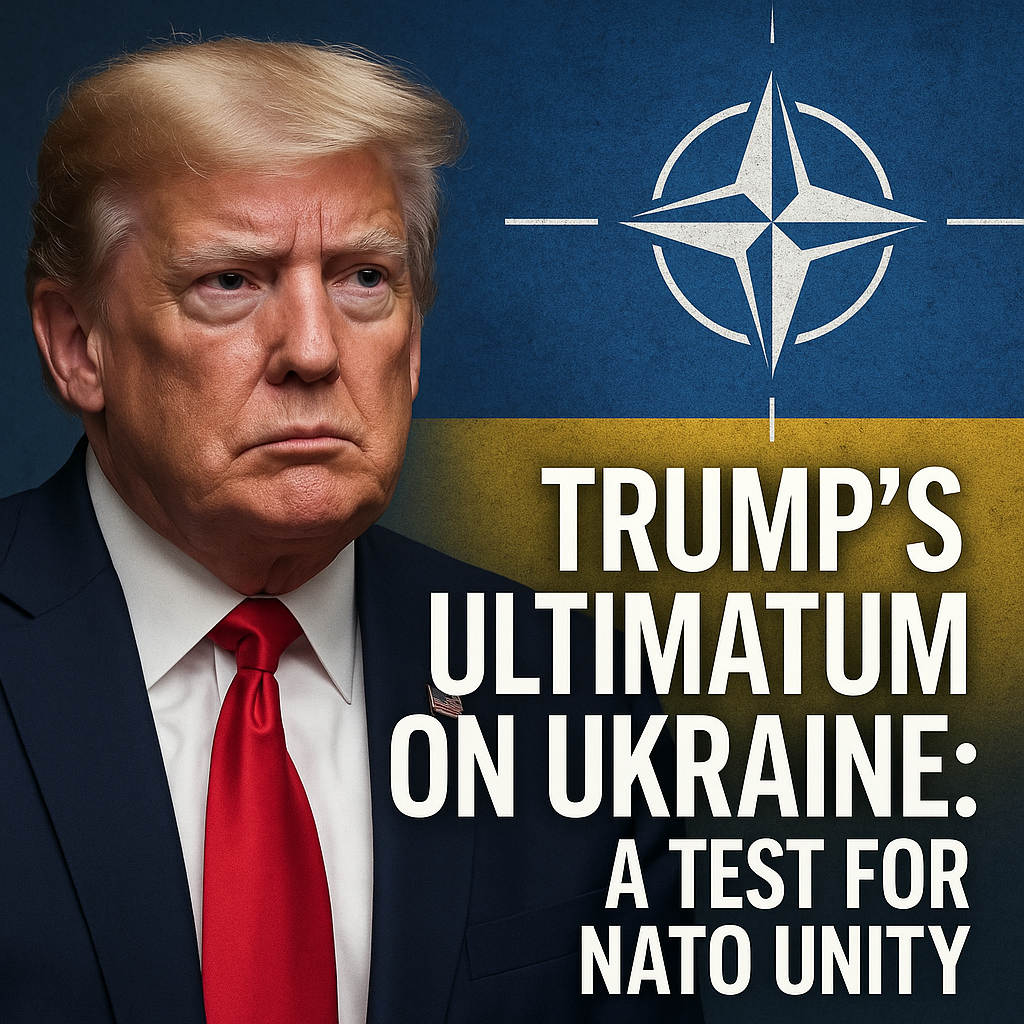
Trump’s Ultimatum on Ukraine: A Test for NATO Unity

Trump’s Ultimatum on Ukraine: A Test for NATO Unity
In recent months, former President Donald Trump’s comments regarding the Ukraine conflict have sparked significant debate about NATO’s cohesion and direction. His stance represents a growing faction within the Republican Party that calls for reassessing the U.S. involvement in European security. This has raised critical questions about the future of NATO and the collective response to the ongoing crisis in Ukraine.

Context of Trump’s Ultimatum
Trump’s recent ultimatum regarding the Ukraine conflict hinges on a call for Europe to take on a larger share of the financial burden associated with the war. According to a piece from RT, Trump asserted that European nations need to significantly increase their military and financial contributions to the defense of Ukraine. He went as far as suggesting that if he were to return to office, the U.S. financial support might be contingent on greater efforts from NATO allies.


This proposal has received mixed reactions from various stakeholders. Critics argue that Trump’s approach risks fracturing the unity that has defined NATO’s stance in supporting Ukraine against Russian aggression. Supporters, however, believe that this shift could prompt European nations to invest more substantially in their own defense capabilities.


The NATO Response
NATO’s position has been clear in its support for Ukraine since the onset of the conflict in February 2022. The alliance has emphasized the importance of collective defense and solidarity among member states. Al Jazeera highlights NATO Secretary-General Jens Stoltenberg’s remarks about the necessity of sustaining military aid to Ukraine. He noted that continued support is crucial not just for Ukraine’s sovereignty, but for the security of Europe as a whole.
Stoltenberg’s comments suggest that while the question of financial contributions is valid, NATO unity is paramount to countering any potential Russian advances. Yet, as Trump’s perspective begins to resonate with certain factions, the alliance faces an internal stress test: maintaining a united front while accommodating varying views on resource allocation.
Diverging Opinions on U.S. Involvement
The internal debate regarding NATO’s military and financial commitments is further complicated by differing opinions on U.S. foreign policy. Some analysts advocate for a significant re-evaluation of U.S. involvement in Ukraine, suggesting that Trump’s position speaks to a growing isolationist sentiment within a portion of the American political landscape. According to sources from Sky News, there is a faction that believes the U.S. can no longer be the “policeman” of the world and should instead focus on domestic issues.
Conversely, pro-involvement advocates argue that U.S. support in Eastern Europe is essential for deterring further aggression from Putin’s Russia. They contend that a withdrawal or significant reduction in resources could embolden Moscow and destabilize the region further.
Implications for Future Policy
The implications of Trump’s ultimatum could signify a dramatic shift—one that may redefine the future of NATO and its shared objectives. If current trends persist, European nations may find themselves compelled to step up their commitments, creating a more balanced distribution of responsibility. A more self-sufficient Europe could, theoretically, lead to a more resilient NATO overall.
However, the risk lies in the potential splintering of unity. If NATO allies view Trump’s policy as an ultimatum rather than a call for collaboration, they may respond defensively. A fractured NATO would undermine decades of collective security constructs and lead to a more unpredictable European security environment.
Navigating Uncertainties
The future trajectory of U.S. involvement in Ukraine remains laden with uncertainties. As Trump’s rhetoric gains traction, both supporters and critics recognize that any significant policy shift must consider the complex geopolitical landscape. While many lawmakers agree on the urgency of addressing Russian aggression, the means of achieving this consensus vary widely.
Ultimately, the evolving discourse within the Republican Party and the broader implications for NATO shows that Trump’s ultimatum may very well be a litmus test for unity among allies. The stakes are high, demanding a careful consideration of both immediate and long-term strategies to address the tensions brewing at the heart of Europe.
In navigating this intricate situation, the importance of dialogue and mutual acknowledgment of responsibilities remains crucial. In an era of shifting alliances, the ability of NATO to adapt while sustaining its core values will define its effectiveness and resilience against future challenges.















