
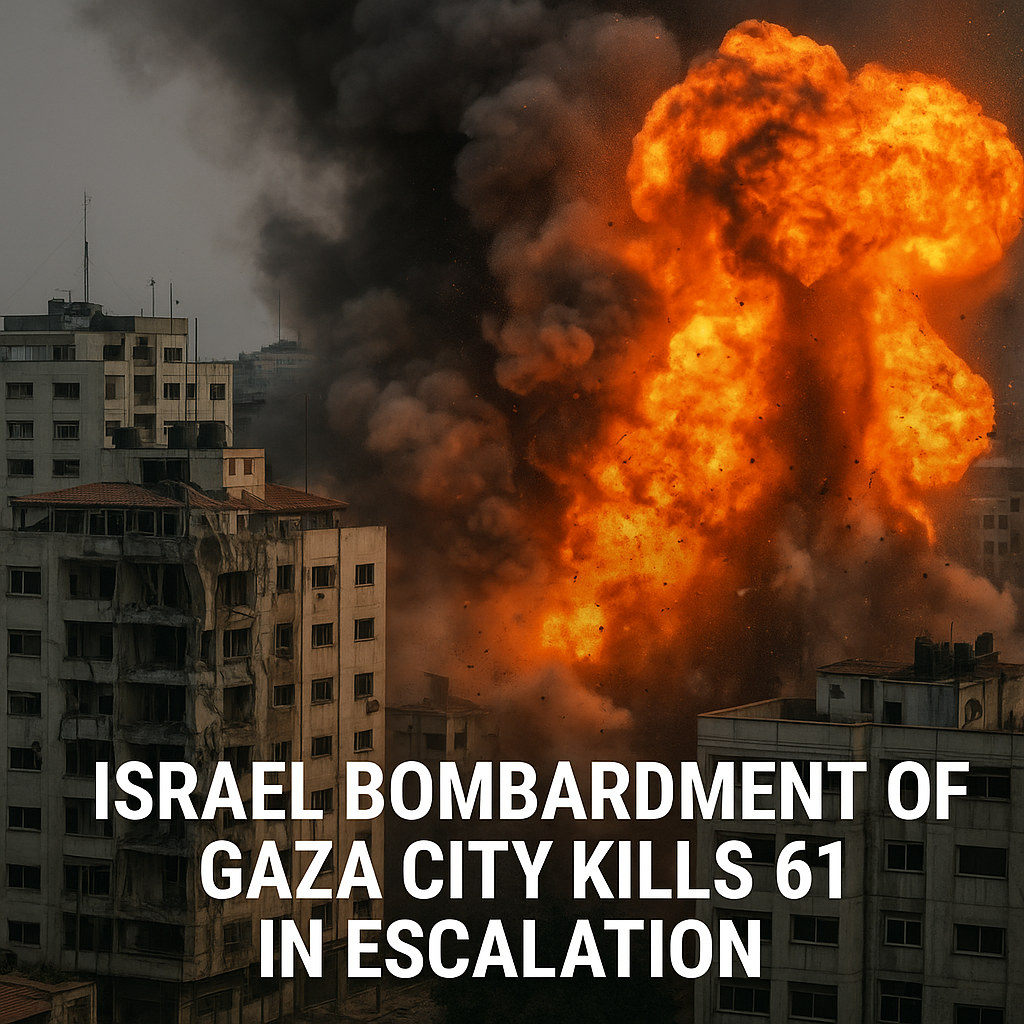
Israel Bombardment of Gaza City Kills 61 in Escalation

Escalation of Tensions: Israel’s Bombardment of Gaza City Claims Lives
The recent escalation in violence has seen Israel’s bombardment of Gaza City claiming numerous lives, a move that has incited a wave of international concern and debate. The gravity of the situation underscores the complexities of the Israeli-Palestinian conflict, emphasizing the humanitarian challenges at the forefront.

A Surge in Military Action
Reports indicate that at least 61 individuals were killed in the latest round of Israeli airstrikes, with many more injured. Notably, this operation follows a period of heightened tensions, with both sides exchanging hostilities. Sources from Al Jazeera report that the bombardment targeted various locations in Gaza, including residential areas, leading to widespread destruction. This type of military response has been characterized by Israeli officials as a necessary measure to neutralize threats from militant groups operating in the region.


Conversely, RT reports that Palestinian officials and human rights organizations have condemned the attacks, labeling them as disproportionate and indiscriminate. The destruction of civilian infrastructure raises significant questions about the legality and morality of such military actions under international law. Critics argue that the loss of innocent lives exacerbates an already dire humanitarian crisis and fuels resentment, potentially leading to further cycles of violence.


Humanitarian Consequences
The humanitarian implications of these military actions are far-reaching. According to reports from Sky News, the strikes have not only resulted in casualties but have also severely impacted medical facilities and supply lines, making it increasingly challenging for aid workers to respond effectively. The ongoing blockade in Gaza has compounded these issues, with many residents already facing shortages of essential supplies, including food, water, and medical care.
Organizations focusing on humanitarian aid are increasingly vocal about the dire conditions. Access to medical facilities has become crucial as the number of injured continues to rise; however, many hospitals are operating under extreme constraints, frequently lacking necessary resources.
Diverse Perspectives on the Conflict
Opinions on the bombardment vary widely based on geopolitical perspectives and local sentiments. Supporters of Israel’s actions argue that the nation has a right to defend itself against rocket attacks from militant groups in Gaza, a sentiment echoed by some in the international community. They emphasize the necessity of striking at the heart of militant capabilities to ensure national security.
On the other hand, many argue that such military actions are playing into a cycle of violence that undermines long-term peace efforts. International observers from various countries, including European nations, have called for restraint and dialogue, urging both sides to pursue pathways that prioritize civilian safety over military objectives.
Weighing the Evidence
The lack of a clear resolution highlights the complexities inherent in the Israeli-Palestinian conflict. Calls for ceasefire have surfaced but have yet to yield significant results. The international community remains divided, with some nations supporting Israel’s right to self-defense while others fiercely criticize its actions as collective punishment against civilians.
Concluding Thoughts
The tragic loss of life in Gaza City is a stark reminder of the broader dynamics at play in the region. As both sides continue to navigate this fraught landscape, the need for a balanced discourse that addresses legitimate security concerns while advocating for humanitarian rights has never been more urgent. While there is a consensus that violence cannot be the solution, the path to lasting peace remains laden with obstacles and uncertainties.
The bombardment’s aftermath will shape the narrative moving forward, forcing governments, agencies, and citizens alike to face difficult questions about responsibility, justice, and the future of the conflict. Urgent dialogues encompassing all viewpoints and concerns prove essential if there is to be any hope for resolution in this long-standing dispute.















