
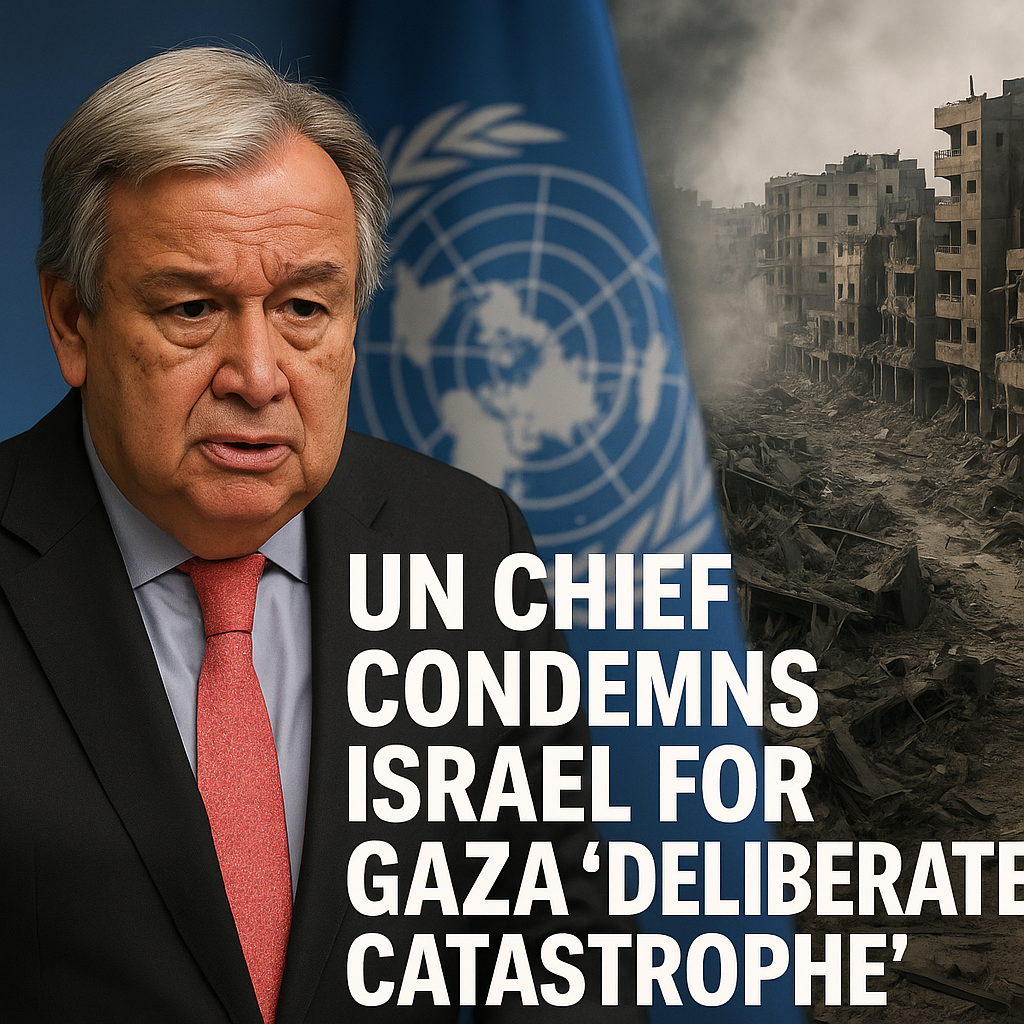
UN Chief Condemns Israel for Gaza’s Deliberate Catastrophe

UN Chief Condemns Israel for Gaza’s Deliberate Catastrophe
In recent remarks, the UN Chief has condemned Israel’s actions in Gaza, labeling them a “deliberate catastrophe.” This proclamation highlights a deepening crisis that resonated throughout various global news outlets, reflecting a complex situation marked by humanitarian concerns, geopolitical intricacies, and divergent worldviews.

The Humanitarian Health Crisis
The situation in Gaza has escalated into a dire humanitarian crisis, with the UN Chief asserting that conditions have reached a point of catastrophe due to blockades and military actions. Reports suggest that essential resources such as food, water, and medical supplies are critically scarce, with over two million people trapped in a territory that has endured significant infrastructural damage.


Sources from Al Jazeera emphasize that many residents are left without basic amenities, raising alarms about health crises, including the spread of preventable diseases and insufficient medical care for the wounded. The UN’s physician reports of treating patients under traumatic circumstances have become increasingly common, highlighting the urgent need for international attention and assistance.


Conversely, some narratives, particularly from RT, argue that the Israeli government’s actions are framed as self-defense against persistent assaults from militant groups within Gaza. This perspective often underscores the ongoing rocket fire targeting Israeli cities as a significant catalyst for military operations in the region. Proponents of this viewpoint contend that security measures are essential for Israel’s survival, presenting a contrasting image of the situation that complicates the humanitarian narrative.
International Responses and Diplomacy
The condemnation from the UN Chief has sparked widespread discussions among international leaders and organizations. Many have expressed solidarity with the Palestinian people, calling for an immediate ceasefire and increased humanitarian aid. The outcry echoes sentiments articulated by various humanitarian groups that argue for the urgent need to allow aid workers unhindered access to Gaza.
Moreover, global leaders have begun to weigh in, identifying the need for a balanced approach that considers both the rights of the Palestinian people and Israel’s security concerns. As stated by commentators in multiple reports, achieving peace in such a contentious environment requires thoughtful diplomacy that extends beyond mere statements of condemnation.
While voices from Al Jazeera advocate for increased international intervention, urging nations to step in with humanitarian support and diplomatic pressure, perspectives from RT advocate for further investigations into Hamas’s actions, asserting that responsibility must be shared. Thus, the layers of this issue remain tangled, with many calling for nuanced approaches rather than binaries of blame.
The Path Forward: Toward Resolution
As the crisis unfolds, it is essential to recognize the multifaceted nature of the Israeli-Palestinian conflict. Calls for peace have historically faced numerous challenges, often rooted in long-standing grievances, territorial disputes, and cycles of violence.
One emerging consensus among commentators is the need for dialogue combined with concrete actions that reflect empathy towards the plight of civilians caught in the crossfire. The voices calling for international mediators are not just looking for temporary solutions but aim for lasting resolutions that can help build a stable future for both Israelis and Palestinians.
In addition, civil societies worldwide are increasingly advocating for grassroots movements promoting peace and understanding between the two communities. These efforts, supported by social media and international solidarity movements, present opportunities for dialogue that bypass traditional political structures.
Conclusion: A Call for Humanitarian Urgency
In conclusion, the UN Chief’s condemnation of Israel’s actions represents a call for urgent humanitarian intervention and a renewed commitment to dialogue and peacebuilding. The varied perspectives from different news outlets illustrate not just the complexity of the situation but also the necessity of approaching the crisis with compassion, understanding, and a willingness to listen.
While there is no one-size-fits-all answer to the deep-rooted challenges facing Gaza and Israel, the urgency remains for the international community to act decisively and thoughtfully. Establishing peace will require more than statements; it will demand genuine efforts to understand and respond to the needs and fears of all parties involved.















