
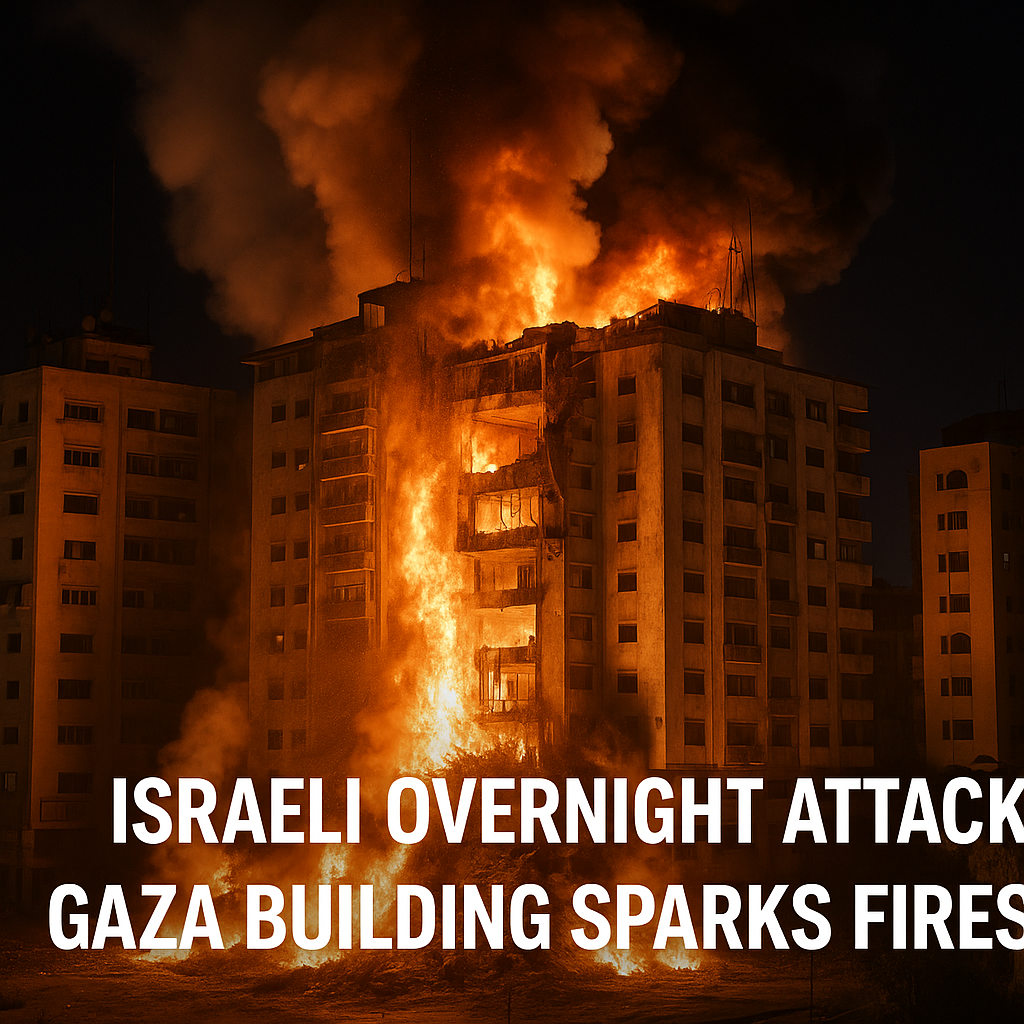
Israeli Overnight Attack on Gaza Building Sparks Fires

Israeli Overnight Attack on Gaza Building Sparks Fires
In the early hours, an Israeli airstrike targeting a residential building in Gaza lit up the night sky, sparking fires that rapidly consumed the structure. This incident illustrates the ongoing humanitarian and geopolitical tensions between Israel and Palestine, raising questions about the efficacy and morality of military actions in densely populated areas.

The Context of the Attack
The airstrike that hit Gaza is not an isolated event; it occurs amid a backdrop of longstanding conflict and intermittent violence. Reports indicate that this specific attack was in response to rocket fire into Israeli territories, which has become a cyclical pattern in the region. Al Jazeera highlights the fact that the Israeli military claims such operations are necessary to protect its citizens from ongoing threats of violence. In contrast, Palestinian advocates emphasize the devastating humanitarian consequences of such strikes, arguing that they exacerbate the already dire conditions in Gaza.


Humanitarian Consequences
While the Israeli government asserts that these attacks are aimed at militant targets, the collateral damage often includes civilian casualties and destruction of vital infrastructure. According to recent reports from RT, the building struck housed numerous families and was located in a heavily populated area, leading to widespread destruction and panic among residents. The aftermath of such strikes results in significant humanitarian crises, as access to essential services becomes increasingly limited. Efforts to aid those affected are often hampered by damage to hospitals and other critical facilities.


Human rights organizations have condemned these actions. They argue that military operations conducted in populated regions raise ethical questions about proportionality and the potential for excessive civilian casualties. The call for accountability in military operations is a recurrent theme, particularly from groups operating in Gaza, which argue that these assaults violate international humanitarian law.
Diverging Perspectives on Conflict
The Israeli perspective often focuses on security and self-defense, emphasizing the need to neutralize threats to its citizens. Conversely, Palestinian narratives frequently highlight victimization and the struggle for basic rights and recognition. Sky News reports that amidst this ongoing conflict, voices from both sides reveal deep-seated animosities and differing perceptions of legitimacy in their claims.
Additionally, there is a division within international communities regarding their responses to such incidents. Some nations support Israel’s right to defend itself, while others condemn disproportionate military responses that lead to civilian suffering. This geopolitical divide often results in varied diplomatic reactions, further complicating the crisis in the region.
Seeking Paths to Peace
As the violence continues, the question remains: What are the pathways to lasting peace? Calls for ceasefires and negotiations often emerge after such incidents, yet progress tends to be elusive. Many leaders advocate for renewed dialogues that respect the rights and security of both Israelis and Palestinians. Yet, ongoing violence undermines trust and hinders effective communication.
Furthermore, grassroots movements on both sides advocate for reconciliation, aiming to build bridges rather than walls. These initiatives seek to address the underlying issues, such as territorial disputes, refugee rights, and mutual recognition. The path to peace may be fraught with challenges, but many believe it is imperative to find alternative solutions to military confrontations.
Conclusion
The Israeli overnight attack on a Gaza building undeniably showcases the complexities of a conflict steeped in historical grievances and present-day realities. The stark differences in perspective about such military actions highlight the broader implications for peace and stability in the region. As violence persists, so too do the calls for a humane and just resolution—one that prioritizes the protection of civilians and the fostering of understanding across divides.
The ongoing tension demonstrates that military action alone is insufficient for long-term solutions. The international community, alongside local voices, must work collectively towards a dialogue that emphasizes peace, empathy, and mutual respect. Only through understanding and collaboration can both Israelis and Palestinians hope to carve out a path toward a more stable future.















