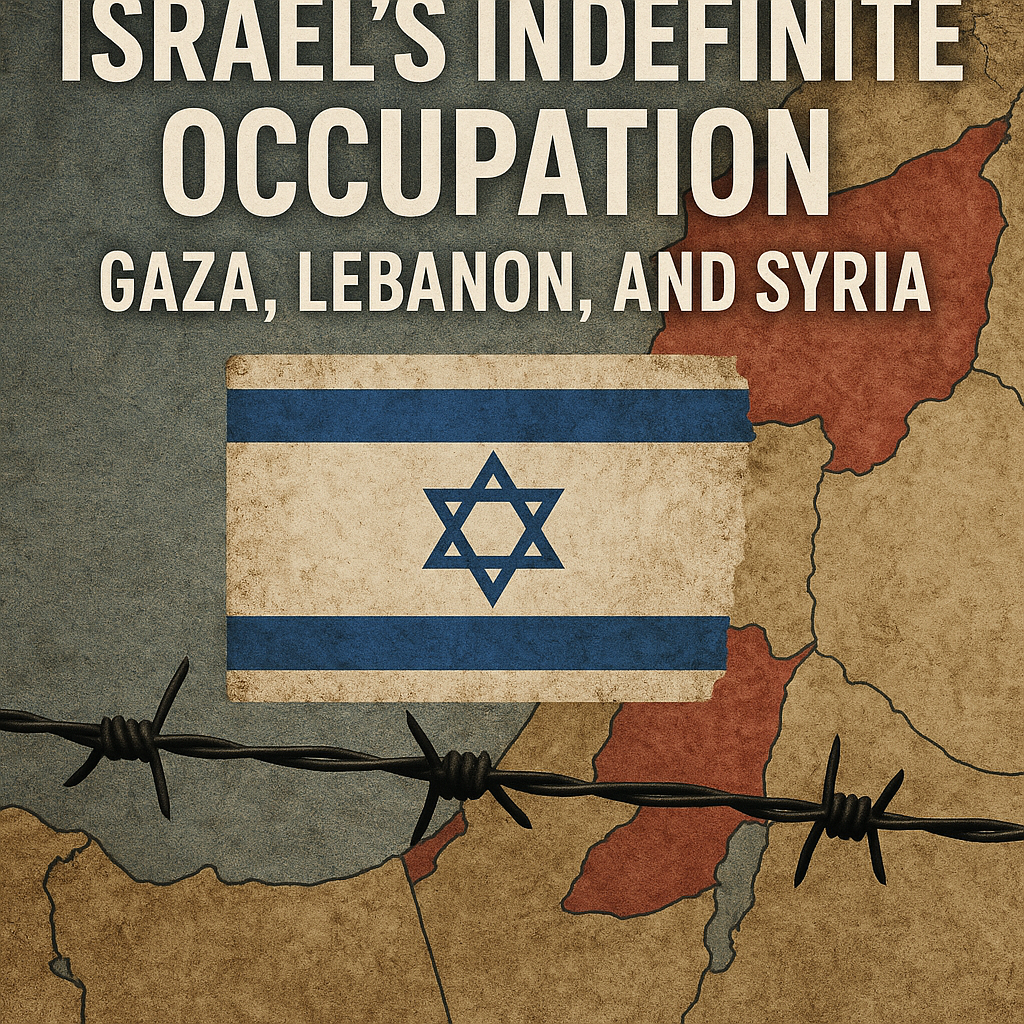
Israel’s Indefinite Occupation of Gaza, Lebanon, and Syria

Understanding Israel’s Indefinite Occupation of Gaza, Lebanon, and Syria
Israel’s indefinite occupation of territories in Gaza, Lebanon, and Syria has been a longstanding and complex issue, characterized by a blend of geopolitical, historical, and humanitarian elements. The situation has garnered diverse viewpoints, revealing a deep divide among nations and communities regarding the implications of such an occupation.

Historical Context of the Occupation
To fully grasp the current dynamics, it’s crucial to understand the historical backdrop that has influenced Israel’s control over these territories. The roots of the conflict can be traced back to the mid-20th century, particularly the establishment of Israel in 1948, which led to the displacement of a significant number of Palestinians. The 1967 Six-Day War further solidified Israeli control over various areas, including the Gaza Strip and the Golan Heights.


In recent reports, Al Jazeera highlighted the plight of Palestinians in Gaza, who continue to endure socio-economic hardships under a blockade initially imposed by Israel in 2007. Approximately two million individuals live under dire conditions compounded by restrictions on movement and goods. The humanitarian repercussions are staggering, with unemployment and poverty rates soaring, sparking calls for international intervention and support.


On the other hand, Israel justifies its continued presence in these territories as a necessary measure for its national security. Officials and supporters frequently cite threats from militant groups such as Hamas in Gaza and Hezbollah in Lebanon, framing the occupation as a defensive stance aimed at protecting Israeli citizens from potential attacks. Recent statements from Israeli leadership reinforce this notion, depicting the military presence in these territories as vital to thwarting regional destabilization.
The Humanitarian Perspective
The humanitarian crisis resulting from the occupation remains a focal point in discussions surrounding this issue. Reports from multiple sources, including Sky News, underscore the dire living conditions in both Gaza and southern Lebanon. Hospitals are struggling to operate under the strain of limited medical supplies, and access to clean water and electricity remains sporadic at best.
Organizations like the United Nations Relief and Works Agency (UNRWA) have warned that the unending conflict exacerbates an already fragile humanitarian situation, impacting education and health services. Coupled with intermittent military conflicts, such humanitarian crises further complicate the political discourse, as the plight of civilians often gets overshadowed by military narratives.
Critics of the occupation argue that the situation not only undermines security for both sides but also fosters a cycle of violence and retaliation that prolongs the conflict. They advocate for a renewed dialogue, emphasizing the need for a two-state solution that respects the rights and sovereignty of both Israeli and Palestinian people.
The Geopolitical Landscape
Geopolitically, Israel’s occupation raises questions about the role of international actors and the effectiveness of foreign policy responses. Countries in the Arab world, as well as international bodies like the United Nations, have historically condemned the occupation. However, the political will to implement substantial change remains lackluster. Organizations like Human Rights Watch and Amnesty International have documented violations but often face resistance to their findings from Israeli authorities, which argue that such reports may be biased or politically motivated.
As discussed in a recent piece by RT, Israel’s military presence in Lebanon, particularly in the south, is justified through a lens of counterterrorism. This perspective complicates the viewpoint of many Arab nations, leading to growing tensions within the region. For example, Lebanon’s government has decried Israeli incursions, viewing them as violations of sovereignty, while also dealing with its internal complexities regarding Hezbollah.
Conclusion: Navigating a Complex Reality
Israel’s indefinite occupation of Gaza, Lebanon, and Syria presents a multifaceted challenge that requires careful navigation of both humanitarian and geopolitical realities. Although security concerns from the Israeli perspective are significant, the tremendous humanitarian implications cannot be overlooked.
In light of the differing viewpoints, it is clear that a balanced approach emphasizing dialogue and understanding might be the key to breaking the cycle of violence. Investment in humanitarian aid, mutual recognition of rights, and a genuine commitment to peace could pave the way toward a more stable and just future for all communities affected by the ongoing conflict.
As the international community continues to observe, the hope remains for a resolution that upholds the dignity and rights of both Israelis and Palestinians, promoting a peaceful coexistence grounded in mutual respect and acknowledgment of shared humanity.