
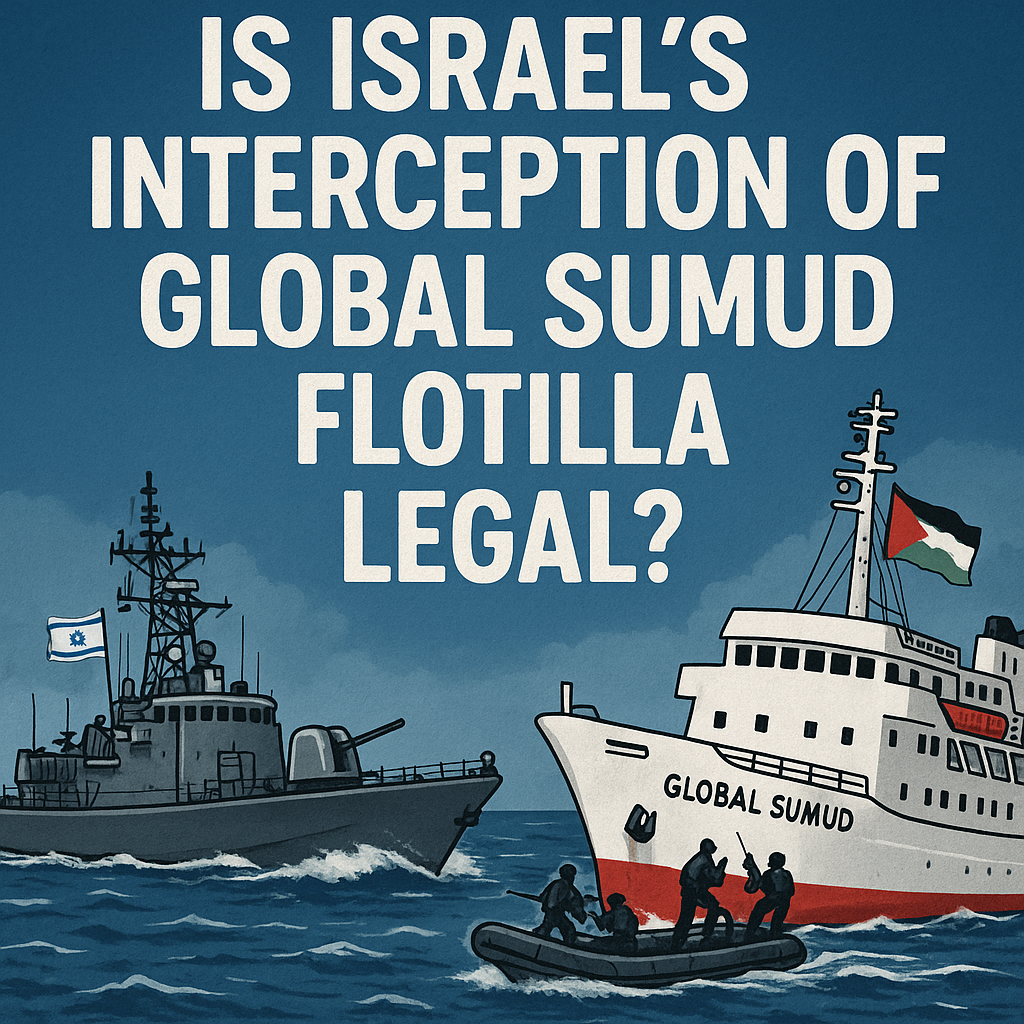
Is Israel’s Interception of Global Sumud Flotilla Legal?

Is Israel’s Interception of the Global Sumud Flotilla Legal?
The recent interception of the Global Sumud flotilla raises significant legal questions regarding international maritime law and the rights of those involved. Amid a backdrop of rising tensions in the region, the incident invites scrutiny from legal experts, government officials, and human rights advocates alike.

Legal Standpoint on Maritime Interception
Israel’s naval forces intercepted the Global Sumud flotilla in international waters, an act that has sparked fierce debate concerning its legality. Under international law, particularly the United Nations Convention on the Law of the Sea (UNCLOS), states have rights to their territorial waters, but the situation becomes complex when actions occur in international waters.


Proponents of Israel’s actions argue that the flotilla posed a security threat. They point to Hamas’s history of maritime operations and the necessity for Israel to protect its borders. According to Israeli government sources, the interception was a justified measure to prevent the introduction of materials that could be used to arm terrorist groups.


Conversely, critics argue that such actions contravene international law. Human rights organizations emphasize that the flotilla was comprised of activists and humanitarian goods meant for the Gaza Strip, challenging the claim of a security threat. These activists maintain that their mission was peaceful and aimed at highlighting the ongoing blockade of Gaza.
Diverse Opinions from Legal Experts
Legal experts have weighed in on both sides of the argument. Some assert that Israel, by intercepting the flotilla, was operating within its rights to ensure national security. They cite instances of previous maritime blockades and their legality under the premise that a state may defend itself against armed threats.
However, others contend that the blockade itself remains legally questionable, especially since it restricts the movement of civilian vessels engaged in humanitarian efforts. Under humanitarian law, they argue, such actions may constitute a form of collective punishment, which is prohibited.
This division among legal analysts showcases the complexities inherent in maritime law, especially concerning security and humanitarian aid.
Responses from the International Community
The international response to Israel’s actions has been mixed. Some countries support Israel’s viewpoint, emphasizing the need for security in a volatile region. Yet, many others, particularly in Europe and parts of the Arab world, have condemned the interception.
For instance, statements from various international bodies and nations have called for a reassessment of Israel’s blockade and actions taken against humanitarian efforts. United Nations representatives have voiced concerns about the implications of the interception on human rights and humanitarian access in Gaza.
Furthermore, activist groups have mobilized globally to raise awareness about the legality of maritime interceptions in the context of humanitarian missions. They argue that the rights of civilians to receive aid must take precedence over national security concerns, especially when no direct threat is evident.
Navigating Uncertain Waters
While a clear legal consensus has yet to emerge regarding the interception of the Global Sumud flotilla, the complexities involved offer no easy answers. The balance between a state’s duty to protect its citizens and the rights of humanitarian missions presents a challenging dilemma.
The case also raises broader questions about the legality of other similar interventions that have occurred in international waters. As the situation evolves, it will be critical to monitor developments and the international community’s response to ensure that humanitarian principles are upheld.
Conclusion: A Complex Tapestry of Law and Ethics
Ultimately, the legality of Israel’s interception of the Global Sumud flotilla hinges on a nuanced understanding of maritime law and its intersection with humanitarian rights. While Israel asserts its actions were necessary for national security, critics call for accountability and compliance with international regulations governing humanitarian missions.
As discussions around this topic continue, it is essential for both sides to engage in constructive dialogue. Clear legal frameworks and protections for humanitarian efforts are paramount, ensuring that the safety of civilians remains a priority amid geopolitical tensions.
In an increasingly interconnected world, navigating the legal and ethical waters surrounding such incidents will require careful consideration and openness to multiple viewpoints.















